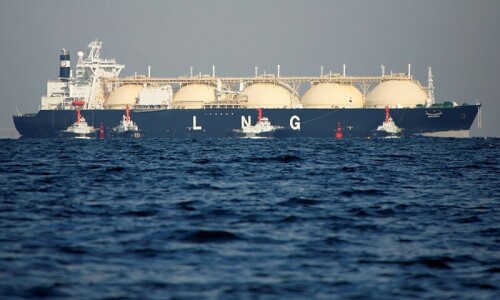
Strait of Hormuz closure pushes Pakistan into expensive $18.4 per mmBtu LNG deal

ISLAMABAD: State-run Pakistan LNG Limited (PLL) has approved a revised bid of $18.4 per million British thermal units (mmBtu) from TotalEnergies for delivery between April 27 and 30, while rejecting all other bids, it emerged on Saturday.
TotalEnergies had initially bid $18.88 per mmBtu but later revised its offer downward to $18.4 following negotiations.
After internal consultations, the authorities rejected all other bids for the first half of May, anticipating the reopening of the Strait of Hormuz.
On Friday, PLL had received four bids at $17.997 to $18.88 per mmBtu for delivery between April 27 and May 8.
A total of four bids were received from three bidders, and three were declared the lowest.
Vitol Bahrain’s bid of $18.54 per mmBtu was declared the lowest for the May 1–7 delivery window, while OQ Trading was the lowest bidder at $17.997 per mmBtu for the May 8–14 period. However, both bids were rejected.
PLL had on Thursday floated urgent tenders for the import of three LNG cargoes for delivery between the aforementioned dates amid rising temperatures and power shortfall.
PLL had set April 24 as the deadline for bids, to be opened the same day, given the urgent need to meet power demand, which was short by more than 4,500MW at peak, resulting in six to seven hours of loadshedding.
The tender was issued following Qatar’s reluctance to dispatch LNG cargoes that were stranded in the Gulf due to the closure of the Strait of Hormuz. Qatar’s three LNG shipments meant for Pakistan had previously returned from the strait over security concerns.
With domestic charges and taxes included, the sale price of regasified LNG is expected to be around $23 per mmBtu, nearly double the rate recorded in March.
Last month, the Oil and Gas Regulatory Authority (Ogra) notified an increase of 19–22 per cent in the price of regasified liquefied natural gas (RLNG) to $12.50–$14 per mmBtu for sales at the distribution stage by the two Sui gas companies for March, based on an import price of about $7.6 per mmBtu.
The increase was mainly due to an increase in terminal charges amid lower import volumes and a slight rise in import price, data from the authority showed.
The basket RLNG price was based on only two cargoes in March, compared to eight cargoes each in February and March 2026, due to a force majeure declared by Qatar after its gas facilities came under attack and following the closure of the Strait of Hormuz.
Both cargoes were imported under two LNG contracts between Pakistan State Oil (PSO) and Qatar Gas at an average price of around $7.68 per mmBtu (DES price), compared to $7.45 per mmBtu last month, but still significantly lower than $8.9 per mmBtu recorded in March last year.
PLL had imported one cargo a couple of months ago after a gap of almost a year at the rate of $7.65 per mmBtu through its old contract with a private entity.
PLL, established nearly a decade ago to handle LNG imports, has become largely redundant and a financial burden on public funds, as it has not imported any energy over the past year despite its executives and board members continuing to receive substantial salaries, perks, and privileges.
The company last floated an LNG tender in December 2023 for delivery in January 2024, but the tender was later cancelled.
Facing criticism over loadshedding even before the beginning of summer, the Power Division had already placed an order with the Petroleum Division earlier last week to arrange around 400 million cubic feet per day (mmcfd) of LNG for power generation, amid hopes of the opening of international supply routes.
Summer peak demand typically rises above 28,000 MW, compared to the current 19,000–20,000 MW during peak hours and below 10,000 MW during daytime, partly due to increased reliance on solar power. While solar energy has helped reduce grid demand during the day, many consumers shift back to the grid after sunset.