Red Zone remains sealed as uncertainty around expected US-Iran talks lingers
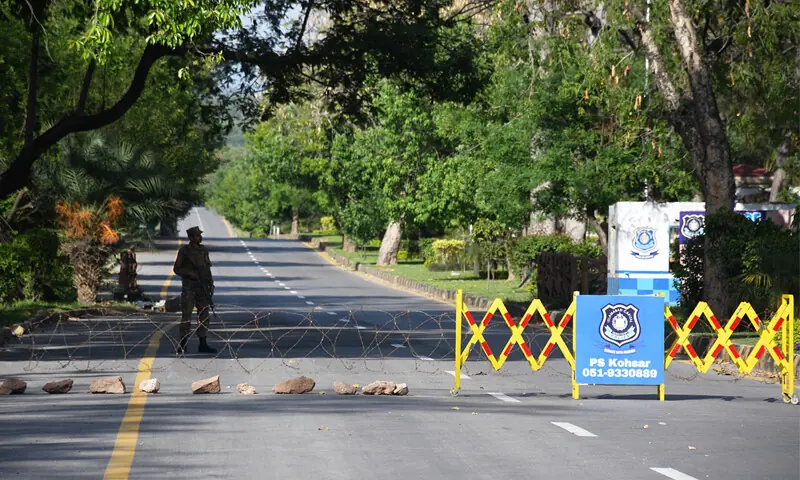


ISLAMABAD: The Red Zone remained sealed to the public on Wednesday, although several other routes in the capital, earlier closed for security reasons, were reopened, offering some relief to residents.
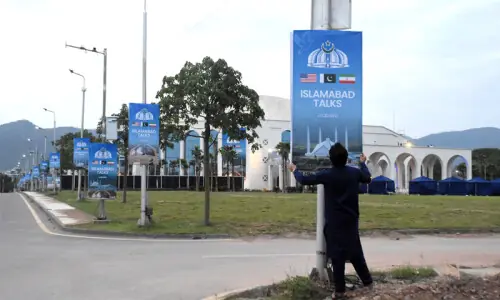
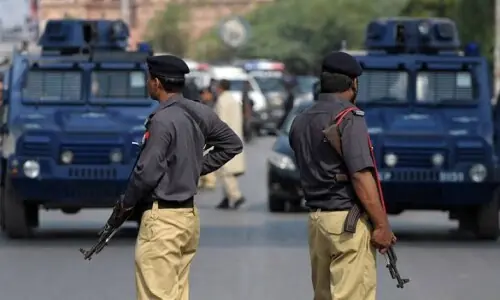
Security arrangements in and around the High Security Zone (HSZ), which includes the Red Zone, remained in place for advance teams of two countries amid the expected arrival of their VVIP delegations. However, a few roads leading to the HSZ were still closed.
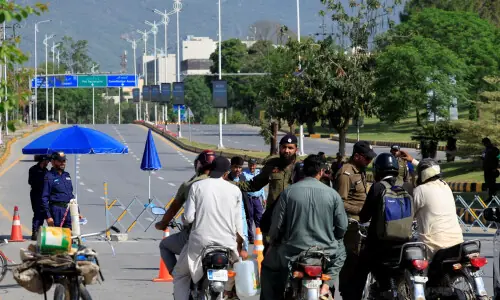
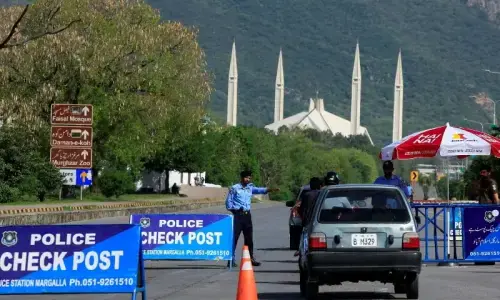
Army, Rangers and police personnel continued to perform security duties, including patrolling and manning pickets in and around the area. Public access to the Red Zone has been restricted since Sunday, limited to essential officials, while some staff continued working from home.
Earlier police deployment plans for other parts of the capital and key routes were not implemented, as official confirmation of the anticipated talks had yet to be received.
Partial reopening of routes eases pressure; citizens face difficulties due to closure of major thoroughfares
US Vice President JD Vance and his delegation were expected to arrive on Wednesday morning, but plans were abruptly altered by the White House, while Iran’s negotiating team also delayed its decision on participation.
In recent days, major roads were closed to facilitate the movement of foreign delegations and their advance teams.
Markets remained subdued, government employees worked remotely and educational institutions shifted to online classes as security forces enforced strict entry restrictions in the Red Zone.
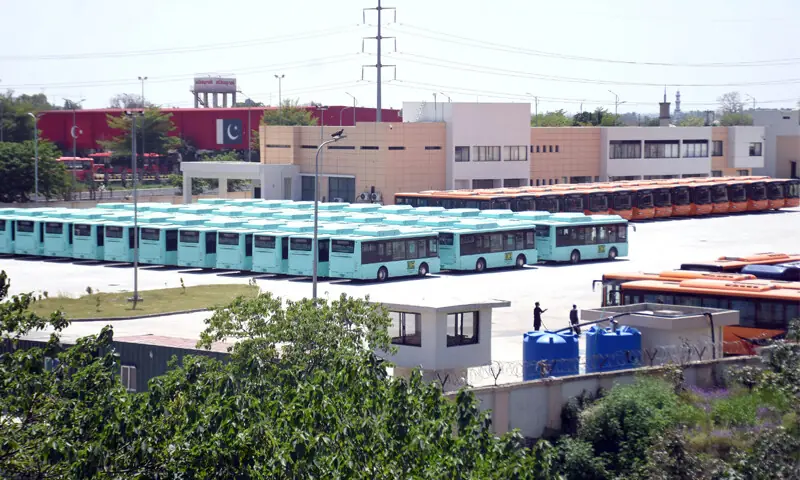
Traffic flow, particularly during morning hours, saw a significant decline, though most other areas of the capital remained largely normal.
Of the four bus terminals in the city, only Chungi No. 26 was operational on Tuesday, while goods transport to and from Islamabad remained suspended. Despite this, there was no reported shortage of fresh produce, poultry, or dairy items.
Officials, including police personnel and magistrates, were deployed at various entry points to inspect vehicles transporting food supplies. After verification, these vehicles were allowed to proceed on designated routes.
Residents in the outskirts of the capital reported difficulties due to road closures, forcing them to take longer routes, particularly near the High Security Zone.
They also noted increased fares by ride-hailing services due to frequent peak pricing.
Public sentiment appeared divided with some welcoming Pakistan’s visibility on the global stage, while others expressed concern over the disruptions to daily life.
Planned high-stakes US-Iran talks were postponed at the last minute overnight, but prolonged security measures have begun to take a toll on residents. Many expressed hope that successful negotiations would lead to the lifting of restrictions, as some areas of the capital remained under near-lockdown conditions.
Similar security arrangements had been enforced during the first round of US-Iran talks in Islamabad earlier this month, with some restrictions continuing thereafter.
That round concluded without an agreement, although US President Donald Trump on Wednesday extended a ceasefire as diplomatic efforts intensified to end the Middle East conflict that began following US and Israeli strikes on Iran on February 28.
While Islamabad residents are accustomed to disruptions due to security concerns, political protests and high-profile visits, the intensity and intermittent nature of recent restrictions have strained many.
Meanwhile, large-scale joint combing and search operations were carried out across multiple areas of Islamabad, including Golra, Sihala, Secretariat, Kirpa, Sambal, Industrial Area, Ramna and Khanna under the supervision of zonal SPs.
Female police officers also participated in the operations. A total of 546 individuals and 248 households were checked, along with 29 hotels, 326 motorcycles, and 123 vehicles.
Around 30 suspicious individuals, one vehicle, and 33 motorcycles were taken to police stations for further verification. Special checkpoints were established at entry and exit points of the city, while patrol units and special squads continued to monitor the capital.
Federal Constitutional Court
In view of the closure of the Red Zone and the anticipated difficulties for lawyers, litigants, and court officials, the Federal Constitutional Court has decided to suspend all judicial proceedings at its principal seat in Islamabad today (Thursday), says a press release.
Accordingly, no hearings will be conducted on the said date and the cause list shall stand cancelled, it said, adding that however, all officers and staff of the court will continue to perform their duties through remote working and have been directed not to leave their respective stations.
Furthermore, all four branch registries of the court will remain open to carry out judicial and administrative functions as usual.
Published in Dawn, April 23rd, 2026