0
0

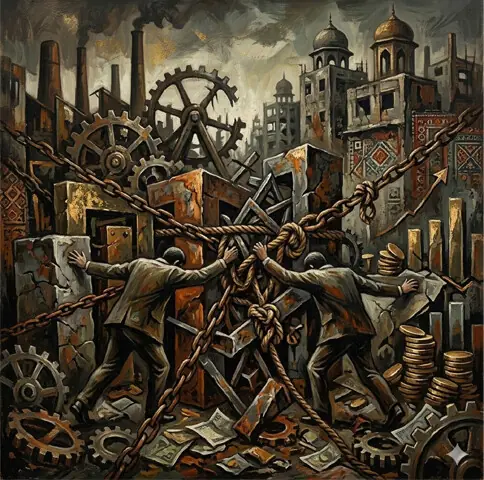
CROSS-BORDER trade in Pakistan is a complex and demanding process. Pros-pective traders must navigate a wide range of regulatory and procedural requirements, including obtaining a National Tax Number (NTN), Sales Tax Registration Number (STRN), registration with the Securities and Exchange Commission of Pakistan (SECP), access to Web-based One Customs (WeBOC) and Pakistan Single Window credentials, maintaining verified business premises, and securing membership with a chamber of commerce, among others. Even large corporations often depend on licensed customs agents to manage these processes.
Such extensive requirements effectively exclude and marginalise significant segments of society — including women, small and medium enterprises (SMEs), border communities, rural populations, start-ups and youths, who are unable to participate in international trade. This is reflected in the fact that only around 20,000 registered individuals and firms are currently engaged in formal trade.
Small business groups typically operate with limited cash flow and are unable to bear the high costs associated with formal trade and customs clearance.
As a result, they often remain confined to informal trade, low-volume transactions, or, in some cases, smuggling. These people generally lack technical expertise, have weak financial capacity, and possess limited information technology (IT) skills, all of which constrain their participation in formal trade channels.
Consequently, women who are engaged in sectors, such as textiles, pottery, weaving and handicrafts, particularly in rural and border areas, are unable to access cross-border markets. Similarly, rural communities are deprived of opportunities to export surplus agricultural produce and locally crafted goods in which they have traditional expertise.
Moreover, despite the global expansion of e-commerce and parcel-based trading, young entrepreneurs continue to face a lot of significant barriers, including courier delays, the absence of a de minimis threshold, and inadequate digital integ- ration with postal services.
It is, therefore, imperative for the federal government to prioritise targeted facili-tation measures that simplify entry and participation of the marginalised groups through an inclusive and equitable Customs and trade framework.
Increased Customs outreach, greater digital awareness, and the simplification of compliance requirements can signi-ficantly improve financial inclusion and ease of doing business. A streamlined framework based on simplified registration processes, reduced documentation, and digital-first platforms, such as Pakistan Single Window and WeBOC, can signi-ficantly expand participation.
Additionally, targeted measures, such as one-page Goods Declaration in local language, concession in duties and taxes, exemption from NTN/STRN, and the introduction of de minimis thresholds can unlock the potential of women, youths, rural entrepreneurs and all small-scale exporters.
Strengthening digital access, improving courier and postal services, and enabling simplified electronic payment systems will further support the formalisation of trade, particularly in the growing segment of e-commerce and parcel-based exports.
Such a broader participation of all the different marginalised groups into the mainstream economic activities is essential not only for improving livelihoods and national human development indicators, but also for enhancing the image of the country in the eyes of the world at large.
Shahid Ali Abbasi
Karachi
Published in Dawn, April 21st, 2026