0
0

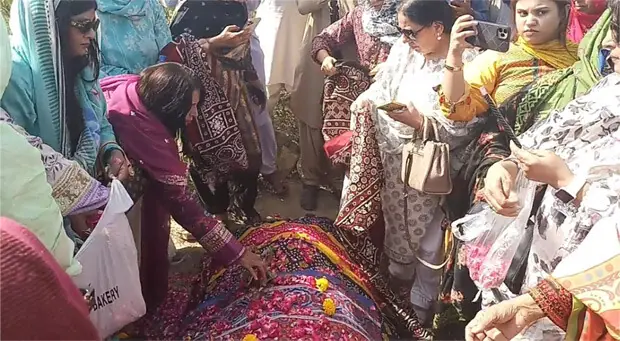
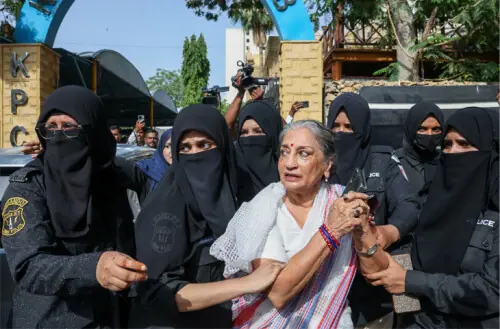
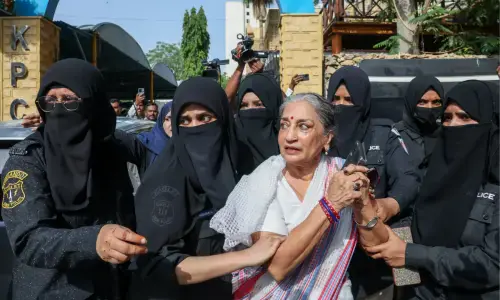
HYDERABAD: The Women’s Action Forum (WAF) staged a “resistance sit-in” at the grave of Khalida Chandio, a woman brutally murdered in front of a crowd after being accused of an extramarital affair.
The protest camp in Tando Masti, Khairpur district, followed a province-wide call for action from the WAF. A large assembly of women, men and human rights defenders gathered to condemn the surge in “honour killings” and the entrenched social injustices facing women in Sindh.
In a deeply political act of defiance, the activists offered funeral prayers at Ms Chandio’s grave — a religious obligation she was denied at the time of her burial. Participants draped the site in traditional ajraks, chaddars, and flowers, transforming the burial ground into a space of remembrance and resistance.
Ms Chandio, a married woman whose husband had been missing for two years, was labelled “kari” (an outcast) after eloping with another man. Though her family located her within hours, she was reportedly shot dead by her maternal uncle in full view of local villagers.
Following the murder, Ms Chandio was subjected to extreme dehumanisation. She was denied ritual washing (ghusl), a shroud (kafan) and formal prayers — and was buried hastily.
The sit-in drew leaders and activists from across the region, including Karachi, Hyderabad and Larkana. Dr Arfana Mallah, who led the collective prayers, expressed grave concern over the “frightening social silence” surrounding such violence. She warned that the normalisation of these killings has diminished public sensitivity, allowing perpetrators to act with impunity.
Speaker Amar Sindhu denounced the “patriarchal mindset” that treats women as property. She argued that these murders are not isolated incidents but are sustained by a “nexus of feudal structures, tribal authority, and weak law enforcement.”
Demands for accountability
The WAF has called for an impartial investigation into the killing and legal action against negligent police officials. Activists pointed to recent cases in Larkana where bodies were allegedly handed over without post-mortem examinations, suggesting state complicity or gross procedural violations.
The forum’s formal demands to the provincial government include the establishment of a high-level provincial commission, including Sindh High Court judges, to investigate the root causes of honour-based violence; formation of a dedicated task force to implement a zero-tolerance policy and fast-tracking of cases through special courts to ensure exemplary punishment for perpetrators.
The demonstration concluded with participants pledging to continue their struggle until women in Sindh are guaranteed the fundamental rights to autonomy, choice, and life.
Notable attendees included former senator Krishna Kohli, former MPA Farheen Mughal and prominent writers and activists from across the province.
Published in Dawn, April 21st, 2026