0
0

ESTABLISHING political, religious, literary and social organisations was quite a rage in the subcontinent in the late 19th and early 20th centuries. Some cities, such as Lahore, were especially known for forming political committees, religious organisations, social groups and literary associations, though many of them would soon become inactive and forgotten, hardly leaving any trace behind.
But some organisations established with sincerity and a desire to play a positive role in the society somehow left their mark. Although they may not exist today and very little may be known about these organisations, when their relics are dug up one realises the scale and intensity of their work. One such organisation was the Intercollegiate Muslim Brotherhood (ICMB). Scholar Muhammad Hamza Farooqi in his book Hayaat-i-Iqbal Ke Chand Makhfi Goshe, or the hidden aspects of Iqbal’s life, has provided the readers with some rare information on this organisation.
On the basis of pieces of information extracted from the 1936 and 1937 issues of Inqilaab, the celebrated newspaper published from Lahore in those days, Farooqi says the orgnisation was established in Lahore by some students on Nov 14, 1931. Its aim was to create awareness about teachings of Islam among students and to instil Islamic values in the youth.
The students were lucky as some dignitaries, including Allam Muhammad Iqbal, Allama Abdullah Yousufali, Mian Basheer Ahmed and Dr Khalifa Shujauddin agreed to patronise the organisation. The organization requested Anjuman-i-Islamia Punjab to allow them to establish a library and reading room in a portion on the premises of Lahore’s Shah Chiraagh Mosque since that portion was not part of the mosque. The main purpose of the library was to collect publications on Islam in every language. With recommendations from Allama Iqbal and other dignitaries, the Anjuman acceded to this request and a library was established. Allama Iqbal and some other writers and intellectuals donated books and magazines to the library. Some newspapers and magazines, such as Zamindaar, Inqilaab, Humaiyun and Ehsaan, agreed to send complimentary copies of their publications to the library.
Though no remains of the library are found today, writes Prof Dr Tehseen Firaqi, a remarkable feat achieved by the organization was to have arranged at a grand level the first-ever Iqbal Day during Iqbal’s lifetime. It was organised on Jan 9, 1938, in the historic Maynard Hall (now Sherani Hall), at Punjab University Oriental College’s old campus. The papers read on that Iqbal Day, both in Urdu and English, were published in one volume by Lahore’s Qaumi Kutub Khana in 1938.
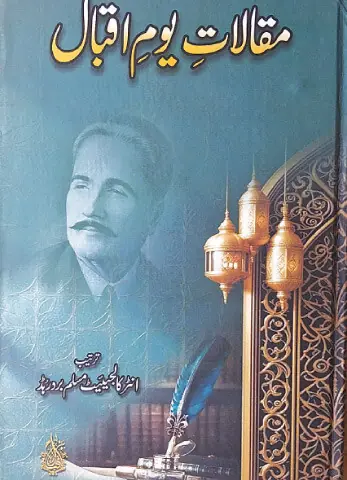
Now Lahore’s Bazm-i-Iqbal has published these rare papers in two volumes, one is titled Aspects of Iqbal and proffers five pieces in English with an introduction by Dr M. D. Taseer. The papers are: ‘Iqbal’s Doctrine of Self’ by F. K. Khan Durrani, ‘Iqbal’s Conception of Good Character’ by Khwaja Ghulam-us-Syedain, ‘Man in Iqbal’s Poetry’ by Sardar Gurbachan Singh, ‘The Metaphysical Element in Iqbal’s Poetry’ by Shaikh Muneeruddin and ‘Iqbal and Nietzche’ by S. M. Oomar Farouk.
The other volume, presenting Urdu writings and titled Maqalaat-i-Yaum-i-Iqbal has six papers — and a poem by Hafeez Jalandhari — with an introduction by Mian Muhammad Shafi’. The papers included are: ‘Dr Iqbal Ka ‘Ilm-i-Kalaam’ by Syed Sulaiman Nadvi and Abdus Salaam Nadvi, ‘Iqbal Ki Ta’leem’ by Syed Zafarul Hasan, ‘Payaam-i-Iqbal Aur Quran-i-Kareem’ by Ghulam Ahmed Pervez, ‘Shaer-i-Rabbani’ by Raja Hasan Akhter and ‘Iqbal Aur Funoon-i-Lateefa’ by Syed Abid Ali Abid.
Tehseen Firaqi, the director, in his intro has rightly pointed out that the significance of these papers can be gauged by the fact that later on full-length books were written on the basis of debates initiated in some of these papers, especially on the topic of ‘Iqbal and Quran’ and ‘Iqbal’s Ilm-i-Kalaam’ (Iqbal’s theological concepts).
Some tend to think that the creation of the ICMB at Lahore was in line with the wider trend of establishing Muslim students’ organisations on intellectual basis with political leanings and it had some connections with Egypt’s Ikhwan-ul-Muslimeen, or Muslim Brotherhood, a social-turned-political movement organised by Hasan al-Banna.
But the fact is the ICMB was an intellectual organisation and had no direct connection with Egypt’s Ikhwaan. Though Hamza Farooqi in his book has given an excerpt from Inqilaab’s Jan 27, 1937 issue that says the ICMB arranged a reception in honour of an Egyptian delegation, it has no reference to Ikhwaan. The news item also says that the purpose of the meeting was to discuss the inclusion of Urdu in Al-Azhar University’s curricula and the delegation was presented with Iqbal’s books. Unlike Ikhwaan, the ICMB was not a political outfit.
Published in Dawn, April 20th, 2026