• Broadcaster claims secret filming revealed ‘repeated and serious breaches of basic infection control’
• Punjab health dept says it informed BBC about measures taken to control spread of HIV, but found no mention in the report
ISLAMABAD: A documentary made by the BBC World Service, Stolen lives: Who gave our children HIV? alleges serious malpractices at the children’s ward of a government hospital in Punjab.
Last year, the Tehsil Headquarters (THQ) Hospital in Taunsa was linked to an outbreak of HIV among children. The authorities promised a crackdown, but months later, secret filming by BBC Eye Investigations found that children’s lives were still being put at risk.
An outbreak of HIV among children early last year forced health officials to investigate the hospital in Taunsa. Doctors working at private clinics in the town noticed many of the HIV-positive children had been treated at the THQ Hospital and suspected that unsafe injection practices were to blame.
Parents recounted stories of blood-contaminated syringes being reused on their children. Acknowledging that 106 children had been infected, Punjab’s health authorities promised a “massive crackdown” and suspended the Medical Superintendent of THQ in March last year.
But months after the crackdown, an insider working in the hospital said nothing had changed. Acting on evidence provided, the BBC went undercover inside the children’s ward late last year.
Filmed covertly over several weeks, the BBC said its investigation “revealed repeated and serious breaches of basic infection control”.
A footage purports to show nurses injecting patients through their clothes, handing over dirty syringes for reuse, and unqualified volunteers injecting child after child from a blood-contaminated vial.
The BBC claimed “undercover filming also captured wider problems: staff handling medical waste with bare hands and leaving syringes and needles exposed”.
The BBC documentary said its investigation found that at least 331 children in Taunsa tested positive for HIV between Nov 2024 and October last year.
Dr Altaf Ahmed, one of the country’s leading experts on infectious diseases, reviewed the undercover footage and confirmed that the “malpractice recorded at THQ Hospital” carries a high risk of infecting children with HIV.
The BBC showed the undercover footage to the new Medical Superintendent of the hospital, Dr Qasim Buzdar.
Dr Buzdar said the video must have been recorded before his tenure. When informed that the “malpractice” took place on his watch, Dr Buzdar claimed it “might have been staged”.
“Infection prevention controls are followed at THQ Hospital Taunsa,” he said.
Helpless families
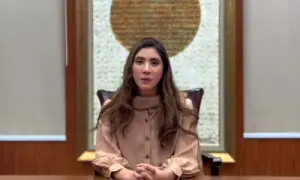
Ghazal Abbasi, who fronts the documentary, spoke to families living with the misery of a life-threatening disease.
“Some have already lost children. Others are watching their children weaken — losing weight, suffering repeated illness, and relying on daily medication to survive.
“We hear the story of eight-year-old Mohammed Amin who was diagnosed in late 2025 and died before treatment could take effect,” Ghazal Abbasi said.
Weeks later, Mohammed Amin’s sister, Asma, 10, also tested positive for HIV. Both children had been treated with injections at the hospital in Taunsa.
Medication is keeping Asma alive. But there is no remedy for the stigma that has blighted her childhood. Her uncle, Qari Abid, said the family’s neighbours know about Asma’s illness and do not let their children play with her. “She asks her mother, ‘What is wrong with me? Other children don’t play with me; they won’t even walk with me’.”
Health Department’s rejoinder
The Punjab government, in a rejoinder to the BBC report, said on Tuesday that it had taken corrective measures after 11 patients brought to the District Headquarters Hospital, Dera Ghazi Khan, from Taunsa in March 2025 were diagnosed with AIDS.
The Health Department set up a joint mission on March 25 with the assistance of UNAIDS, UNICEF and WHO, a press release said.
Door-to-door screening of a population of 50,000 identified 334 AIDS patients, 331 of them under 12 years of age. A permanent AIDS screening and treatment centre was established at THQ Hospital Taunsa in March 2025. It has screened 5,000 people so far for HIV, according to the Health Department.
“Details about measures taken to control the further spread of HIV were provided to the international broadcaster, but were not included in the report.
“This is against the principles of responsible journalism. Such actions create unnecessary fear, panic, and suspicion among the public, which is highly condemnable,” the department added.
Published in Dawn, April 15th, 2026