US, Iran explore path forward as talks go into third round


 0
0

• Dialogue continues despite differences on key issues
• Experts exchange written proposals in technical talks
• Strait of Hormuz dispute emerges as central sticking point
• Iran seeks full control; US insists on open navigation
• Iran presses for reparations, ceasefire in Lebanon
• Washington seeks nuclear curbs, open to phased sanctions relief
• Trump says it makes ‘no difference’ to him if deal isn’t reached
ISLAMABAD: Direct Iran-United States dialogue mediated by Pakistan appeared to be at an impasse as talks entered a third round stretching into Sunday, with sharp differences persisting over the Strait of Hormuz, Lebanon ceasefire terms and sanctions relief, even as both sides continued engagement at the technical level.
The highest-level, face-to-face negotiations between the US and Iran since 1979 followed weeks of Pakistani mediation that resulted in a fragile two-week ceasefire, leading to a pause in the active phase of the conflict.
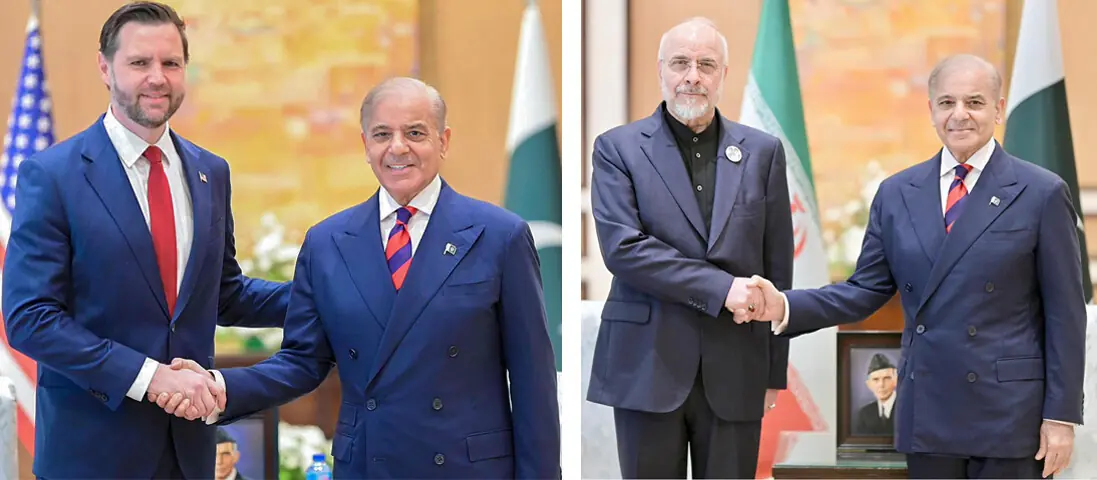
Delegations led by US Vice President J.D. Vance and Iranian Parliament Speaker Mohammad Bagher Ghalibaf, accompanied by Foreign Minister Abbas Araghchi, met under Pakistan’s facilitation.
After the opening session, specialised committees on economic, political and legal issues, comprising experts from both sides, began deliberations. At the end of the second session, the experts exchanged written notes on the issues under discussion.
Officials familiar with the discussions described an atmosphere of cautious engagement but said positions remained far apart.
A Western source said the discussions were stalemated over control of the Strait of Hormuz, as Iran sought complete control over the vital chokepoint carrying about one-fifth of global oil and LNG shipments, whereas the US wanted it to remain open without Iranian interference.
The US camp largely remained silent on the specifics of the discussions. By the time this report was filed, Mr Vance had been inside the hotel for 13 hours and the only word from US officials was that talks were in progress.
Meanwhile, an Iranian source, while confirming the disagreement in a background interaction, said: “The US demands on the Strait of Hormuz and several other issues are too ambitious.” He said Washington appeared to be seeking at the table what it had failed to secure during weeks of conflict and pressure.
“It seems that what the US has not achieved in 40 days of war … it now expects to easily achieve in negotiations,” he said, noting that Tehran viewed such expectations as unrealistic.
Echoing President Masoud Pezeshkian, who during the talks posted on X that the delegation in Islamabad was a “staunch guardian of Iran’s interests with all its might”, the Iranian source said the team was determined to “preserve and protect what the field has achieved with the courage of the armed forces and the fierce protection of the Strait of Hormuz”.
The Iranian side entered the negotiations with reservations over what it described as “unfulfilled preconditions for talks”, but the meeting was still widely seen as a major breakthrough.
“Iran believes that the ceasefire in Lebanon has not yet been fully achieved and the US is obliged to compel Israel to implement this commitment. The Iranian delegation is pursuing this issue seriously … and despite the experience of America’s breach of promises in previous negotiations, we have decided to take part in talks with the mediation of Pakistan,” the Iranian source said at the start of the direct talks.
The Iranian side claimed that the US had agreed to release $6 billion in frozen assets and said the matter would be discussed at the technical level. The claim was denied by the White House.
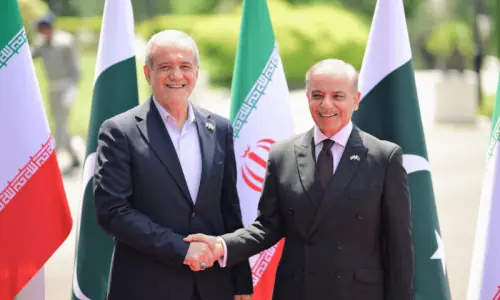
The negotiations were preceded by separate meetings of both delegations with Prime Minister Shehbaz Sharif, who reiterated Pakistan’s commitment to facilitating dialogue.
In official statements, he expressed hope that the process would “serve as a stepping stone towards durable peace” and affirmed Islamabad’s resolve to “continue playing its role as a mediator”.
Despite the forward movement in format, substantive gaps remained pronounced. Iran has placed four core demands at the centre of its negotiating position: full control over the Strait of Hormuz, comprehensive sanctions relief, including the release of frozen assets, war reparations, and a durable ceasefire across all fronts, particularly in Lebanon.
The Lebanon question continued to cast a shadow over the talks. Iranian officials said they were maintaining continuous contact with their ambassador in Beirut and with allied groups to verify the cessation of hostilities, warning that any continued Israeli action would undermine the process.
Israeli strikes, though reduced in Beirut and its southern suburbs, have continued in parts of southern Lebanon, keeping the issue alive as a potential deal-breaker. Iranian negotiators have rejected any attempt to separate Lebanon from the ceasefire framework.
US officials, on their part, focused on ensuring unrestricted navigation through the Strait of Hormuz, curbs on Iran’s nuclear programme and a phased approach to sanctions relief.
Mistrust remained a defining feature in the meeting room. Iranian officials repeatedly pointed to past US actions and alleged ceasefire violations as reasons for scepticism, while US representatives maintained pressure for concrete commitments from Tehran.
The continuation of talks into a third round reflected a shared interest in avoiding immediate collapse, even though the process remained fragile. A short extension of the current round or an additional round was under consideration, though no decision had been announced.
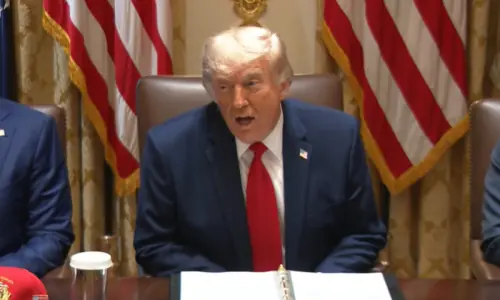
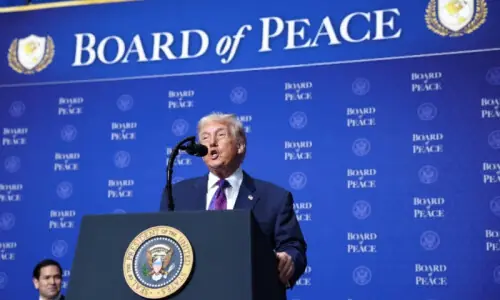
Meanwhile, US President Donald Trump said he was not bothered about the outcome of US-Iran talks in Pakistan, insisting the United States had come out ahead from the war, AFP reported.
“Whether we make a deal or not makes no difference to me. The reason is because we’ve won,” Trump told reporters.
“We’re in very deep negotiations with Iran. We win regardless. We’ve defeated them militarily,” Trump said.
Published in Dawn, April 12th, 2026