World Bank cuts Middle East growth forecast after energy sector turmoil
DUBAI: The World Bank has slashed its 2026 growth forecast for Middle East economies as a consequence of the US-Israel war against Iran, and warned of pervasive risks in a report published on Wednesday.
President Donald Trump late on Tuesday announced a two-week ceasefire in the conflict. Iran’s foreign minister said Tehran would stop counter-attacks and provide safe passage through the waterway.
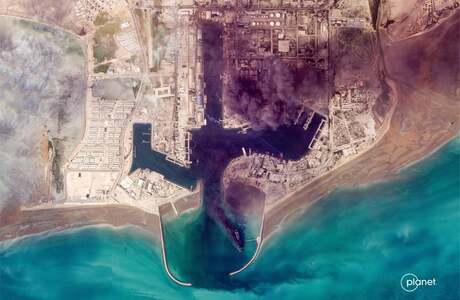
The closure of the strategic strait, and destruction of energy and public infrastructure, had disrupted markets, increased financial volatility, and weakened the 2026 growth outlook, the World Bank Group said in its Economic Update for the Middle East, North Africa, Afghanistan and Pakistan.
“Risks are firmly tilted to the downside. Uncertainty is pervasive, and the economic outlook could shift significantly if the conflict intensifies or protracts,” the report said.
Overall GDP growth in the region, excluding Iran, is expected to slow from an estimated four per cent in 2025 to 1.8pc for 2026, which is 2.4 percentage points below the Group’s January projections.
Growth in the oil and gas producers of the Gulf Cooperation Council and Iraq, among the most heavily affected by the impact of the conflict, is expected to slow even more sharply.
The World Bank downgraded its forecast for the GCC, which includes Saudi Arabia, the world’s top oil exporter, to 1.3pc for 2026, down 3.1 percentage points from its January projection, and driven mainly by lower projected hydrocarbon revenues due to disruptions caused by the conflict.
Within the grouping, growth in Kuwait and Qatar - which are less economically diversified, and where energy related disruptions are more severe - growth is projected to contract this year by 6.4pc and 5.7pc, respectively.
The current crisis is a stark reminder of the work ahead for the region: not only to weather shocks, but to rebuild more resilient economies with stronger macroeconomic fundamentals, innovate and improve governance, invest in infrastructure, and boost employment-creating sectors, Ousmane Dione, the World Bank’s vice president for the region, said in a statement.
Due to “exceptionally high uncertainty”, the World Bank said it was not publishing forecasts beyond the 2025/26 fiscal year for Iran.
It said real GDP was estimated to contract by 2.7pc in the 2025/26 fiscal year to March 20, 2026.
Published in Dawn, April 9th, 2026