‘Tireless and courageous diplomacy’: World reacts to Islamabad-brokered US-Iran ceasefire
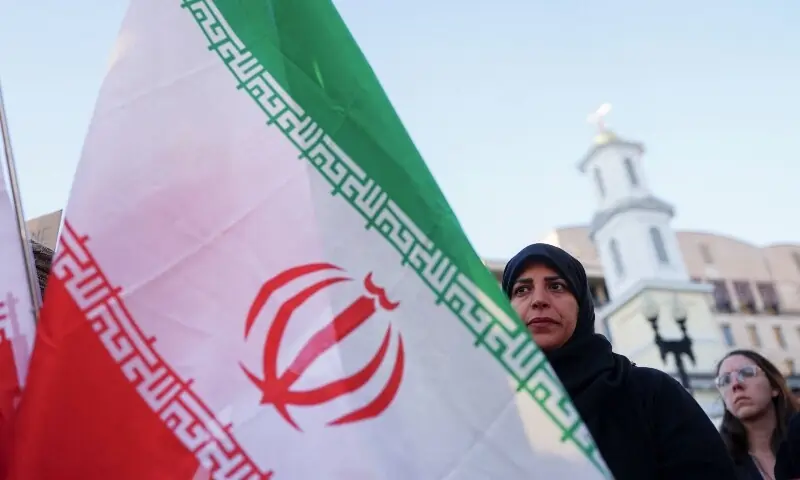
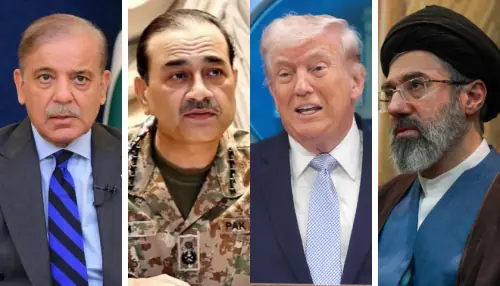
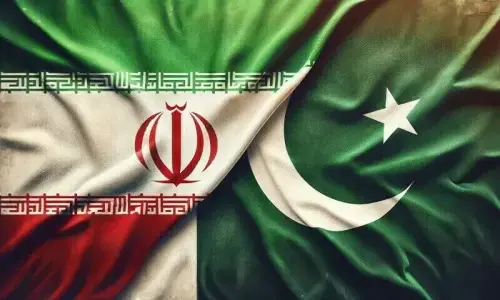
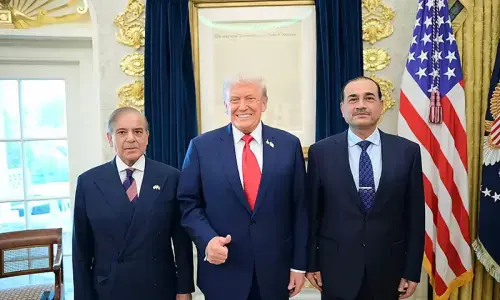
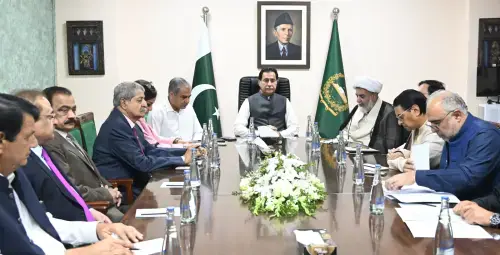
In the early hours of Wednesday, Prime Minister Shehbaz Sharif announced that the US and Iran had agreed to an immediate ceasefire, bringing a temporary pause to the escalating conflict in the Middle East.
In his X post, the premier, who helped mediate the ceasefire, also invited delegations from both countries to Islamabad on April 10 to “hold further negotiations towards a conclusive agreement to settle all disputes”.
Amid the hostilities, Pakistan has emerged as an active diplomatic player. In the past few weeks, Islamabad has hosted consultations with key regional countries, maintained back-channel contacts between Tehran and Washington, and worked closely with Beijing on a framework for de-escalation that includes calls for a ceasefire, dialogue, and protection of critical infrastructure.
Here is how global leaders reacted to the development.
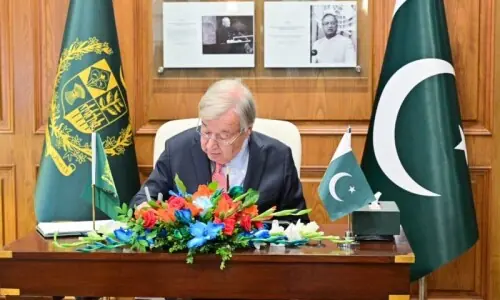
UN Secretary-General Antonio Guterres
UN Secretary-General Antonio Guterres welcomed the US-Iran two-week ceasefire, his spokesperson said, while urging all parties to work toward long-term peace in the Middle East.
“The Secretary-General welcomes the announcement of a two-week ceasefire by the United States and Iran,” his spokesperson Stephane Dujarric said in a statement.
He added that the UN chief “calls on all the parties to the current conflict in the Middle East to comply with their obligations under international law and to abide by the terms of the ceasefire in order to pave the way toward a lasting and comprehensive peace in the region.”
Saudi Arabia
Saudi Arabia’s Foreign Ministry welcomed the ceasefire, expressing hope that it will lead to a “comprehensive sustainable pacification”.
As per the statement, Saudi Arabia called for an end to attacks on countries in the Gulf and stressed that the Strait of Hormuz should be opened.
The foreign ministry also lauded efforts undertaken by PM Shehbaz and Chief of Defence Forces and Chief of Army Staff Field Marshal Asim Munir in securing the two-week truce.
Egypt
The Egyptian Ministry of Foreign Affairs said the ceasefire represented “a very important opportunity that must be seized to make room for negotiations, diplomacy and constructive dialogue”, Al Jazeera reported.
The ministry said in a statement on X that the truce must be built upon with a full commitment to “stopping military operations and respecting freedom of international navigation”.
As per the statement, Egypt said that it will continue its efforts with Pakistan and Turkiye “to promote security and stability in the region”.
It added that the talks between the US and Iran “must take into account the legitimate security concerns” of the Gulf nations.
Turkiye
Turkiye, welcoming the ceasefire, called on all sides to respect the truce.
“We insist on the fact that the temporary ceasefire be fully implemented on the ground and hope that all sides abide by the agreement,” the foreign ministry said in a statement.
Qatar
Welcoming the deal, Doha called on Tehran to halt any hostile acts.
“Qatar expresses its welcoming of the announcement of the ceasefire… considering it an initial step toward de-escalation,” the Gulf state’s foreign ministry said in a statement.
“The ministry affirms the importance of full adherence to the ceasefire… emphasising the necessity for the Islamic Republic of Iran to take the initiative to immediately cease all hostile acts and practices that undermine regional stability,” it added.
Oman
Oman’s foreign ministry, in a statement, welcomed the ceasefire, appreciating the “efforts” extended by Pakistan in bringing about the two-week ceasefire.
“The Ministry of Foreign Affairs expresses the Sultanate of Oman’s welcome of the announcement of the ceasefire between the Islamic Republic of Iran and the United States of America, and appreciates the efforts exerted by the Islamic Republic of Pakistan in this regard and all parties calling for an end to the war,” the statement said.
It added that Oman “affirms the importance of intensifying efforts now to find solutions capable of ending the crisis at its roots”.
Kuwait
Welcoming the ceasefire, Kuwait’s foreign ministry appreciated “the efforts exerted to reach this announcement, and primarily the role played by the Islamic Republic of Pakistan in sparing the region further escalation”.
It underscored the importance of full adherence to the ceasefire to create the conditions for dialogue and stressed the necessity for Iran “and its proxies, including factions, militias, and armed groups loyal to it, to take the initiative to immediately cease all hostile acts and practices that undermine stability”.
It urged them “to respect the sovereignty of states, thereby ensuring that such violations are not repeated” and also called for ensuring freedom of navigation in the Strait of Hormuz.
Iraq
Iraq’s foreign ministry said it welcomed the two-week ceasefire between the US and Iran, calling for “serious and sustainable dialogue” between the nations.
The ministry “calls for building upon this positive step by launching serious and sustainable dialogue tracks that address the root causes of the disputes and strengthen mutual trust,” it posted on social media.
China
China welcomed the ceasefire as well, with its foreign ministry spokesperson Mao Ning stating, “China welcomes relevant parties announcing the reaching of a ceasefire agreement”.
Addressing a new conference, she added that China would continue to work towards restoring peace in the Middle East.
European Union
The US-Iran ceasefire deal “is a step back from the brink after weeks of escalation”, European Union’s top diplomat Kaja Kallas wrote in a post on X.
“It creates a much-needed chance to tone down threats, stop missiles, restart shipping, and create space for diplomacy towards a lasting agreement,” she added.
Kallas said she had spoken to Dar as well, adding that the door to mediation must remain open as the war’s underlying causes remain unresolved. Kallas said she would be discussing the conflict on her trip to Saudi Arabia today.
European Commission President Ursula von der Leyen also welcomed the two-week ceasefire, saying it would ease tensions.
“I welcome the two-week ceasefire the US and Iran agreed last night. It brings much-needed de-escalation”, she said, stressing it was crucial negotiations continue for an enduring solution.
Germany
German Foreign Minister Johann Wadephul welcomed the two-week ceasefire, thanking “especially Pakistan” for its role.
“This must be the decisive first step on the path toward lasting pacification, for the consequences of continuing the war would be incalculable,” he said in a post on X.
“Germany will support this path of diplomacy to the best of its ability,” he added.
Separately, Germany’s Chancellor Friedrich Merz also urged a definitive end to the conflict.
The goal now is “to negotiate a durable end to the war in the next days,” he said in a statement. “This can only be achieved by diplomacy.”
He said that Germany would contribute “to guarantee freedom of navigation in the Strait of Hormuz”.
France
French President Emmanuel Macron said he welcomed the ceasefire between Iran and the US at the start of his meeting on defence with advisers and members of his cabinet.
However, he noted that the situation in Lebanon remained critical and called for Lebanon to be included in the deal.
United Kingdom
UK Prime Minister Keir Starmer, welcoming the development, said the ceasefire will bring “a moment of relief” to the region and beyond.
In a post on X, Starmer said, “I welcome the ceasefire agreement reached overnight, which will bring a moment of relief to the region and the world”.
“Together with our partners we must do all we can to support and sustain this ceasefire, turn it into a lasting agreement and re-open the Strait of Hormuz,” he added.
Separately, British High Commissioner to Pakistan Jane Marriott, taking to X, applauded Pakistan’s role in the mediation efforts.
In a post on X, she said, “Thank you, Pakistan, for the quiet, effective, diplomatic role you have played in bringing about this vital ceasefire”.
Spain
Spain’s Prime Minister Pedro Sanchez stressed the need for “diplomacy, international legality, and peace” in welcoming the ceasefire.
In a post on X, he maintained that while ceasefires were “always good news [..] “this momentary relief cannot make us forget the chaos, the destruction, and the lives lost.
“The government of Spain will not applaud those who set the world on fire just because they show up with a bucket,” he added.
He stressed the need for “diplomacy, international legality, and peace”.
Portugal
The Portuguese government welcomed the ceasefire agreement between the United States and Iran and the reopening of the Strait of Hormuz. Portugal expressed its appreciation for Pakistan’s mediation role, as well as the efforts of all partners involved in the negotiations.
Calling it a “decisive first step toward a lasting and sustainable diplomatic solution,” Portugal reiterated its full support for the diplomatic process. The government said it had underlined this commitment during contacts over the past two days with the foreign ministers of Pakistan and Egypt.
Malaysian PM Anwar Ibrahim
Malaysian Prime Minister Anwar Ibrahim also welcomed the ceasefire and lauded Pakistan for its “tireless and courageous diplomacy”.
In a post on X, the prime minister said, Iran’s 10-point proposal to end the war needed to be “translated into a comprehensive peace deal, not just for Iran, but also for Iraq, Lebanon and Yemen”.
He reiterated his support for Pakistan’s diplomatic efforts, appreciating its “willingness to speak to all sides, without fear or favour”.
Ibrahim added that Pakistan’s efforts reflected “the highest traditions of Muslim solidarity and international responsibility”.
Ukraine
Ukrainian President Volodymyr Zelenskiy, welcoming the US-Iran ceasefire, said Kyiv was ready to “respond in kind” if Moscow ceased strikes.
“Ukraine has always called for a ceasefire in the war waged by Russia here in Europe against our state and our people, and we support the ceasefire in the Middle East and the Gulf that paves the way for diplomatic efforts,” he wrote on X.
New Zealand
Welcoming the ceasefire, New Zealand Foreign Minister Winston Peters expressed appreciation to Pakistan, Türkiye and Egypt for helping reach a resolution.
In a post on X, Peters said, “New Zealand welcomes the announcements by the United States and Iran over the past few hours — as we welcome all efforts to bring an end to this conflict”.
“While this is encouraging news, there remains significant important work to be done in the coming days to secure a lasting ceasefire,” he added.
“We are grateful for the work of Pakistan, and others such as Turkiye and Egypt, to seek to find a solution to the crisis,” he said.
Australia
Australian Prime Minister Anthony Albanese welcomed the ceasefire as “positive”.
Speaking to Sky News Australia, Albanese welcomed news that the United States and Iran had agreed to a two-week ceasefire, barely an hour before Trump’s deadline expired.
“What we have called for is a de-escalation, and that is what has occurred, and that’s a good thing,” the Australian leader said.
“This is positive news. We’ve been calling for a de-escalation for some time. We want to see a resolution of the conflict.”
Australian High Commissioner Timothy Kane also congratulated Pakistan on its “effective diplomacy” in the US-Iran ceasefire.
In a post on X, the Australian envoy said, “Congratulations, Pakistan, on your effective diplomacy and efforts to bring peace! Australia wants to see the ceasefire upheld and a resolution to the conflict”.
Kazakhstan
Kazakhstan President Kassym-Jomart Tokayev lauded Pakistan’s diplomatic efforts.
In a post on X, the president’s office said that the ceasefire was “reached with the mediation of Prime Minister of Pakistan Shehbaz Sharif and Chief of Army Staff of Pakistan, Field Marshal Asim Munir”.
“This agreement became possible due to the goodwill and wisdom of the President of the United States, Donald Trump and the senior leadership of Iran, as well as all countries involved in the military conflict,” he added.
His office said that the president “expressed hope that the truce agreement will be long-lasting and will contribute to the development of global trade and the economic prosperity of all nations”.