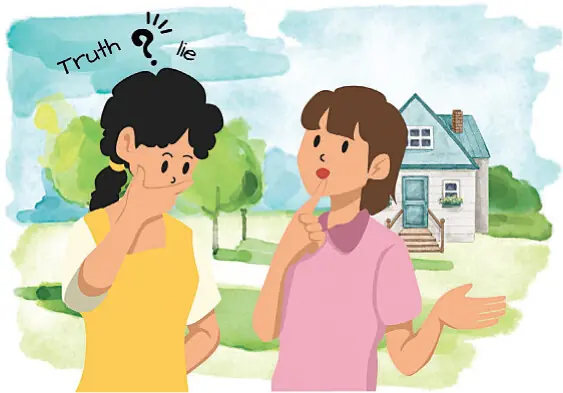
You lied today. Probably more than once, and you didn’t even notice.
This is a harsh reality. We lie more than we think. People will tell you they’re honest, but research suggests the average person lies once or twice a day. Much of it isn’t even intentional; it just slips out.
And then there are the lies we consciously choose to tell — sometimes to keep the peace, sometimes to avoid conflict and sometimes to hide a truth that might hurt someone for no reason.
The lies we don’t even notice
This is called unconscious lying. You meet a friend and they ask, “How are you?”
From unconscious habits to intentional choices, lying exists in many forms. These small, everyday lies influence our lives more than we realise
Before you even think, out of habit, you reply, “Good, thanks.”
Maybe you slept four hours, your back hurts and you have a test tomorrow, but you still say “good”. You don’t even think about it. It just comes out.
Psychologists call this ‘social lubrication’. These small lies keep daily interactions running smoothly. Because if we told the full truth every time, things could get uncomfortable.
Imagine replying, “I’m exhausted, I don’t want to be here, I just want to go home.” It may be true, but not every conversation needs that level of honesty.
White lies feel like kindness
A white lie is a harmless lie told to avoid hurting someone’s feelings. For example, your friend shows you a haircut they love, but you think it looks terrible. What do you say? Unless you’re blunt, you’ll probably respond, “Nice…” without hesitation.
Similarly, saying “The dinner was amazing” when it wasn’t, or “I love this gift” when you know you’ll never use it — these feel normal. They don’t feel like lies, but technically, they are.
The lies we tell ourselves
Also called self-deception, this is perhaps the most common form of lying. Everyone around you may see it before you do. Your friends know you’re struggling with a subject. Your family knows you’re avoiding something. But you keep convincing yourself that everything is fine.
Sometimes, it’s not about hiding the truth from others — you’re simply not ready to face it yourself.
We live among people, emotions, expectations and consequences. Over time, we have become comfortable with lying within these boundaries. But that doesn’t make it right. Repeated lies, especially those that hurt others, can damage both your personality and your relationships.
At the same time, small, harmless compliments can brighten someone’s day, even if they aren’t entirely true.
Remember, trust, once broken, is difficult to rebuild. And as you grow older, you realise that a hard truth is almost always better than a comfortable lie.
Published in Dawn, Young World, April 4th, 2026