‘Feels like a dream’: GB’s blossom season brings calm in a troubled world
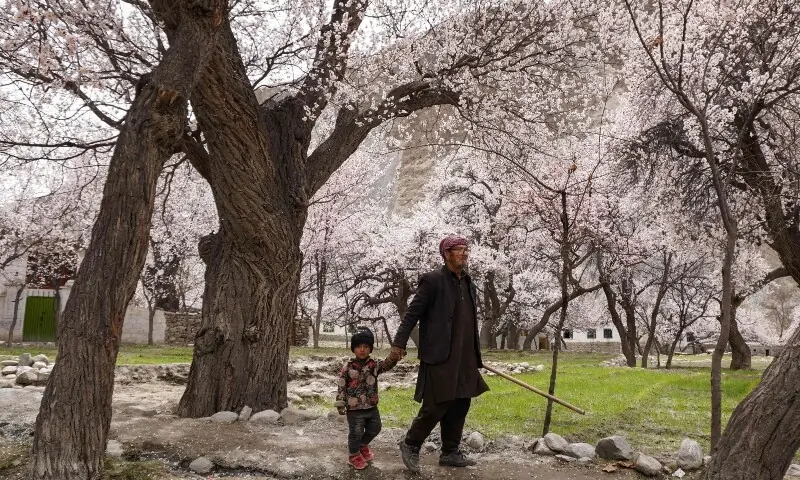
The harsh days of winter are over in Gilgit-Baltistan and while snow still tops the towering peaks that dominate the landscape, spring has arrived in the foothills.
But this year, visitors who have come to witness the region’s cherry and apricot blossoms see it as the perfect tonic to the war in the Middle East and its knock-on effects.
“There’s war going on all over the world right now. It’s petrol crisis, this and that, everything has become more expensive, everyone is in a depression,” Hatib, 27, from Karachi, told AFP.
“But to get out of depression, you need to step outside, go out somewhere for a bit, see places, explore, and relax the mind,” he said.
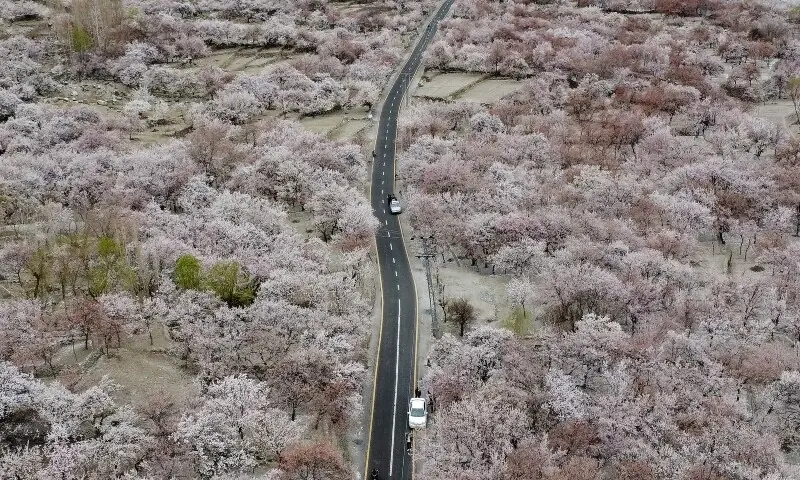
The blossoms that turn bare trees into a vibrant shade of pink carpet the thawing farmland of Gilgit-Baltistan from late March every year, marking renewal and the promise of fruit harvests to come for local people.
“The best part is when these flowers are falling. It literally feels like a dream,” Hatib said.
The region, home to about 1.7 million people, has some of the world’s highest mountains, including K2, which soars to 8,611 metres (28,251 feet) — second only to Mount Everest.
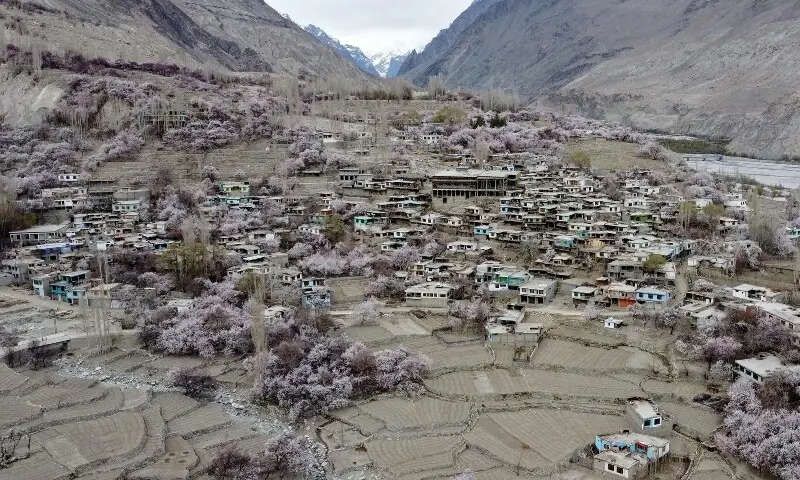
The jagged mountain ranges, high-altitude lakes and glaciers of GB are a magnet for the daring and adventurous.
But more sedate visitors can instead take selfies in the orchards of the flowering deep valleys, under a clear blue sky with only the chirrup of birdsong and the bleat of foraging goats to break the surrounding silence.
“No matter how much inflation there is in Pakistan today, no matter how much petrol prices are going up, tourists still don’t want to miss the cherry blossom and apricot blossom season,” said local visitor Maria Akbar, 29.
“Even if we have to spend extra money, it’s not a problem, but we’ll enjoy this view.”
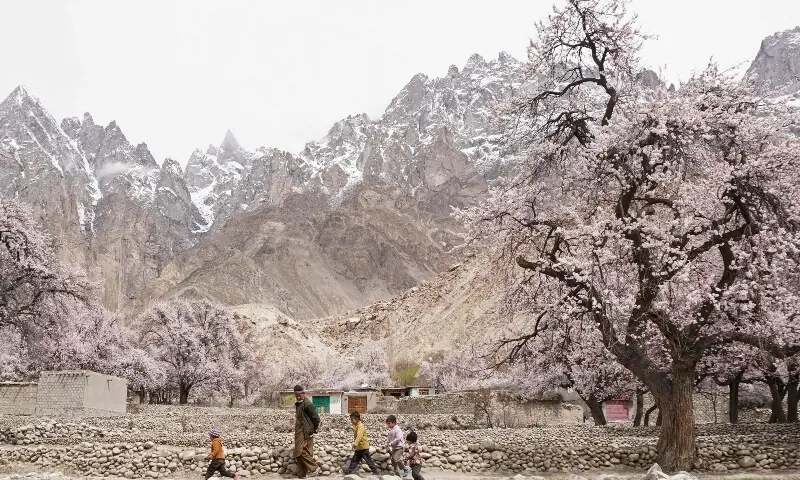
“Things like cherry blossom and apricot blossom are what make Gilgit-Baltistan unique compared to all other regions,” added Junaid Ahmed, 31.
“Tourists from all over the world come to enjoy this season. As you can see around me how beautiful it is, the beautiful view of these cherry and apricot blossoms is right before your eyes,” he said.