Alarm at UNSC as Israel announces destruction plan
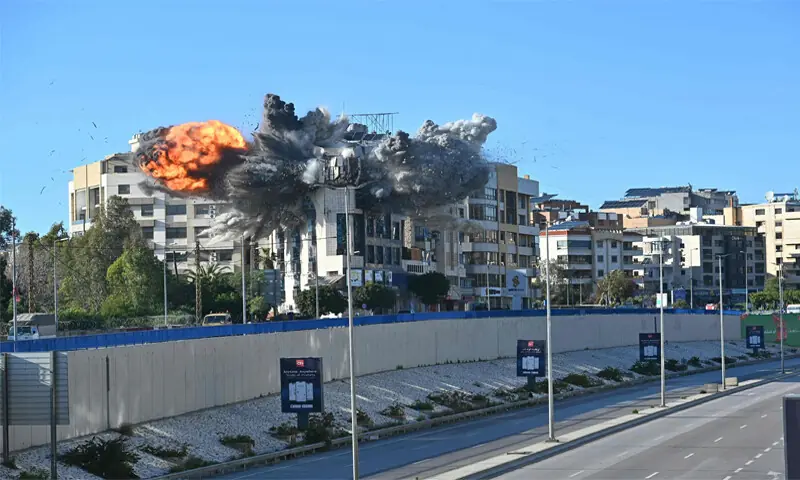


UNITED NATIONS: Diplomatic alarm at the UN Security Council intensified on Tuesday as Israel announced plans to destroy border villages in southern Lebanon and establish a security zone reaching the Litani River — a move that could reshape the conflict and deepen the humanitarian crisis.
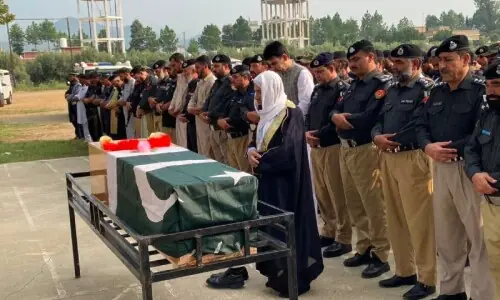
At the UNSC an emergency meeting, convened to address the deaths of three UN peacekeepers in southern Lebanon, Pakistan’s Permanent Representative, Ambassador Asim Iftikhar Ahmad, warned that attacks on peacekeepers “may constitute war crimes under international law”, describing them as part of a “disturbing pattern” undermining the UN Interim Force in Lebanon (Unifil).
“These incidents are not isolated,” he said, cautioning that the violence is worsening the humanitarian crisis and increasing risks to civilians and UN personnel alike.
Highlighting Pakistan’s long role in UN peacekeeping, Asim Ahmad noted that his country has lost 182 peacekeepers in the line of duty. “We share this profound sense of loss,” he said, expressing solidarity with the government and people of Indonesia and with the families of the fallen.
Pakistan’s envoy says attacks on peacekeepers in Lebanon are ‘not isolated incidents’
“Their sacrifice reflects the immense risks undertaken in service of international peace and security.” He urged the council to ensure accountability and guarantee “full freedom of movement” for Unifil, stressing that “the Security Council must extend its full support to Lebanon”.
Lebanon’s Ambassador Ahmad Arafa told the council that his country “did not choose this war”. He condemned attacks on UN personnel, saying they were “attacks on this council itself”, and called for an end to the “barbaric acts”.
‘Legal and moral responsibility’
Recalling Israel’s 1996 targeting of Unifil headquarters in Qana, Arafa underscored the Security Council’s “legal and moral responsibility” to identify and hold perpetrators accountable.
Despite the “heavy and exhausting” price Lebanon is paying, he reaffirmed his country’s commitment to the UN mission “more than ever”.
China’s Ambassador Sun Lei said that “the rights and wrongs of the conflict in the Middle East are crystal clear”, stressing that “the achievement of a ceasefire and cessation of hostilities are the most pressing tasks”.
“Lebanon must never become another Gaza,” Sun warned, calling on parties to immediately cease hostilities and urging Israel to withdraw and respect Lebanon’s sovereignty, security and territorial integrity.
According to Lebanon’s health ministry, at least 1,247 people have been killed in Israeli strikes since the offensive began on March 2. The figures includes 124 children and 52 medics. More than 1.2 million people have been displaced.
Presiding over the session, United States Ambassador Michael G. Waltz acknowledged that peacekeepers operate under “exceptional danger” to prevent conflict and protect civilians, and said their safety and security “must be respected at all times”.
He urged the Security Council — “and the watching world” — to reserve judgement until the United Nations can fully investigate and assess the circumstances behind the recent killings.
“This situation cannot go on,” insisted Ambassador Jérôme Bonnafont of France. Paris had convened Tuesday’s meeting.
Bonnafont paid tribute to the three Indonesian peacekeepers killed and reaffirmed support for the Unifil mandate. He denounced grave incidents by Israel against the French contingent in Naqoura, particularly against the head of the military force.
Israelis’ aggressive attitude
Israeli soldiers have shown an “aggressive attitude” and attacked the security of personnel, the French envoy said, at a time when deconfliction measures had been duly respected.
He condemned in the strongest terms the direct threats to personnel working with and within Unifil, stressing that “light should be shed on what happened without delay”.
Israel, however, claimed that Unifil forces were hit by Hezbollah explosive devices in an incident near Bani Hayyan.
In Israel, Defence Minister Israel Katz said his country would raze “all houses in villages near the Lebanese border” and prevent the return of some 600,000 displaced residents until northern Israel is secure.
“At the end of the operation, the IDF will establish a security zone inside Lebanon — a line of defence against anti-tank missiles — and will maintain security control over the entire area up to the Litani River, including the remaining Litani bridges,” Katz said in a statement.
Published in Dawn, April 1st, 2026