ISLAMABAD became the hub of regional diplomacy over the weekend as key states sent their foreign ministers to the capital in order to find a peaceful solution to the disastrous US-Israeli war on Iran.
The top diplomats representing Saudi Arabia, Egypt and Turkiye were hosted by Foreign Minister Ishaq Dar as the conflict entered its second month, with no sign of America achieving its nebulous objectives, and the Iranians putting up a tough fight.
In the meantime, the Gulf states have been caught in the crossfire, while the global economy has suffered major jolts, primarily due to the closure of the Strait of Hormuz. Therefore, the government deserves credit for its diplomatic efforts to de-escalate matters.
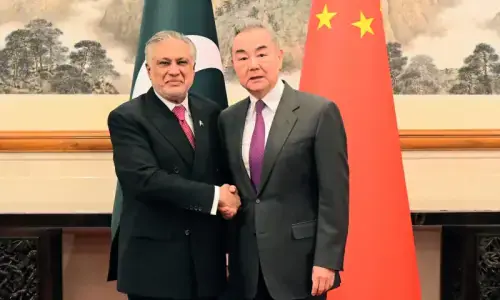
The quadrilateral meeting stressed the need for dialogue, as well as unity within the Muslim world. Noticeably, the language was much softer than previous statements issued by Arab capitals that have used a harsh tone against Iran. Mr Dar will now head to Beijing in order to expand diplomatic efforts for a ceasefire.
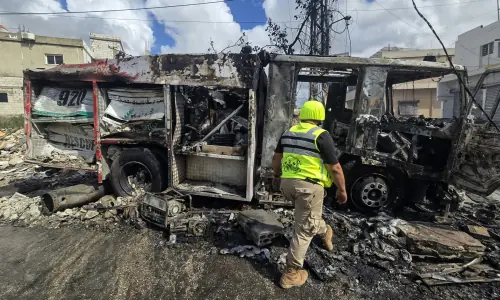
Time is indeed of the essence as the war is expanding and pulling in actors from different parts of the globe. For example, Yemen’s Houthis have struck Israel in solidarity with Iran, while Ukraine has signed defence deals with the Gulf monarchies. Though one should not sound alarmist, when more and more players enter the fray, the chances of miscalculation increase, and an already volatile situation turns into a powder keg waiting to explode. If this happens, the entire region will be impacted, and a painful blow will be dealt to the global economy.
The fact is that the key to de-escalation lies in Washington’s hands. It was America that started this disastrous war, and only America can and should end it, even if it means eating humble pie. Two key decisions must be made.
Firstly, there is dangerous talk of the US planning a ‘limited’ ground invasion, specifically targeting Iranian oil facilities on Kharg Island. Such an invasion would be a disaster of unmitigated proportions. It seems the US has learnt nothing from its own history. Over the past few decades, two American invasions have ended in ignominious retreat: Iraq and Afghanistan. Perhaps President Donald Trump’s administration wants to add Iran as the third.
The Iranians will be defending their homeland, operating in terrain they are very familiar with. The US should take a step back and reconsider. Secondly, Washington must pressure its proxy Israel to immediately stop attacks on Iran and Lebanon.
Unless there is an immediate ceasefire, and plans for a ground invasion are nixed, efforts by Pakistan and other states to prevent escalation will go nowhere. Let Washington create the conditions for peace by immediately halting all hostilities, which Iran should respond to positively.
Published in Dawn, March 31st, 2026