Metldown at PSX as KSE-100 loses over 4,000 points
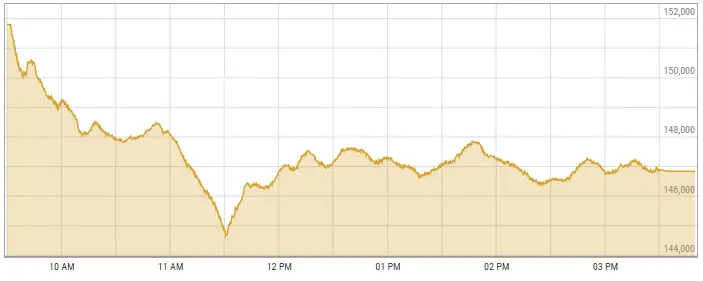
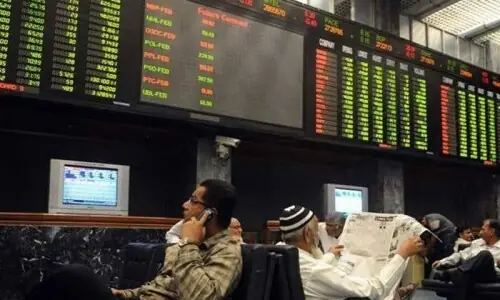
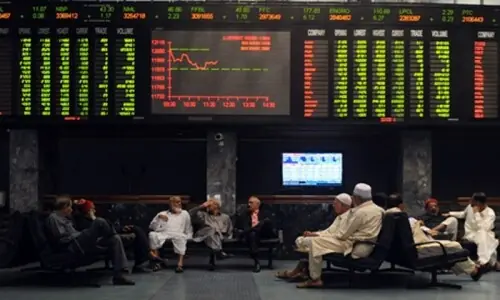
The Pakistan Stock Exchange’s (PSX) benchmark KSE-100 index plummeted by over 4,000 points during intraday trade on Monday.
The KSE-100 index declined by 4864.54 points, or 3.21 per cent, to close at 146,842.97 from the previous close of 151,707.51.
The index rose to an intraday high of 151,813.61 points at around 9:30am, shortly after trading began. However, it declined to an intraday low of 144,656.97 points at around 11:30am, before settling at 146,842.97.
Topline Securities, in its daily market review, said, “the local bourse felt the heat today, as surging oil prices and escalating geopolitical tensions rattled investor confidence”.
It said that the investors also grew “wary over the government’s decision to keep fuel prices unchanged for a second consecutive week, raising concerns of fiscal strain”.
The statement added that the “bears wasted no time seizing control, unleashing aggressive selling across the board”.
“Relentless liquidation pushed the index to an intraday slide of 7,050 points — bringing the market uncomfortably close to triggering a trading halt — before it finally settled at 146,842, a sharp drop of 4,864 points (-3.21pc),” the statement read.
It said that heavyweights — Fauji Fertiliser Company, Engro Holdings Limited, Meezan Bank Limited, Lucky Cement Limited, and United Bank Limited — acted as “key laggards”, taking the index down by 1,527 points.
However, market participation “remained robust, with total traded volume reaching 529 million shares,” Topline Securities said.
It added that the total turnover stood at Rs29.6 billion.
“K-Electric Limited emerged as the volume leader, with 56.5m shares,” the statement concluded.
Last week, the benchmark KSE-100 index declined 0.68pc week-on-week, according to Topline Securities Ltd, reflecting sustained investor caution as inflationary pressures linked to the Middle East conflict began to filter through to the broader economy. Looking ahead, analysts expected market direction to remain closely tied to geopolitical developments.
PSX has been in a losing streak amid ongoing geopolitical tensions and the absence of positive economic triggers, which have continued to dampen investor sentiment.
Earlier last week, it witnessed a brief recovery at the start of the week, fuelled by ceasefire negotiations and mediation efforts involving several countries, including Pakistan; however, it was short-lived.
With no breakthrough in talks, global markets stayed under pressure, especially as oil prices rose after Tehran rejected a 15-point US proposal and vessel movements through the Strait of Hormuz remained restricted, a vital route for a large portion of global oil supplies.