CUBA is next. Iran and Lebanon continue to burn. Conflicts from Gaza to Sudan to the DRC persist, though they are yesterday’s news. The humanitarian, societal and economic toll of proliferating conflict is difficult to fathom. No wonder then that one silent victim of the perma-war is repeatedly overlooked: the planet.
Conflict destroys the environment and exacerbates climate change. Such ‘environcide’ is understandably sidelined amidst the panic of war. Until it becomes impossible to ignore, as it did in Tehran recently, when the city was cloaked in acid rain, resulting from the bombing of fuel depots, which spewed oil particles and sulphur compounds. The air quality deteriorated sufficiently for our own Met Office to warn that the continued targeting of polluting sites in Iran would worsen air quality in our western provinces.
The environmental impact of today’s conflicts will plague communities for decades to come. Missile strikes and drone attacks produce toxin- and particle-laden debris, and destroy industrial and sanitation infrastructure that leaks chemicals, plastics and other poisons into water systems and the air. Military scrap piles up and leaches polluting materials into the soil, leading to chronic health risks.
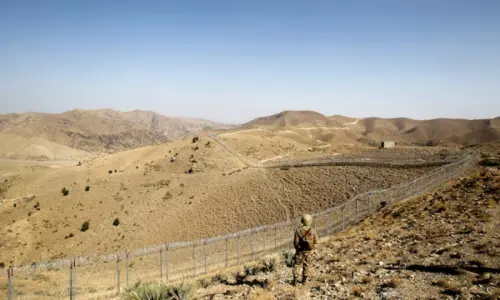
War also leads to mass displacement and the eruption of refugee camps, which are hugely disruptive to the environment. Think of the waste produced by IDP camps lacking sanitation or rubbish disposal services, or the deforestation caused by camp residents resorting to firewood for cooking and warmth. Military movement and the construction of security barriers also affect wildlife movement and migratory patterns.
The assault on the climate is terrifying.
The assault on the climate in the form of GHG emissions is also terrifying to consider. The destruction of oil and gas reserves, the mass destruction of buildings, and the burning of fuel by aircraft and vessels led to five million tonnes of carbon dioxide being released within the first 14 days of the Iran war — the equivalent of 84 countries’ emissions — according to a Guardian analysis.
And this is just the immediate toll. The indirect effects are harder to comprehend. Military activities (including training exercises, maintenance and disposal of weapons, development of infrastructure such as bases, etc) are estimated to contribute 5.5 per cent of all GHG emissions (though the true scale is unknown as militaries are not required to report transparently to the UN climate change convention that tallies climate data).
High military expenditure also diverts resources away from sustainability initiatives. Consider how most Western countries have dramatically cut development aid budgets to beef up defence capacity, with climate finance commitments being an early victim.
The Iran conflict is having a particularly regressive effect on global efforts to tackle climate change. As oil and LNG prices surge due to the targeting of energy facilities in Iran and the Gulf, and the energy supply chain is disrupted, many Asian countries, Pakistan included, have ramped up coal-fired power generation despite green transition commitments. Persistent conflict also stymies local preservation efforts as stretched local governments and activists struggle to access, monitor and manage environmental destruction. Within Pakistan, for example, KP’s invaluable forests are rapidly being lost to corruption and mismanagement. A most dire example is Arandu Gol in Chitral, which runs along the border with Afghanistan. By some estimates, 35pc of its forest cover has been lost since 2000, with billions of rupees worth of timber being smuggled into Afghanistan. The timber ma-fia is not a consequence of conflict, but it has certainly taken advantage of the collapse of environmental governance in the context of persistent violence and insecurity.
Since 2022, the UN International Law Commission has been calling for greater recognition of the environmental impact of conflict, and demanding that militaries plan better to protect the planet. There are also campaigns to get the International Criminal Court to recognise ecocide as a criminal offence. Though valiant, such efforts may have little traction against the backdrop of global securitisation and the right-wing backlash against the Paris Agreement and related climate and environmental commitments.
But we ignore war pollution at our own peril. As one of the world’s most climate-vulnerable countries, which is also ranked among the top 15 global military powers by the Global Firepower index, Pakistan is uniquely positioned to show leadership in the urgent space of climate- and environmentally conscious militarism. Let’s seize the opportunity, as we have recently proved ourselves to be pragmatic diplomatic interlocutors, putting our country in the headlines for the right reasons.
The writer is a political and integrity risk analyst.
X: @humayusuf
Published in Dawn, March 30th, 2026