Civil-military leadership calls for consensus amid oil, security challenges


 0
0
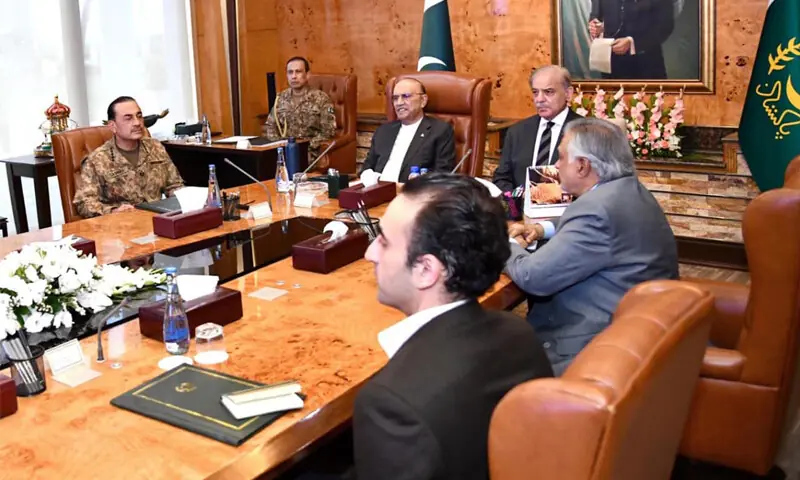

• President chairs high-level consultative meeting; PM Shehbaz, CDF Munir also attend
• Participants review economic, energy situation amid Mideast war
• Urge public awareness to cut fuel use, promote ride-sharing
ISLAMABAD: Top civil and military leadership on Thursday stressed the need for national consensus, public awareness, economic management, energy planning and food and border security in light of the fallout from the US-Israel war on Iran.
According to a statement issued by the Presidency, President Asif Ali Zardari chaired a high-level consultative meeting to review the evolving economic and energy situation amid oil supply constraints, rising petroleum prices and regional security developments.
“It was agreed that economic management, energy planning, food security and broader security considerations must remain closely aligned to address the current challenges,” the statement said.
Prime Minister Shehbaz Sharif and Chief of the Army Staff and Chief of Defence Forces Field Marshal Syed Asim Munir also attended the meeting.
Participants underscored the importance of maintaining national consensus and strengthening institutional coordination in view of emerging regional challenges.
The meeting also emphasised the need for public awareness to reduce fuel consumption, encourage public transport use and promote ride-sharing practices.
Other participants included Deputy Prime Minister and Foreign Minister Ishaq Dar, PPP Chairman Bilawal Bhutto-Zardari, Interior Minister Mohsin Naqvi, Finance Minister Muhammad Aurangzeb, Petroleum Minister Ali Pervaiz Malik, Economic Affairs Minister Ahad Cheema and the finance secretary.
The meeting reviewed the impact of global oil and gas supply fluctuations on Pakistan’s economy, with a focus on managing inflationary pressures and ensuring energy security.
The ministers for finance and petroleum briefed the meeting on measures taken by the government to stabilise petroleum prices, manage the effects of rising fuel costs on other sectors of the economy and enforce fiscal discipline through austerity measures to reduce expenditure pressures. The regional situation also came under discussion, including its implications for Pakistan’s security, economic outlook and food security.
The meeting emphasised the need for a coordinated national response, noting that policy decisions must prioritise stability while safeguarding the interests of the public.
China and Malaysia
Earlier, PM Shehbaz received a phone call from Malaysian Prime Minister Anwar Ibrahim who assured that Pakistan would continue its sincere and genuine efforts in de-escalating the prevailing situation in the region. Both leaders agreed to remain in touch.
PM Shehbaz then briefed his Malaysian counterpart on the latest diplomatic efforts, including his discussions with leaders of brotherly Gulf countries and Iran, to bring the US and Iran to the negotiating table.
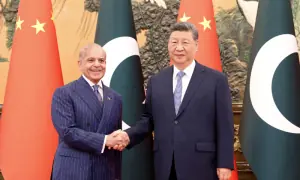
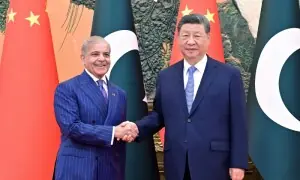
PM Shehbaz also met China’s Ambassador to Pakistan, Jiang Zaidong, to highlight Pakistan’s constructive role in promoting de-escalation and regional stability.
The premier, while appreciating China’s steadfast economic support, reaffirmed Pakistan’s commitment to advancing the China-Pakistan Economic Corridor (CPEC-II) project, with a focus on agriculture, industrial cooperation, and priority infrastructure projects.
Published in Dawn, March 27th, 2026