Exotic pet trade thrives in China despite welfare concerns


 0
0
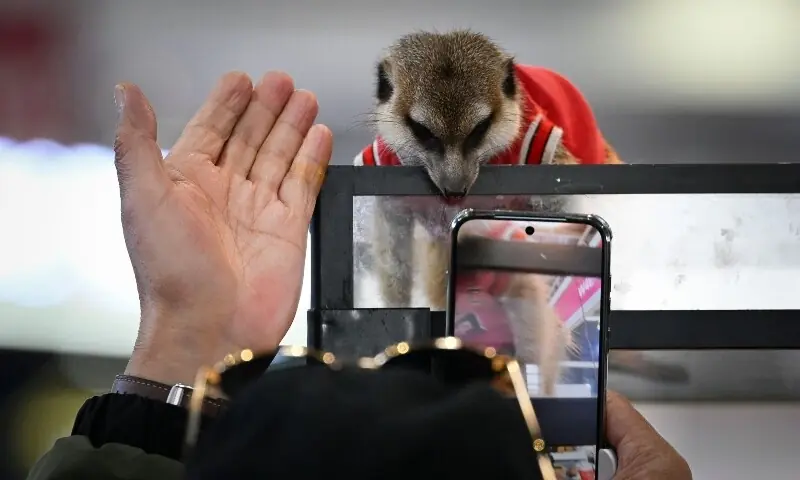

Pet lovers eagerly gathered around a container to snap photos of meerkats at a Beijing animal fair, each selling for $320, while nearby, a raccoon nervously paced in a cage only slightly bigger than itself.
Throngs of people from across China packed into the cavernous exhibition halls for the annual pet fair, where exotic animals are a more common sight than cats or dogs.
The exotic pet industry is experiencing rapid growth with a market nearing 10 billion yuan ($1.45 billion), Chinese state media have said.
Approximately 17.07 million people in China have exotic pets, Xinhua reported last year, and animal rights groups have raised concerns about welfare standards.
Unconventional pets are particularly popular among young people, with videos on how to raise them widely shared on social media platforms.
An 18-year-old putting down a deposit for a meerkat told AFP he was confident it would be easier to raise the animal than his previous cats and dogs.
“I feel that raising exotic pets is really just child’s play by comparison,” said Xiong, who had travelled to Beijing from Jiangxi province.
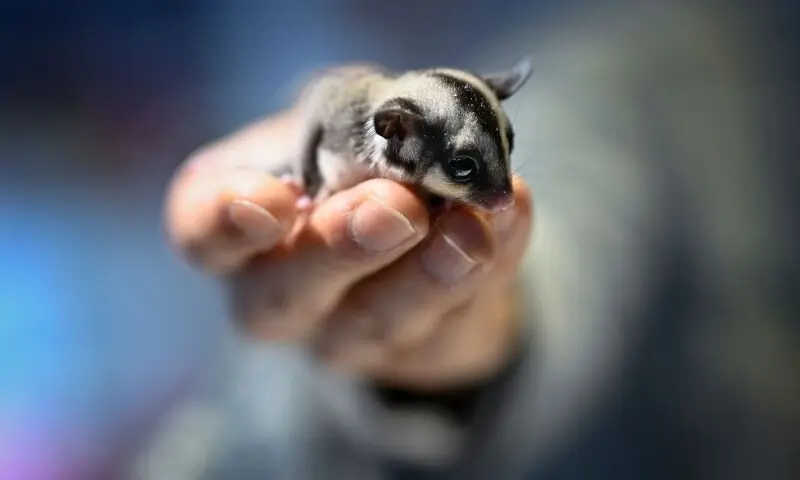
He had previously bought a sugar glider — a nocturnal palm-sized possum sold at the same store — and said he found raising exotic pets easier as they did not feel separation anxiety as dogs do.
It was “quite a hassle-free” experience, Xiong said.
“When you want to interact, it’s happy to engage with you, but when you’re not in the mood, it’s perfectly content playing by itself,” he told AFP.
Reptilian rapport
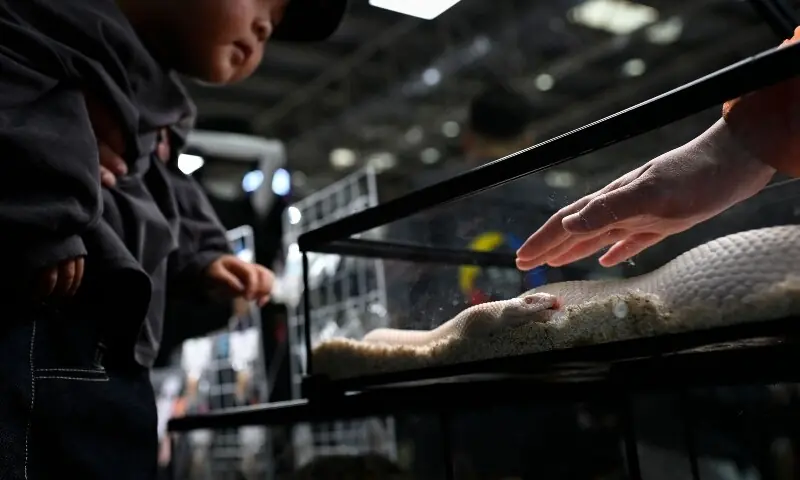
In another part of the fair, patterned snakes and spotted geckos squirmed in round plastic containers as people shopped for their latest reptile.
Yang Xurui brought his green Argentine snake to the fair, where he told AFP he was searching for new exotic pets.
“I consider her a friend of mine,” said Yang, 24, caressing the slithering creature hanging around his neck.
“Every day, the moment I walk through the door, she stands tall and straight like a giant green onion to welcome me home,” he added.
“She keeps me company while I watch TV, and then, come evening, she goes off to bed on her own — marking the end of our day together.”
Yang said he feels a certain sense of responsibility to dispel the commonplace fear of snakes as pets. “I want to tell everyone that she isn’t terrible, that she isn’t something to be feared.”
China’s Ministry of State Security has warned against the exotic pet craze it says is driven by trend-seekers.
“The trade, rearing, medical treatment, and abandonment of these exotic animals harbour latent safety risks,” it said last year, adding that this warrants “serious attention”.
Animal welfare regulations, however, remain lax in China, where pets such as fish, birds and pigs are commonly sold even in shopping malls.
The pandemic, meanwhile, sparked fears that animals may be carriers of diseases, including Covid-19, which was widely believed to have originated in bats.
Lack of knowledge
Authorities in China should target the traders, breeders, and retailers who depend on the business — and its expansion — for profit, said Peter Li, a specialist in China’s animal protection policy at the University of Houston-Downtown.
Businesses engaged in the sale and transport of exotic animals have reportedly used fraudulent labelling, withheld critical information, and engaged in deliberate deception to move these animals through supply chains, Li told AFP.
Abandoned exotic species can reproduce rapidly in the wild, creating significant ecological pressures on local environments, while diseases carried by them could pose public health risks, he said.
Public awareness in China regarding wildlife protection has improved significantly, but some consumers of exotic pets still lack sufficient knowledge before purchasing such animals, conservation charity WWF told AFP.
“Some consumers may not be fully aware of which species are legal to own, whether specific permits are required, the varying levels of care difficulty for different species, long-term financial costs,” it added.
At the fair, 26-year-old Zhang Yue agreed that bringing certain animals “into human-inhabited environments could lead to various repercussions”.
Nevertheless, Zhang told AFP she would still consider owning a sugar glider as they are “absolutely adorable”.