US-Israel war on Iran may increase food prices worldwide: UN


ISLAMABAD: The United Nations Food and Agriculture Organisation (FAO) has said that the prolonged disruption to trade through the Strait of Hormuz triggered by US/Israeli attack on Iran could create cascading impacts across energy markets, fertiliser supply chains and global agrifood systems, raising production costs, tightening agricultural supply and increasing food prices worldwide.
While global food markets remain more stable than during previous crises, the current war underscores the vulnerability of interconnected energy and agrifood systems and the importance of coordinated international action to stabilise markets, maintain open trade routes, and protect vulnerable populations from rising food insecurity, the FAO said in its report titled, Global Agrifood Implications of the 2026 Conflict in the Middle East.
A coordinated policy response is urgently needed to mitigate these risks and build resilience. In the short term, alternative trade routes, market monitoring, targeted support for vulnerable import dependent countries, and financial assistance for farmers are critical to stabilise supply chains and protect populations.
Medium-term strategies should prioritise diversification of import sources, regional coordination, and contingency planning, while long-term measures must focus on domestic agricultural expansion, sustainable fertiliser production, renewable energy investments, and structural adjustments to cope with persistent price volatility and biofuel-driven demand shifts.
Coordinated world action sought to stabilise markets, maintain open trade routes and cushion people from rising cost of living
Diplomatic efforts to de-escalate tensions and ensure freedom of navigation in the Strait of Hormuz remain the single most effective way to stabilise global energy and food markets, complementing these multi-layered interventions, the report emphasises.
Unlike oil, the fertiliser sector does not have internationally coordinated strategic reserves, making supply disruptions more difficult to manage. Prices have already increased significantly. In early March, Middle East granular urea prices rose by nearly 20 per cent compared to late February levels, while other fertilizer prices, such as diammonium phosphate, also rose. Because nitrogen fertilizer production relies heavily on natural gas as a feedstock, the rise in energy prices has further amplified production costs.
It is estimated that global fertiliser prices could average 15 to 20pc higher during the first half of 2026 if the US/Israel war against Iran continues, the FAO says.
These developments are beginning to affect global agricultural commodity markets. Rising fertiliser costs and higher fuel prices increase production expenses for farmers and this may lead to reduced fertiliser use in many regions. Lower input application could result in lower crop yields later in the year and tighter global grain supplies.
At the same time, higher energy prices are increasing costs throughout agricultural supply chains, including farm operations, irrigation, transport, storage, and food processing. Early signals in international markets indicate that prices for major food commodities such as wheat, rice, and vegetable oils have started to increase.
Lower fertiliser applications can reduce crop yields and increase food security risks directly and indirectly in vulnerable regions through local supply changes and future reduction of outputs in global breadbaskets. Higher energy prices also increase transport and logistics costs, raising the cost of food imports and further pressuring domestic food prices.
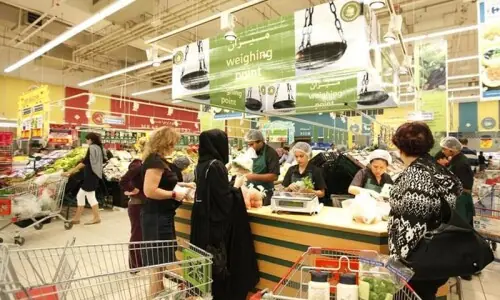
Meanwhile, Gulf countries themselves face structural food security vulnerabilities. Despite their energy wealth, most Gulf countries rely on imports for between 70 and 90pc of their food supply, because domestic agricultural production is limited by water scarcity and climatic constraints.
Iran faces particularly severe pressures because it is both directly affected by the conflict and vulnerable to macroeconomic instability. The conflict has disrupted imports of key staples and agricultural inputs, while worsening an already fragile economic environment characterised by currency depreciation and high inflation.
Published in Dawn, March 25th, 2026