US deploys ICE agents at 14 airports
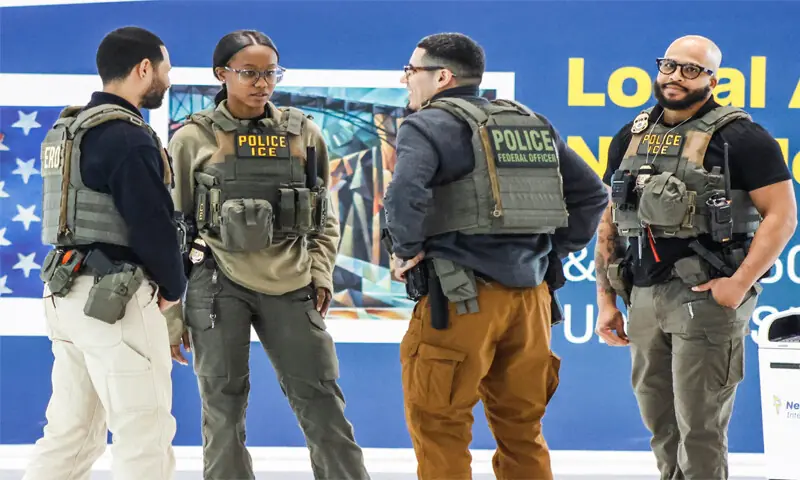
WASHINGTON: The US immigration agency at the centre of a firestorm over heavy-handed enforcement tactics began deploying to major airports on Monday, as officials scrambled to ease mounting travel disruption during a prolonged, partial government shutdown.
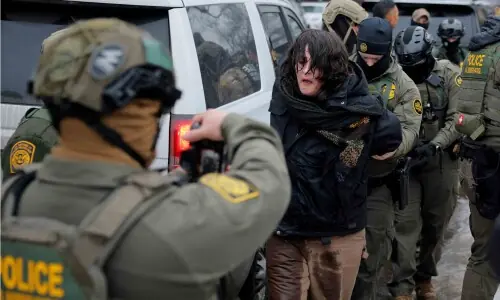
The move places Immigration and Customs Enforcement (ICE) personnel — already under intense scrutiny after fatal shootings linked to immigration operations — in highly visible roles at crowded transport hubs across the country.
Officials say the agents are being sent to at least 14 airports, including hubs in New York, Chicago and Atlanta, to assist overstretched Transportation Security Administration (TSA) staff, many of whom have gone weeks without full pay.
The agents will not conduct passenger screening but are expected to handle support roles such as monitoring exits and managing logistics, allowing TSA officers to focus on security checks.
The deployment comes as airports struggle with long delays during a busy travel period for the annual spring break, with some passengers reporting waits of several hours.
Unscheduled absences among TSA staff have surged to their highest levels since the beginning of the shutdown, which has halted the operations of the Department of Homeland Security — which oversees TSA — raising concerns about safety and system strain.
Tom Homan, President Donald Trump’s point man on border security, told CNN the move was a temporary measure to “help TSA move those lines along,” while Trump framed it as part of a broader effort to maintain security during the funding standoff.
But the decision has drawn sharp criticism from Democrats, rights activists and some Republicans, who warn it risks escalating tensions in already stressed environments.
House Democratic leader Hakeem Jeffries told CNN deploying ICE in crowded airports could create new risks, while Republican Senator Lisa Murkowski told reporters it was “not ICE’s mission” and warned of “additional tension” at airports.
The controversy reflects broader unease over the administration’s immigration crackdown, which has sparked protests and legal challenges in several states.
In Minnesota earlier this year, two US citizens — Renee Good and Alex Pretti — were killed in separate encounters with federal immigration officers, incidents that fueled nationwide outrage and scrutiny of enforcement tactics.
Good, a mother of three, was shot by an ICE agent during an operation, while Pretti, an intensive care nurse, was later killed by officers from Customs and Border Protection during a related deployment.
Against that backdrop, the airport deployment has taken on outsized significance, highlighting the increasingly blurred lines between immigration enforcement and domestic security roles. Meanwhile, negotiations in Washington remain deadlocked.
Published in Dawn, March 24th, 2026