Israeli minister calls for annexation of southern Lebanon, extension of border


Israel should extend its border with Lebanon up to the Litani River deep inside the country’s south, Israel’s finance minister said on Monday as Israeli troops bombed bridges and destroyed homes in the area in an escalating military assault.
The comments by Finance Minister Bezalel Smotrich were the most explicit yet by a senior Israeli official on seizing Lebanese territory in a fight that Israel claims targets Hezbollah.
Lebanon was pulled into the regional war on March 2 when Hezbollah fired missiles into Israel. Since then, Israel has ordered all residents to leave the area south of the Litani River as it pummels the area with air strikes, terming it a Hezbollah stronghold.
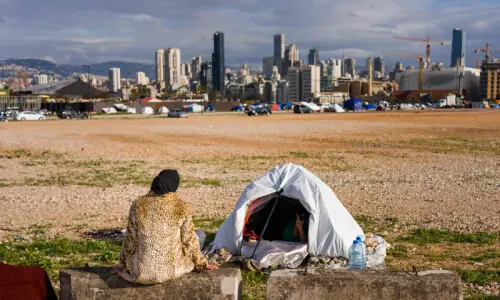
Lebanese authorities say the Israeli air and ground assault has killed more than 1,000 people, and more than a million have been driven from their homes, with Israel having ordered residents to flee swathes of the country.
‘The new Israeli border must be the Litani’
Smotrich told an Israeli radio programme that the military campaign in Lebanon “needs to end with a different reality entirely, both with the Hezbollah decision but also with the change of Israel’s borders.”
“I say here definitively … in every room and in every discussion, too: the new Israeli border must be the Litani,” Smotrich said.
Smotrich, leader of a small far-right party in Prime Minister Benjamin Netanyahu’s cabinet, often makes comments that go beyond official Israeli policy.
Netanyahu’s office did not immediately respond to a request for comment on the remarks. Defence Minister Israel Katz hinted earlier this month at plans to capture land, saying Lebanon could face “loss of territory” if it did not disarm Hezbollah.
Smotrich’s remarks were deeply resonant in Lebanon, which is trying to emerge from a decades-old cycle of invasions and occupations by its neighbour. Israeli forces have launched repeated assaults on Lebanon since 1978 and occupied the south from 1982-2000.
A Lebanese official told Reuters that Beirut was still counting on foreign powers to put enough pressure on Israel to put an end to the war, through an offer from President Joseph Aoun to hold direct talks.
Smotrich also called for Israel to annex territory it now controls in the Gaza Strip, up to an armistice line with Hamas. A ceasefire signed in October left Israel in control of 53 per cent of Gaza, where it has ordered residents out and bulldozed buildings.
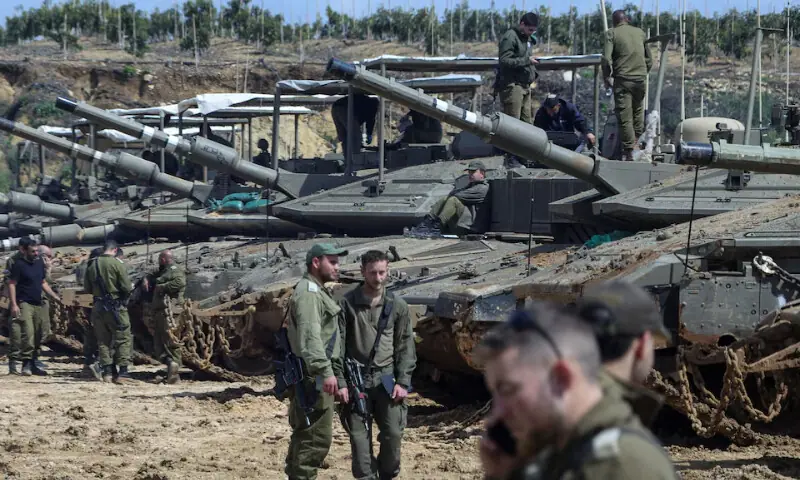
The Israeli military says its troops in Lebanon are carrying out ground manoeuvres and targeted raids on Hezbollah members and weapons stores, aimed at protecting residents in northern Israel from Hezbollah fire.
The Lebanese government has outlawed Hezbollah military activity and said it wants to engage in direct talks with Israel.
Routes to North being cut off
Over the weekend, Israel struck a main bridge linking south Lebanon with the rest of the country after ordering its military to destroy all crossings over the Litani River and to step up the demolition of homes near the southern border.
International law generally prohibits militaries from attacking civilian infrastructure, and the United Nations human rights chief has criticised Israel’s actions in Lebanon, particularly its use of widespread evacuation orders.
Israeli strikes hit two more crossings on the Litani River on Monday — a road running near a main bridge hit on Sunday and another small bridge on another section of the river.
Hanna Amil, the mayor of the Christian border town Rmeish, whose residents have refused to leave their homes, told Reuters that it was getting increasingly difficult to move around.
“Once or twice a week, a convoy from the Lebanese army accompanies us as we try to get basic goods from nearby areas,” he said.
“Already, we have no state electricity, no water and we have diesel shortages. If all the routes to the north get cut off, who knows what the future could hold for us?” Amil said.