US efforts against terrorism in the spotlight after Kent’s exit
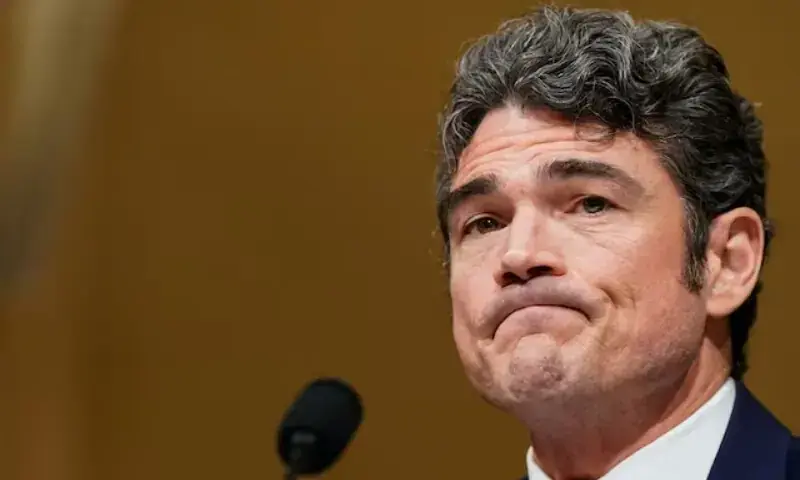
• Ex-counterterrorism chief lost his wife — a naval officer — in Syria in 2019, completed 11 combat tours
• Represents MAGA’s anti-war faction
THE top US counterterrorism official, who resigned from his role to protest the war against Iran, is under the spotlight for his anti-war stance and anti-Semitic remarks in the past, while his letter saying Iran was not a threat did not gain much traction in the intelligence or political community.
Joseph Kent, who headed the National Counterterrorism Centre, was a Green Beret and a former CIA official who also ran for Congress in 2022 and 2024, endorsed by Donald Trump, but lost the election both times.
As a soldier, he completed 11 combat deployments, including in the Iraq war, before joining the CIA. In 2019, he lost his first wife Shannon Kent, who was a US Navy cryptologic technician, in a suicide bombing in Syria, leaving two children behind.
Mr Kent also mentioned the loss of his wife in his letter, saying that “as a Gold Star husband who lost my beloved wife Shannon in a war manufactured by Israel, I cannot support sending the next generation off to fight and die in a war that serves no benefit to the American people nor justifies the cost of American lives”.
According to US broadcaster PBS, Mr Kent represented the portion of MAGA (Make America Great Again) movement, which was anti-war. He is close to Tucker Carlson, a conservative political commentator, and Tulsi Gabbard, who heads the national intelligence. Ms Gabbard, however, did not agree with his comments that Iran did not pose an imminent threat to the US, while Mr Carlson endorsed his concerns.
Mr Kent, who blamed the “Israeli and its powerful American lobby” for the war, had “some extremist associations”, as per Liz Landers, a PBS correspondent. His confirmation to the NCC was opposed by the Anti-Defamation League and the Southern Poverty Law Center for his extremist links. And after he tendered his resignation, a Congressman, Don Bacon, quipped, “Good riddance”.
“He held a call with Nick Fuentes, who is a Holocaust denier. He later denounced Fuentes, but that’s just one example of a very extreme figure that he has links to from the past,” said Ms Landers.
Counterterrorism efforts
Since Mr Kent said there was no imminent threat from Iran, former NCC director Nicholas Rasmussen appeared to have contested this claim in his interview on PBS. “National security threat is not a black-and-white matter… (if) an attack on US interests was going to happen at this place on that day in this manner, that would certainly constitute an imminent threat,” Mr Rasmussen said, adding that “you can have imminence without having all of those elements as well”.
“If you feel like — and I say feel — if you feel like you don’t have the ability to forecast and project when an attack might happen, that might create a sense of imminence, even if you don’t have that specific intelligence giving you time and place,” he added.
He, however, deflected a question about no clear path to victory, but said that most national security professionals wanted to see the Iranian capability to carry out “terrorist activity around the world, to act aggressively against neighbours, to threaten the West” degraded.
He also played down the disruptions at the counterterrorism centre because of the resignation, saying it could be a “little disruptive” but expressed confidence that the staff were doing exactly what they were doing before the departure of their chief. “They’re very mission-focused, making sure that they have their eyes on every bit of available intelligence so that they can prepare the best possible assessments to support policymakers, up to and including the president.”
Speaking about the counterterrorism efforts, he said NCC has certainly been preparing the intelligence assessments to undergird and to support good policymaking and good decision-making, while also playing a role in supporting the state and local apparatus around the country as they try to worry and deal with potential homegrown threats. However, the former director said he was worried due to the “hollowing out of a work force that has gotten younger and less experienced…the shift in emphasis away from counterterrorism and terrorism towards state competition, state conflict, and other administration priorities, to include immigration.”
Published in Dawn, March 19th, 2026