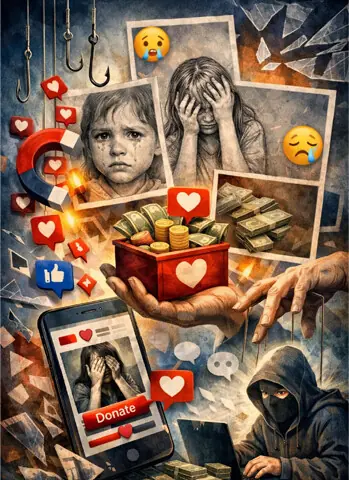
I HAVE noticed a troubling trend that has become increasingly visible on social media platforms; the rise of emotional donation appeals that often turn out to be calculated scams. Every day, users encounter posts showing sick children, emergency medical cases, or desperate pleas for financial help, usually accompanied by mobile wallet numbers. While many of these cases are genuine and deserving of support, many more are not. Scammers now recycle images from old news reports, or exploit the identities of vulnerable families to collect money that never reaches those in need.
The most damaging consequence of this practice is the erosion of public trust. When donors realise they have been deceived, they become hesitant to give again. As a result, families facing real medical emergencies find their genuine appeals ignored or met with suspicion.
As a society, we are quick to share emotional content, but we remain slow to verify its authenticity. We rarely ask for hospital records, receipts, or follow-up proof. As such, this lack of accountability allows scams to thrive. I believe that it is time for a rather serious conversation about digital transparency in the country.
Dayaan Zameer
Karachi
Published in Dawn, March 17th, 2026