Pak-Saudi research finds Covid vaccine safe
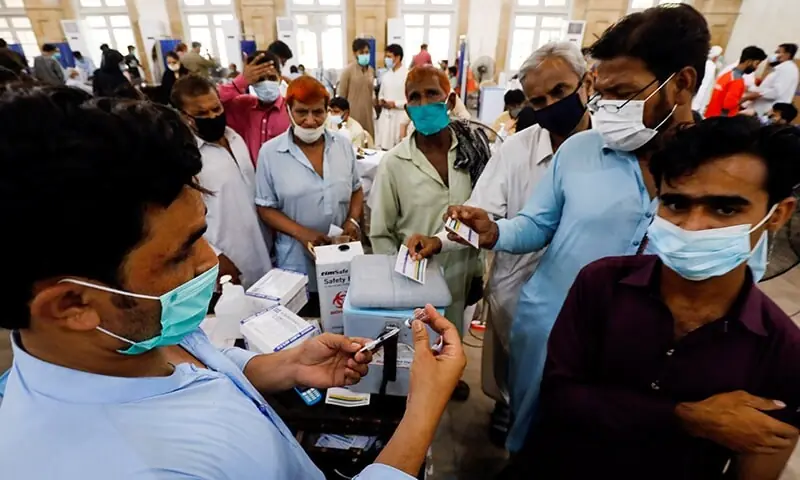
PESHAWAR: A Pak-Saudi research study conducted in the context of Khyber Pakhtunkhwa has found anti-coronavirus vaccine to be safe with no adverse effects and showed that the Covid-19 vaccination scaled up immunity of the recipients to stay safe from the infectious disease that killed over 20,000 in Pakistan.
Jointly conducted by KMU and and King Abdulaziz University Jeddah, the researchers, including Waleed M Bawazir, Ahmad Al Ibad, Muneeba Mohsin, Hanouf A Niyazi, Turki A Alamri, Mohammed A Bazuhair, Mohannad Hazzazi, Noura A Chehab, Steve Harakeh and Yasar Mehmood Yousafzai, have also highlighted vaccination issues for policymakers to consider for the future programmes.
The research’s findings were published by Biomedicines Journal UK, showing that no clinical adverse events after Covid-19 vaccination were observed in the people.
Mr Yousafzai said the study had drawn international attention at a time when global Covid-19 narratives were largely shaped by Western institutions.
Shows vaccination scaled up immunity of people against infectious disease
“Findings of this research from Khyber Pakhtunkhwa, Pakistan, have been well received and are being discussed beyond the country’s borders,” he told Dawn.
According to him, KMU, which pioneered Covid-19 testing and established over one dozen PCR labs in the province, the study says, has helped place Pakistani evidence into the wider international discussion on vaccine response, immunity and public health decision-making.
Pakistan recorded the first Covid-19 cases from
Khyber Pakhtunkhwa in early 2020 where the pandemic infected over 100,000 with over three per cent mortality rate.
One of the most notable studies examined immune and hematological responses after a third dose of the Pfizer mRNA Covid-19 vaccine in 68 healthy young adults during which the researchers found that the booster produced sustained IgG and IgA antibody responses over six months, while also causing mild but statistically significant short-term changes in selected inflammatory and coagulation-related markers.
According to researchers, the significance of their work lies in its balance as it doesn’t present vaccination as either beyond question or inherently dangerous.
Instead, it shows that mRNA vaccination can generate strong protective immune responses while also producing measurable biological changes that warrant careful study and transparent communication. This is precisely the kind of evidence that becomes important when countries reassess booster policies, risk communication and long-term vaccine monitoring.
The Pakistani-led vaccine study recently gained further visibility after being discussed in an interview carried by a US-based media platform, bringing it into wider public view beyond academic journals.
That attention, according to Yousafzai, reflects a broader reality that research from Pakistan is increasingly being noticed internationally when it addresses globally relevant scientific questions.
Other vaccine-related work by the same research group adds to this picture. A separate study in older unvaccinated adults found high Sars-CoV-2 antibody prevalence, showing that immunity patterns in Pakistan had also been shaped by widespread prior exposure. It has brought in its wake a central lesson for Pakistan that vaccination policy and pandemic planning should be informed by local evidence, local populations and local realities.
Other long-term studies with larger sample size showed that by and large, the Covid-19 vaccine was safe from immediate side effects, though heart diseases and blood clotting were recorded, especially in youth. Since mRNA vaccine was used for the first time at mass scale, no one knows about its long-term effects, with some people calling it gene therapy.
Dr Yasar Yousafzai said that the long-term studies conducted globally hadn’t looked at the immediate effects of Covid0-19 vaccination but the Pak-Saudi research had examined the effects of vaccination within 48 hours.
He said the KMU also provided eight million Covid-19 vaccine units to people free of charge with support of the Khyber Pakhtunkhwa government and supervised the chain of PCR labs, too.
Published in Dawn, March 17th, 2026