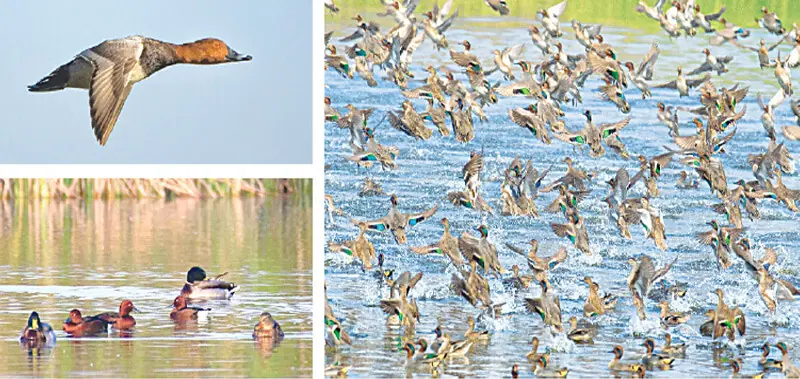
KARACHI: The number of migratory birds visiting wetlands in Sindh this winter season was higher than in the past three years, it emerged on Monday.
A survey conducted by the Sindh Wildlife Department recorded over 654,287 migratory birds over the last three months across Sindh.
The department recorded 545,258 birds in 2024-25, while in 2023-24 the number of migratory birds recorded was 639,122.
The Water Fowl Survey — part of an annual departmental exercise since 1980s — was carried out at 30 sites in across the province between December 2025 and February 2026.
Extensive use of agricultural pesticides destroying birds’ habitats, warns wildlife official
The areas covered during the survey included Keenjhar Lake, Manchhar Lake, Hamal Lake, Haleji Lake, Runn of Kutch, Lungh Lake and Nareri lagoon.
Like previous year, the highest number of birds, 171,171, were seen at Nareri Lagoon, a Ramsar-accredited wetland located in the Badin district, followed by 135,332 in Runn of Kutch and 47,970 in the nearby Runpur Dam, Nagarparkar.
According to officials, digital photographic record of the birds was also developed during the survey. The species recorded during the survey included green winged teal, common pochard, tufted duck, Eurasian wegion, knob-billed duck, cotton pygmy goose, northern shoveler, garganey, lesser whistling duck, Indian spot billed duck, ferruginous pochard, northern pintail, common coot, red crested pochard, greylag goose, ruddy shelduck, common shelduck, gadwall, marbled teal, crested grebe, mallard and bar-headed goose.
“Like previous year, the team observed common teal and shoveler in large numbers. The presence of Indian spot billed duck and comb (knob) billed duck was also significant, though in limited numbers. The latter had been recorded after a long time. The endangered lesser flamingos, great white pelican, oriental dater and white storks were also recorded in numbers worthy of attention,” the survey says.
‘Surveys covered only 40pc Sindh wetlands’
“Given the fact that our surveys covered only 40 per cent of the wetland area of the province, they don’t represent a precise picture. In fact, the birds visited us in much larger numbers than what’s presented in the data,” said Sindh Wildlife Conservator Javed Ahmed Mahar.
According to Mr Mahar, the data collected in recent years indicate that a stable population of birds has been visiting the province, which is a positive sign.
“Having said that, they are facing multiple threats in our environment, the most important one is the extensive use of agricultural pesticides,” he said, adding that these chemicals posed grave threat to Sindh’s wetlands and aquatic system.
“They are destroying migratory birds’ habitats. These fowls arrive here in winters when we are harvesting rice crop,” he said, adding that the pesticides applied on these crops were toxic and had a profound negative affect on the water body, crop and the land.
Published in Dawn, March 17th, 2026