HAVANA: Cuba has opened talks with the US government, President Miguel Diaz-Canel said on Friday, amid an oil blockade that has crippled the economy.
Raul Guillermo Rodriguez Castro, the grandson of Fidel Castro’s brother Raul, is also taking part in the talks.
Rodriguez was seated behind Diaz-Canel and among the Communist Party officials pictured in the video, an unusual appearance given that he does not officially hold a high-level position within the party.
The Castro grandson, 41, widely known as “El Cangrejo”, or “The Crab”, also attended a press conference on Friday morning.
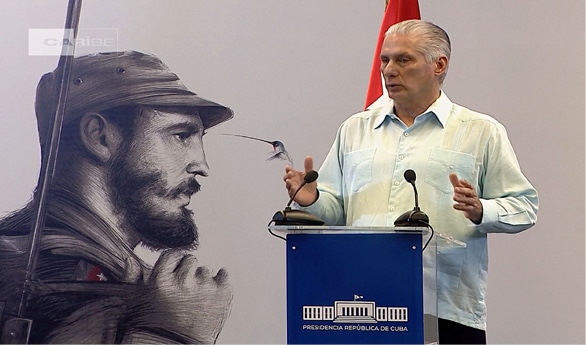
“Cuban officials recently held talks with representatives of the United States government to seek, through dialogue, a possible solution to the bilateral differences between our nations,” Diaz-Canel told reporters.
“These talks have been aimed at finding solutions through dialogue to the bilateral differences we have between the two nations,” Diaz-Canel said in a video aired on state television. Diaz-Canel said he hoped the negotiations would move the two long-time rivals “away from confrontation”.
Diaz-Canel said he was interested in conducting the talks “on the basis of equality and respect for the political systems of both states, and for the sovereignty and self-determination of our governments”.
Cuba is growing increasingly desperate. The Caribbean nation’s citizens, already exhausted by years of economic crisis and shortages, now live the majority of their days without electricity. Rising prices, strictly rationed fuel and medicine shortages have pushed many to the tipping point.
No fuel has entered Cuba for three months.
Since the US captured Venezuelan President Nicolas Maduro and removed from power Cuba’s most important foreign benefactor in January, Trump has cut off Venezuelan oil shipments to Cuba and threatened to slap tariffs on any country that sells oil to Cuba.
Trump in recent weeks had made a series of statements, saying Cuba was on the verge of collapse or eager to make a deal with the United States. On Monday he said Cuba may be subject to a “friendly takeover”, then added, “it may not be a friendly takeover”.
Cubans on the streets of Havana welcomed the news as a possible solution to the power blackouts, which this week provoked protests in Havana.
“We are already overwhelmed, we can’t take this situation anymore, and I think that this conversation between Cuba and the United States should lead to a better situation,” said Yaimi Gonzalez, a 44-year-old homemaker.
Published in Dawn, March 14th, 2026