Saudi Arabia activates desert oil pipeline


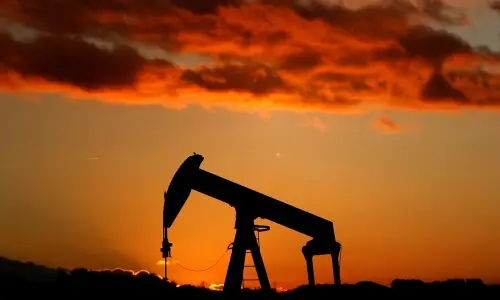
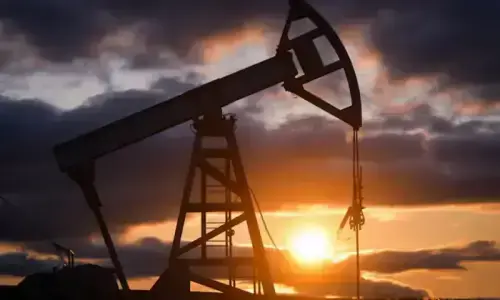
RIYADH: Faced with an unprecedented crisis in shipping its oil to clients overseas, Saudi Arabia is moving rapidly to activate a decades-old contingency plan — pumping millions of gallons across vast tracts of desert to reach tankers on the Red Sea.
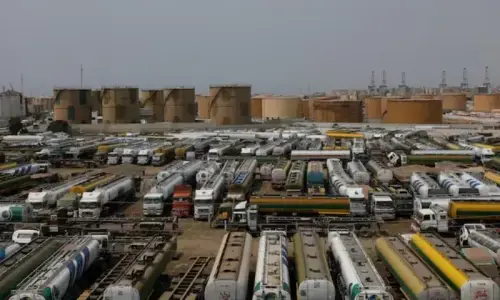
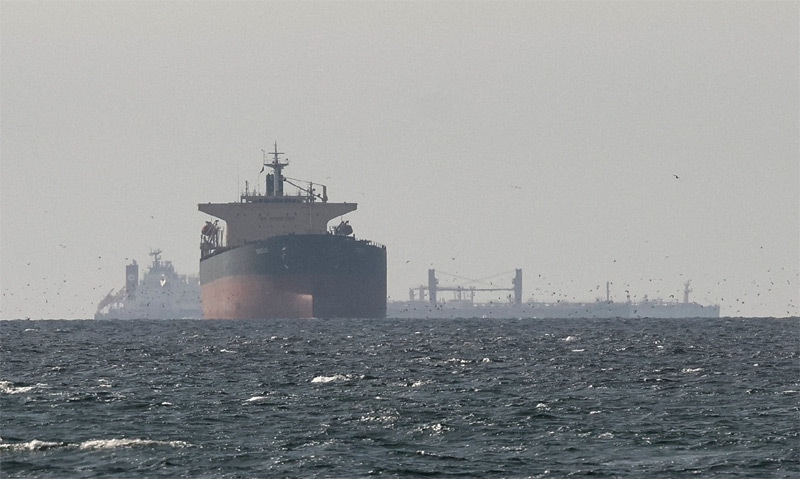
With the vital Strait of Hormuz all but closed, the region’s petroleum-exporting monarchies are facing a potentially disastrous situation as Iran targets energy installations, storage capacity fills, and production is throttled due to the shipping paralysis caused by the Middle East war.
The Gulf has been battered by Iranian attacks in retaliation for the US-Israeli strikes that sparked the conflict, with Tehran targeting both US assets in the region and civilian infrastructure alike.
To help manage the fiasco, Saudi Arabia is ramping up the use of the Petroline, its east-west pipeline bisecting the kingdom, Saudi state energy giant Aramco said during an earnings call this week.
Petroline ramps up activity to bypass Hormuz blockage
“While we have faced disruptions in the past, this one by far is the biggest crisis the region’s oil and gas industry has faced,” Aramco CEO and president Amin H. Nasser said, warning of “catastrophic consequences for the world’s oil markets the longer the disruption goes on”.
The CEO said the company was working hard to increase flows to the Petroline in the coming days, with the infrastructure’s capacity reported to be an estimated seven million barrels a day.
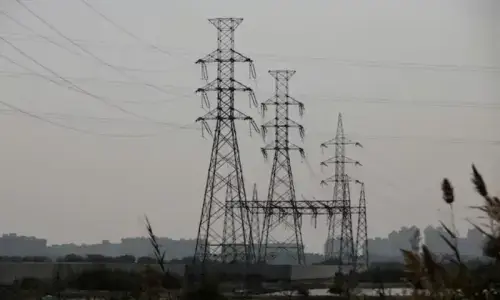
The 750-mile network of pipes connects two waterways crucial for global commerce — the Gulf in the east and the Red Sea to the west.
“This will not ‘fix’ the Strait of Hormuz problem,” warned Jim Bianco, president and founder of Bianco Research, in a note posted on X. According to Bianco, the Petroline carried roughly one million barrels a day before the war — meaning just six million more can be added.
That total is a fraction of the roughly 21 million barrels of oil that passed through the Gulf before the war. The situation the Gulf finds itself in was unthinkable just weeks ago.
Despite the presence of an archipelago of US military bases dotting the region, Iran was able to effectively close the Strait of Hormuz and cause widespread disruptions in just a matter of days.
In a line stretching from Kuwait City to Abu Dhabi, Iran has methodically knocked major refineries offline and forced Qatar to shutter LNG installations that provide roughly a fifth of the world’s liquified natural gas. The stranglehold only appears to be deepening, with the US appearing to acknowledge this week that Iran has begun mining the Strait of Hormuz — a chokepoint where around 20 per cent of global energy passes.
“Strait of Hormuz will either be a Strait of peace and prosperity for all or will be a Strait of defeat and suffering for warmongers,” Iran’s national security chief Ali Larijani wrote in posts in multiple languages Tuesday on X.
Murmurs from Washington have suggested that no immediate solution to the strait’s issues is coming soon.
“On the Strait of Hormuz, they had NO PLAN,” Democratic US Senator Chris Murphy wrote on social media after a classified briefing this week.
“I can’t go into more detail about how Iran gums up the Strait, but suffice it [to] say, right now, they don’t know how to get it safely back open. Which is unforgivable, because this part of the disaster was 100% foreseeable.”
Back in the Saudi Arabia, the plan to bypass the Strait of Hormuz is not without risks. Finished in the 1980s when the Gulf was rattled by the Iran-Iraq war, the Petroline was constructed as a strategic contingency to get around any blockage of the strait. But the conduit transfers oil to export terminals on the Red Sea coast, which lies squarely in the Houthi rebels’ crosshairs.
The Houthis have yet to enter the war, but their decision could be significant.
“How soon before Iran/Houthis hit the alternate export terminals and pipelines,” analyst Michael Knights mused on X.
Published in Dawn, March 12th, 2026