Senate body grills Ogra officials over massive fuel price hike

• Members demand justification for the ‘assumption-based’ increase
• Ask whether neighbouring countries also adopted similar measures
• Ogra chairman says prices may stabilise as ongoing Iran conflict subsides
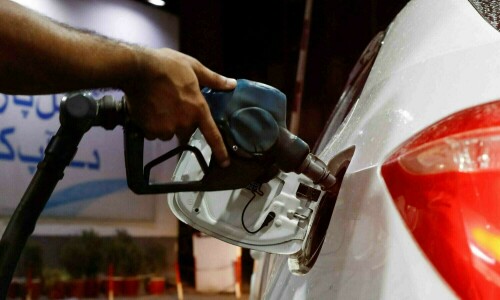
KARACHI: Members of a Senate standing committee on Tuesday expressed serious concerns over the recent hike in petroleum prices, describing it as an additional burden on the people while questioning the justification for imposing such a massive increase on already hard-pressed nation.
The concerns were raised during a meeting of the Senate Standing Committee on Cabinet Secretariat held at the Secretariat Building in Karachi under the chairmanship of Rana Mahmood ul Hassan.
The meeting was attended by Saleem Mandviwalla and Amir Waliuddin Chishti, while Senators Atta-ur-Rehman, Abdul Qadir, Farooq H. Naek and Special Assistant to the Chief Minister Anoosha Rehman joined the meeting virtually.
Senior officials of the Oil and Gas Regulatory Authority (Ogra) briefed the committee via video link from Islamabad.
Members of the committee observed that major price increases appeared to have been imposed on the public based on assumptions and asked whether neighbouring countries had adopted similar measures.
Senator Rana Mahmood also sought clarification regarding the impact of the recent increase in petrol prices on the general public.
Senator Naek questioned whether gas prices were also likely to increase asking how Ogra would justify such measures.
He remarked that no country in the region had increased petroleum prices by as much as 20 per cent.
Ogra chairman Shehzad Iqbal said that the authority only proposes pricing recommendations to the government. He further said that the current situation is temporary and linked to regional developments, adding that prices may stabilise once the impact of the ongoing Iran conflict subsides.
Responding to a question, the Ogra officials said the authority was not directly involved in the operational procedures of Oil Marketing Companies (OMCs) and therefore could not take action regarding changes introduced by them. The committee took a note of the explanation.
The Ogra officials also informed the committee about fuel availability and the regulatory framework governing oil marketing companies.
During the discussion, Senator Chishti asked about the country’s current fuel reserves. The Ogra chairman told the committee that diesel and oil stocks were sufficient until the end of March with government facilitation. He added that discussions were also underway with other stakeholders to ensure continued supply.
The committee chairman, Senator Hassan, sought a clarification regarding the impact of the recent petrol price increase on the general public.
Participating online, Senator Naek asked whether gas prices were also likely to rise, questioning how such measures could be justified.
Meanwhile, Senator Atta ur Rehman, who joined the meeting online, stressed that the public should not be overburdened and urged the government to address the issue of rising fuel prices on a priority basis.
K-IV water project
The committee later received a briefing from the National Engineering Services Pakistan (Nespak) regarding the K-IV water supply project in Karachi.
Officials informed the members that the project had recently been transferred to Nespak for supervision, while the World Bank would oversee further processes before implementation proceeds.
The members were also briefed about the Karachi Red Line corridor project being handled by Nespak.
The estimated cost of the project was stated to be around Rs80 billion.
The committee expressed concern over certain gaps in project planning and directed that all relevant authorities be called to the next meeting for clarification.
The committee also raised concerns regarding delays and pending issues in the project, observing that the matter may warrant a formal inquiry if satisfactory explanations are not provided.
Published in Dawn, March 11th, 2026