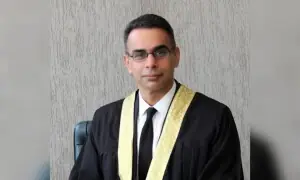
IT is often the fear of the courtroom and what may transpire therein that drives many victims of crime, especially women, to stay silent. Last week, a Supreme Court ruling cut to the heart of the problem of how the justice system punishes witnesses and litigants long before a judge issues a ruling. The case involved a medical student who filed criminal reports against the accused persons. She was subjected to days of cross-examination by the counsel of each of the accused, who simply repeated the same questions as the ones before them while the complainant stood in the witness box, fending off the relentless, intrusive and humiliating scrutiny. The trial had dragged on despite the Supreme Court’s instructions to expedite it. It was merely our justice system working as it does. “A court of law is not merely a chamber where disputes are resolved; it is a place where the majesty of the law must walk hand in hand with the dignity of the individual,” Justice Salahuddin Panhwar said in his judgement. “The courtroom must remain a place where justice is administered not only with authority but with humanity,” he wrote.
The new judgement explicitly instructs trial court judges to ensure they do not allow irrelevant, indecent or insulting questions to be put to persons standing in the witness box. This requires the presiding judge to be a vigilant supervisor, as the right of cross-examination is neither unlimited nor unrestrained, the judgement instructs. It also questions the ‘requirement’ of making witnesses stand during their testimony, which can be physically exhausting, and asks why witnesses are not facilitated and protected better when multiple provisions for how to do so already exist. “The law requires a witness to speak the truth; it does not require that truth to be extracted through needless physical strain,” the judgement stresses. All of this is welcome, but it also reflects a failure hiding in plain sight for decades. Trial court judges have always had the authority under the Qanun-i-Shahadat Order to disallow irrelevant, indecent or insulting questions. The Witness Protection Act of 2017 already provides for video-link testimony and anonymity for vulnerable witnesses. The law is not entirely without teeth. The problem has been a culture of judicial passivity that has allowed cross-examination to become an instrument of harassment dressed in legal procedure.
Published in Dawn, March 9th, 2026