Live streaming of cases yields negative results: IHC judge
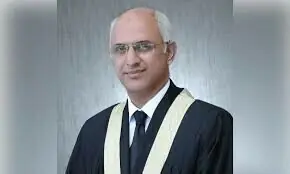


ISLAMABAD: Justice Mohsin Akhtar Kayani of the Islamabad High Court on Wednesday expressed concern over the fate of cases that were live-streamed from superior courts, observing that the practice has yielded “very negative outcomes” in certain instances.
The remarks came during the hearing of a petition relating to the promotion of teachers from various public sector universities when a teacher was caught filming the court proceeding.
The court was informed that the Higher Education Commission (HEC) had submitted its response along with a policy report concerning promotion criteria for BPS teachers.
As proceedings were underway, Justice Kayani took notice of a person in the courtroom recording the hearing on a mobile phone — a practice not permitted under court rules. The court staff confiscated the device after the judge asked the individual to identify himself.
“Who are you and what are you doing?” Justice Kayani inquired. The man replied that he was a teacher. The judge told him he needed to be more careful, adding that video recording in court was not allowed.
In the course of his observations, Justice Kayani said that the live streaming in certain cases was proved counterproductive.
The matters that were broadcast live from superior courts were the PTI party symbol case, the reserved seats case, the case concerning the Supreme Court of Pakistan (Practice and Procedure) Act, and the review proceedings in the Article 63-A judgment.
While ruling political parties had welcomed the outcomes of those decisions, opposition parties — particularly the Pakistan Tehreek-i-Insaf — had expressed reservations.
The teacher tendered an unconditional apology, stating that the recording was made inadvertently. His counsel also apologised on his behalf.
Justice Kayani observed, “These are teachers; I do not want to say anything to them myself,” and accepted the apology.
On merits of the case, after examining the HEC’s policy report, the court directed the petitioner’s counsel to advance arguments at the next date of hearing.
The matter was adjourned till after Eidul Fitr.
Published in Dawn, March 5th, 2026