Palestinian envoy withdraws from UNGA presidency bid
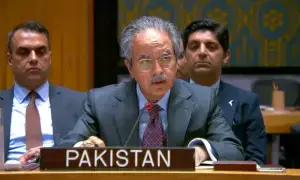
WASHINGTON: Two separate, but closely watched developments at the United Nations, have drawn attention to the institution’s internal procedures and shifting diplomatic dynamics, one involving the presidency of the General Assembly and the other the rotating leadership of the Security Council.
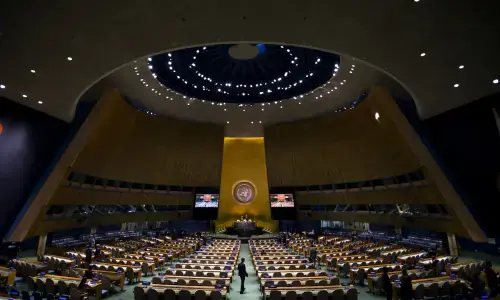
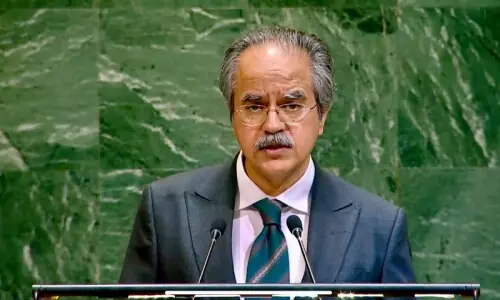
Palestinian Ambassador Riyad Mansour has withdrawn his candidacy for the presidency of the next session of the UN General Assembly, diplomatic sources confirmed.
While some observers suggested that US and Israeli pressure may have played a role in the decision, diplomats familiar with internal deliberations said the decisive factor was procedural.
Under the UN’s established system of regional rotation, the presidency of the General Assembly alternates annually among five regional groups. The upcoming session falls to the Asia-Pacific Group.
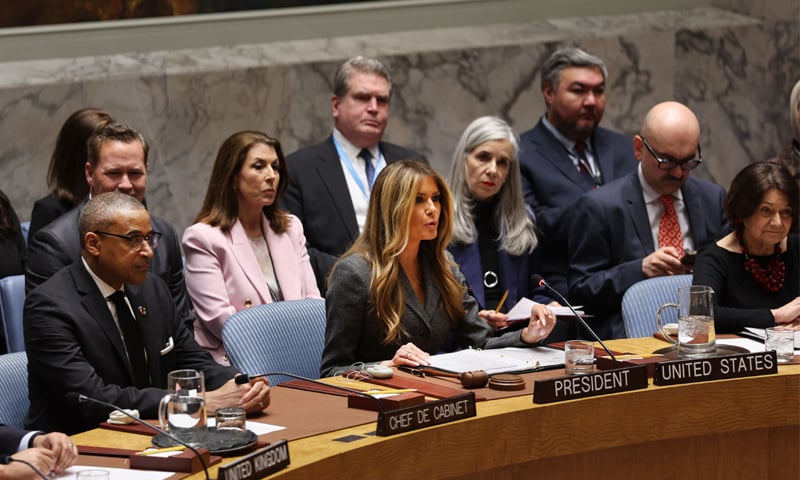
Melania Trump chairs UN Security Council session as Iran war rages
Despite its name, the Asia-Pacific Group includes not only South and Southeast Asian countries and Pacific island states, but also most Middle Eastern nations. For electoral purposes, these states operate as a single regional bloc.
According to diplomatic sources, the group has consolidated around Bangladesh as its consensus candidate. In such circumstances, mounting an alternative bid becomes extremely difficult.
One senior diplomat pointed out that this loyalty had, at times, overridden even deep political rivalries. On at least three occasions in past UN elections, India and Pakistan, despite their longstanding tensions, voted in support of each other’s candidacies when those bids carried the endorsement of the Asia-Pacific Group.
Sources indicated that with the group united behind Bangladesh, Ambassador Mansour’s path to victory had narrowed considerably, making withdrawal a practical decision.
Melania chairs session
US First Lady Melania Trump presided over a meeting of the United Nations Security Council on Monday, the first time a sitting US first lady led the 15-member body.
The session, titled “Children, Technology, and Education in Conflict”, was held at the UN headquarters in New York at 3pm local time.
It examined how education systems and technological access in war zones can promote tolerance and contribute to global security.
Mrs Trump took the gavel alongside US Ambassador to the United Nations Mike Waltz, joined by council members and invited stakeholders.
UN spokesman Stephane Dujarric described the session as “a sign of the importance that the US feels towards the Security Council and the subject”.
Diplomats note that while it is unusual for a US first lady to preside over a Security Council meeting, it does not violate UN rules or established practice.
Under longstanding UN procedure, member states may nominate representatives of their choosing. On several occasions, private citizens and non-governmental figures have addressed the Security Council and General Assembly at the invitation of member states.
Published in Dawn, March 3rd, 2026