0
0
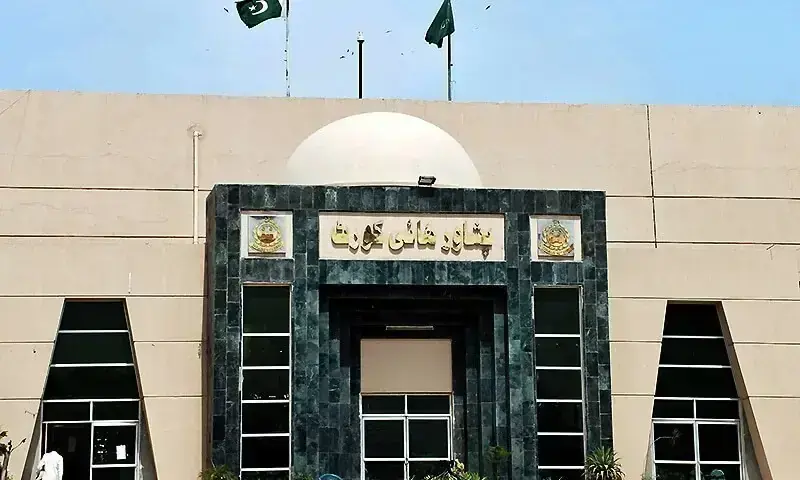
PESHAWAR: Peshawar High Court has dismissed petitions challenging ban on Pashtun Tahaffuz Movement (PTM) as non-maintainable and declared that petitioners can approach federal government’s review committee for de-proscription of the organisation.
A bench comprising of Justice Sahibzada Asadullah and Justice Dr Khurshid Iqbal released its detailed 62-page judgement on Thursday. The bench had earlier last month issued a short order about rejecting two petitions that challenged proscription of PTM and its leaders by the government in 2024.
The bench had reserved its order on Jan 21 after completion of arguments by lawyers representing petitioners and government.
One of the petition was jointly filed by Manzoor Pashteen and nine other leaders, requesting the court to declare illegal ban on PTM under Section 11B of Anti-Terrorism Act and petitioners under Section 11-EE.
Bench says petitioners can approach federal govt’s review committee
The petitioners had sought court’s orders for federal government to remove PTM from the list of banned outfits in First Schedule of ATA and their names from the ATA’s Fourth Schedule.
They also requested the court to declare that sections 11-B and 11-EE, amended through Anti-Terrorism (Amendment) Act, 2014, were in conflict with Article 10-A of the Constitution that guaranteed the right to fair trial and due process of law.
They had sought orders for Section 11-D of the law, which deals with keeping of an organisation under observation, to be read as a mandatory precursor to proscription under Section 11-B.
The other petition was filed by a member of PTM, Masoom Shah, requesting the court to declare the Oct 6, 2024, notification of the ministry of interior about proscribing the movement as illegal. The organisation was proscribed ahead of a high-profile Pashtun National Jirga (PNJ) held in Jamrud, Khyber tribal district, from Oct 11 to 13, 2024.
The bench has held that procedural prerequisites for proscription under sections 11B and 11E were complied with in letter and spirit. Besides, the court also held impugned notification was not vitiated by any jurisdictional or foundational defects.
“Questions relating to sufficiency or adequacy of material fall within the competence of the statutory review committee,” it said. The bench also held that in the presence of an efficacious alternate remedy, the innovation of constitutional jurisdiction at that stage was premature and impermissible.
The verdict noted that sections 11B and 11E of Anti-Terrorism Act, 1997, vested in federal government the authority to proscribe organisation/individuals upon formation of reasonable grounds to believe that it was concerned in terrorism or associated with terrorist elements. “The statutory scheme is neither unanalysed nor arbitrary,” it reads.
The bench held that the intelligence inputs and reports were processed administratively; a formal summary was prepared; the matter was placed before the federal cabinet in exercise of executive authority; a notification was issued in the official gazette.
“The proscription takes effect by virtue of such publication. Importantly, the legislature has engrafted a remedial safeguard in the form of review committee to examine applications for de-proscription. The architecture thus balances executive necessity with institutional accountability,” the verdict reads.
The bench noted that they examined the original record with anxious care and the summary was duly initiated and processed, cabinet meeting convened, deliberations were undertaken, requisite quorum was available, signature and recorded consent appeared on original documents.
“No material has been brought before us to demonstrate fabrication, manipulation or procedural impropriety,” the bench noted. It said that gazette notification was issued as lawful consequence of cabinet approval, the procedural spine of impugned action; therefore, remained intact.
“The petitioner’s grievance that no material was disclosed to establish anti-state activities pertains to sufficiency and adequacy of information forming the basis of the executive satisfaction,” it said. However, the bench held that judicial review, at that stage was concerned with the legality of the process, not with the substitution of the opinion.
“Where the statues entrust satisfactions to the executive, and where the process leading to the satisfaction conforms to the law, the court does not converts itself into appellate forum to weigh the evidentiary sufficiency ab initio. The legislature, in its wisdom, has designated the review committee as the primary forum for such examination. It is there the questions of adequacy, credibility or misapprehension of material may be urged or determined,” it said.
The bench said that the in the case at hand, the statutory procedure was duly observed, cabinet approval obtained, notification validly issued and no foundational illegality was established.
“A statutory review committee exists with the defined jurisdiction. Further appellate recourse remains open. To assume jurisdiction at this juncture would not only bypass but effectively nullify the statutory forum created by the legislature. Such an approach would erode the carefully constructed remedial hierarchy,” it said.
Published in Dawn, March 3rd, 2026