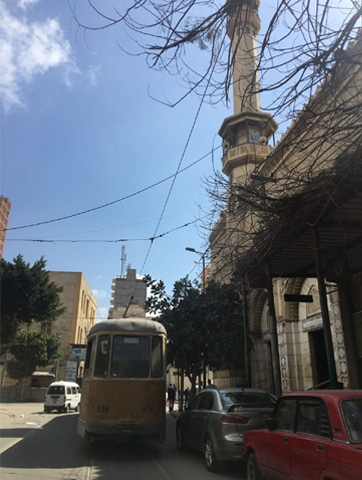
ALEXANDRIA: Along Egypt’s Mediterranean coast, the oldest tram in Africa and the Middle East rumbles for a final few weeks before its removal — the latest urban upheaval Alexandrians say is hollowing out their city’s identity.
Government plans to replace the colourful streetcars on one of the city’s routes with a partially elevated light rail line have angered Alexandrians, for whom the 163-year-old track is “heritage, not just a means of transport”, local urban researcher Nahla Saleh said.
Inaugurated in 1863, the tram is one of the world’s oldest, and among only a few to operate double-decker cars. In the 19th and 20th centuries, it helped the city become a bustling metropolis, home to sizable European diasporas and a distinct cosmopolitan culture.
Now, Egyptians young and old have flocked for farewell rides, before the streetcars come to a halt in April. As one locomotive screeches into the old El-Raml Station, commuters and visitors crane their necks out of giant windows at the historic neo-Venetian buildings overhead. “We’re not against progress,” psychologist and writer on culture Mona Lamloum said.
She and other Alexandrians agree the tramway needs work: inside the hand-calligraphied blue exterior, grime covers every surface. Underfoot, the rubber flooring is torn and strewn with trash. “We just have bad experiences of everything they call ‘progress’ becoming synonymous with destruction,” Lamloum said.
In recent years, development projects in Egypt’s second city have razed historic parks and — most egregiously to locals — privatised and obstructed much of its Mediterranean coastline.
For over 160 years, the tram has cut through Alexandria’s heart, in an 11-kilometre stretch that includes many of the city’s schools and main universities. The new project, led by Egyptian and international companies including Systra, Hyundai and Hitachi, promises to double speed and triple capacity.
Over half of it will be elevated — a major concern for Alexandrians who fear the tree-lined track will be replaced by eyesore concrete stilts. Ahead of the first phase of suspension, the transport ministry said the new project was the “only solution to the city’s traffic problems”.
Published in Dawn, February 26th, 2026