Reinstatement not a right if acquitted on technicalities: SC
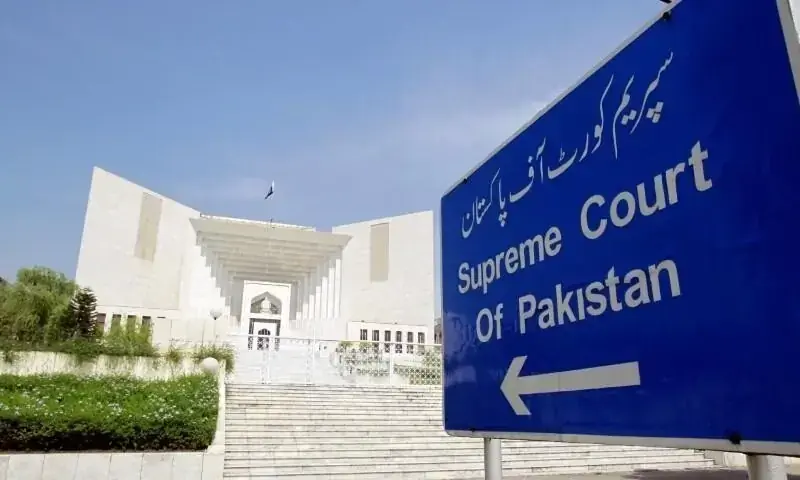

ISLAMABAD: The Supreme Court on Wednesday rejected the appeal of a police official dismissed from service, ruling that acquittal on mere technical grounds does not confer an automatic right to reinstatement in a disciplined force.
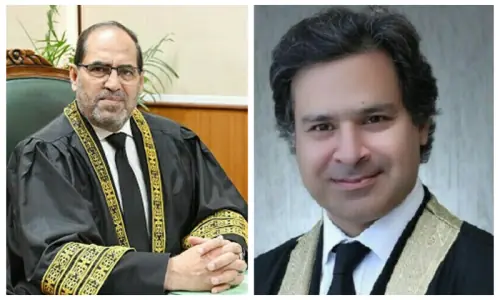
“Despite acquittal, the delinquent has to pass through the acid test of departmental proceedings first and cannot force the employer to reinstate him, come what may,” observed Justice Muhammad Ali Mazhar in a judgement authored by him.
A two-judge SC bench, headed by Chief Justice of Pakistan Yahya Afridi, had taken up an appeal against the Aug 27, 2025 rejection of the petitioner’s plea by the Punjab Service Tribunal.
Constable Shahzad Hussain was arrested on Aug 20, 2021, by the Anti-Corruption Establishment Police, Rajanpur, on a complaint lodged by Shahzad Sarwar under the Prevention of Corruption Act, 1947.
Policeman’s dismissal upheld, despite acquittal in graft case
He was accused of demanding Rs200,000 as bribe/illegal gratification to arrange a job for the complainant, allegedly receiving Rs30,000 as advance.
The constable faced trial and was acquitted by the Special Judge, Anti-Corruption, Dera Ghazi Khan, through a judgement dated Dec 16, 2022.
Earlier, on Sept 13, 2021, while the petitioner was in jail, he was charge-sheeted and placed under suspension.
A departmental inquiry later found him guilty, leading to his dismissal from service on Dec 18, 2021.
His departmental appeal was declined, followed by the dismissal of a revision petition on May 25, 2023. Subsequently, a service appeal was also dismissed by the tribunal.
Justice Mazhar emphasised that the doctrine of a disciplined force in policing underscores the importance of internal discipline, accountability, obedience and adherence to the rule of law to achieve legitimate law enforcement objectives rather than extrajudicial actions.
A well-disciplined force, the judge observed, requires robust internal and external accountability mechanisms to build and sustain public trust and confidence.
The integrity and reputation of officers of a disciplined force must remain untarnished and impeccable, as public trust is the bedrock of an effective policing system.
If the credibility or uprightness of an individual in a disciplined force is compromised or questioned, it adversely affects and jeopardises the goodwill of the entire institution, the judgement noted.
While acquittal may remove criminal stigma, it does not automatically warrant reinstatement in service in a disciplined force. Despite acquittal, the competent authority retains the jurisdiction to initiate disciplinary action and conduct an independent inquiry to assess the gravity of miscon-duct, including the nature of the acquittal.
The question of reinstatement, the court held, depends strictly on the outcome of such an inquiry. Mere acquittal in a criminal case does not provide a legitimate ground for reinstatement and remains subject to the satisfaction of the competent authority through internal disciplinary mechanisms, including assessments of suitability and fitness.
The judgement further stated that authorities must remain vigilant to ensure that only officers of clean antecedents and rectitude are engaged or reinstated, keeping in view the weight of public trust reposed in a disciplined force.
Even where police officials are acquitted in serious offences such as murder, rape, dacoity, theft, illegal gratification, extrajudicial killings or offences involving moral turpitude, the competent authority has the right to decide, in the larger public interest, whether such officers should be taken back into service or separated.
Finding the appeal bereft of merit, the SC dismissed the case and upheld the constable’s dismissal from service.
Published in Dawn, February 26th, 2026