Concrete lining of KB Feeder raises ecological concerns in lower Sindh
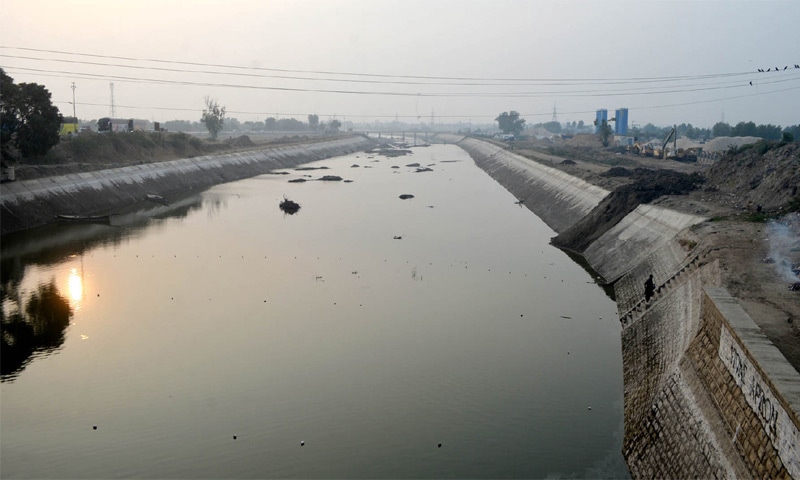

THATTA: The partial structural failure of the Kalri Baghar (KB) Feeder Upper has triggered growing environmental degradation across lower Sindh, as water and climate experts warn that the Rs50.9 billion canal “improvement” project could inflict long-term ecological damage on the Indus Basin and its dependent communities.
The KB Feeder, a critical artery supplying water from the Indus River system to Karachi, was recently lined with rigid concrete (PCC) to reduce seepage losses. However, environmentalists and hydrologists caution that the intervention has disrupted the canal’s natural hydrological role, potentially accelerating ecological degradation in Thatta, Jamshoro and surrounding districts.
Obhayo Khushk, a water expert and author of several books on the Indus River system as well as a former Superintendent Engineer Irrigation Department, told Dawn that the earthen banks of the KB Feeder historically functioned as a vital groundwater recharge mechanism for the arid lower Sindh belt.
Mr Khushk pointed to extensive scientific evidence from the Indus Basin showing that unlined canals significantly replenish freshwater aquifers. “By replacing porous soil with concrete, the project has effectively erected an aquifer barrier,” he said, warning that such engineering solutions ignore the ecological hydrology of river systems.
Rs50.9bn canal ‘improvement’ project may inflict ecological damage to Indus Basin
He noted that nearly 78 per cent of groundwater in Sindh is already brackish, and restricting freshwater seepage could intensify saline intrusion, especially in the lower riparian areas and the Indus Delta. “If freshwater pressure continues to decline, vast tracts of agricultural land could become unproductive,” he warned.
While the Irrigation Department maintains that canal lining would save up to 550 cusecs of water, climate specialists have raised concerns over a potential “heat-sink effect.” With summer temperatures in Sindh frequently exceeding 48°C, exposed concrete absorbs and radiates heat, elevating water temperatures and accelerating evaporation.
Anees Hillayo, president of the Keenjhar Conservation Network, observed that the replacement of earthen banks has eliminated natural vegetation that once moderated microclimates and supported biodiversity. “The presumed water savings may be substantially offset by increased evaporation and thermal stress on aquatic life,” he said.
The redesign has also led to the widespread removal of riparian vegetation and natural nesting habitats, supported by assessments shared by Shafi Murghar, head of the Delta Development Organisation. He said the loss of slow-moving water pockets and vegetative cover has disrupted ecosystems supporting amphibians, reptiles, and the endangered smooth-coated otter.
Following the collapse of several concrete sections on February 3, fractured slabs created concentrated leakage points, causing localised waterlogging and soil erosion. Mr Murghar warned that the steep, smooth canal walls now act as a physical barrier to wildlife and livestock, transforming sections of the feeder into a potential “death trap.”
Beyond ecological impacts, the project has raised serious socio-economic concerns. Yasmeen Shah, vice chairperson of the Pakistan Fisherfolk Forum and head of the Noori Development Organisation, said hundreds of villages along the canal depend on traditional access points for livestock watering, domestic use, and fishing-related livelihoods.
“Environmental groups estimate that more than 1,000 livestock animals have already lost safe access to water due to the steep concrete embankments,” she said, adding that affected communities were neither consulted nor provided alternative access infrastructure.
Critics argue that the project reflects a broader policy mindset that prioritises rapid urban water transfer to Karachi while sidelining the ecological balance and water rights of lower Sindh.
Dr Muhammad Ali Manjhi, a renowned environmentalist, believed that “those who matter were treating the Indus as a plumbing conduit for the city, forgetting that it is a living river system that sustains an entire civilisation,” remarked a representative of a local environmental organisation.
As authorities prepare repair work under the defect liability clause, environmental groups and water experts, including Obhayo Khushk and Anees Hillayo, are demanding a comprehensive Environmental Impact Assessment (EIA). They have urged the government to adopt nature-based solutions such as bio-engineered embankments, controlled seepage zones for aquifer recharge, and the construction of designated cattle ghats and wildlife escape ramps.
Without integrating ecological hydrology into infrastructure planning, experts warn that the KB Feeder project risks becoming a costly example of environmental miscalculation in lower Sindh with consequences extending far beyond the canal’s concrete walls.
Published in Dawn, February 26th, 2026