Remote Jhelum village struggles without basic facilities


 0
0
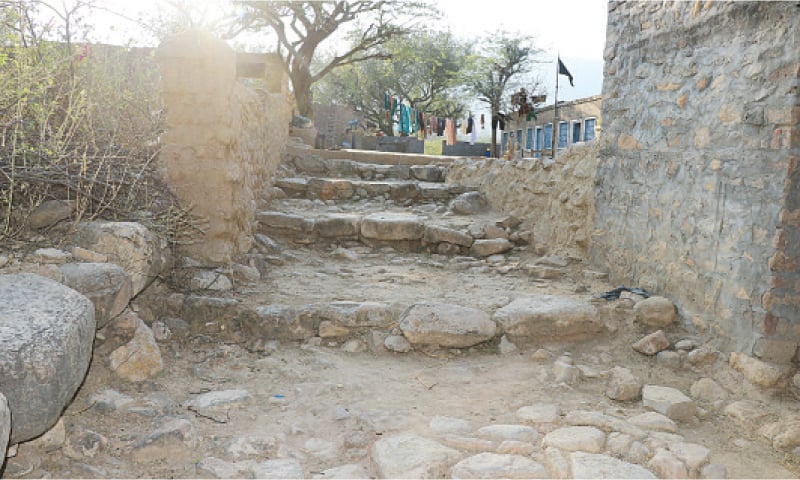

Located far from Dina and Jhelum cities, the secluded locality of Moogli, hidden at the foot of the centuries-old Tilla Jogian, struggles with access to education, health, drinking water and paved streets.
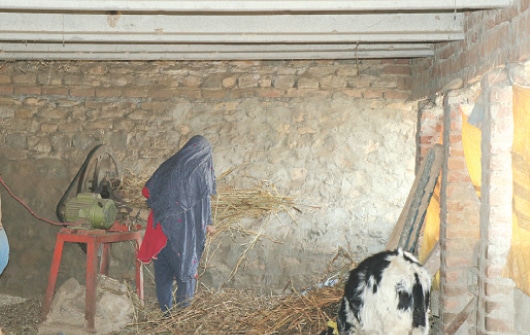
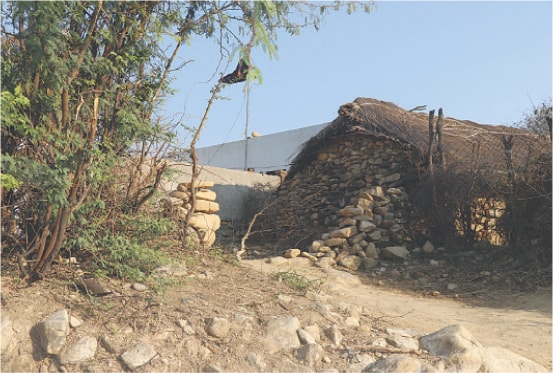
The stone-walled houses with straw roofs, gateless compounds or thorny hedges serving as barriers to keep wild animals away from the surrounding jungle make a visitor from the city feel as though they have travelled back in time.
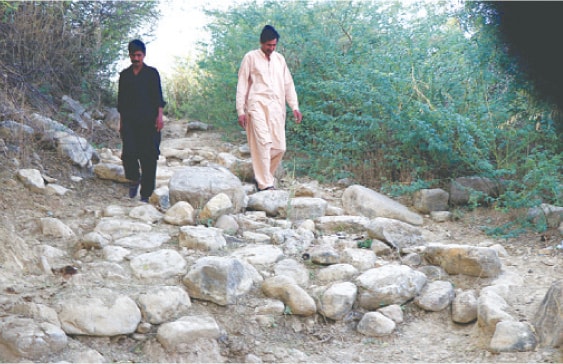
There is no easy road access. A steep, ascending and descending, twisting, unpaved stony road links the village from the Jandala side, stretching over five kilometres. The eastern route from Rohtas is 16 kilometres long and even more dangerous.
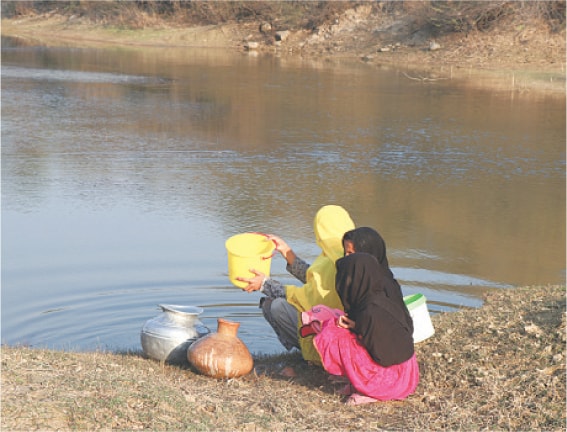
There are about 20 to 30 scattered houses, mostly stone cottages. All the streets, if they can be called streets, are studded with stones placed by residents who remain helpless before the sharply protruding rocks along the path to the water pond. The pond caters to daily needs of washing and bathing and, during hot summers, even drinking, as a couple of 400-foot-deep bored wells often run dry.
Over 120 villagers, including around 30 children, live in the village.
Abdul Qayum, a notable resident, while serving boiled desi eggs with tea, told this reporter that children are not sent to school as the nearest primary school is a two-hour walk through the jungle. Electricity was provided years ago, but paving a road to connect with the outside world was never considered. “No candidate bothers to come here,” Abdul Qayum said with a deep, suppressed sigh.
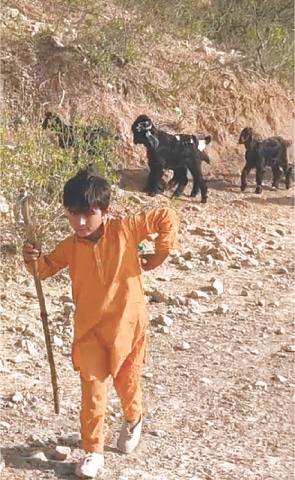
When asked about their livelihood, villagers said that illiterate youth have no option but to work with masons for daily wages. Women, children and the elderly rear cattle, especially goats and sheep, while limited landholdings in the hills yield grains for bread. Wood from the jungle is cut to fuel kitchen fires.
However, he said that one of his relatives working abroad commented on the social media post of the deputy commissioner Jhelum, expressing a desire for educational facilities for their growing illiterate daughters. In response, the DC sent a lady officer from the education department to explore the possibility of adult literacy.
The most distressing sight was that of young girls fetching pots of water from a pond located in the nearby jungle.
Muhammad Saqlain, a young man, said that when villagers go to cities for labour, they wish to educate their children, but sending girls to school remains unimaginable. “If a paved road is built and a school is established, teachers can come fearlessly,” he suggested.
Farakh Hussain, another young resident, said the entire community, especially mothers, desires education for their children and clean drinking water, but feels helpless.
The villagers have appealed to the chief minister Punjab to look into their grievances on humanitarian grounds and provide roads, water, school and health facilities to enable them to live in step with the surrounding society.
Deputy Commissioner Jhelum Mir Reza Ozgen, when contacted, said that the district literacy officer was dispatched in response to a message on social media to assess the prospects of setting up an adult literacy centre and a school for children in the remote village.
When informed about the difficulties in shifting patients to hospitals, he said a “Clinic on Wheels” team could be assigned to reach the locality on a weekly or fortnightly schedule.
Ms Mamoona, the district literacy officer, after visiting the area, said it was unimaginable that such a stone-built locality existed in such isolation and underdevelopment.
She said access to the area without a proper road link was difficult for teachers. She added that young girls and boys were keen to attend school, but their journey beneath the hills and through the jungle was extremely risky.
Published in Dawn, February 23rd, 2026