UN liquidity crisis undermining peacekeeping operations, warns Pakistan


 0
0
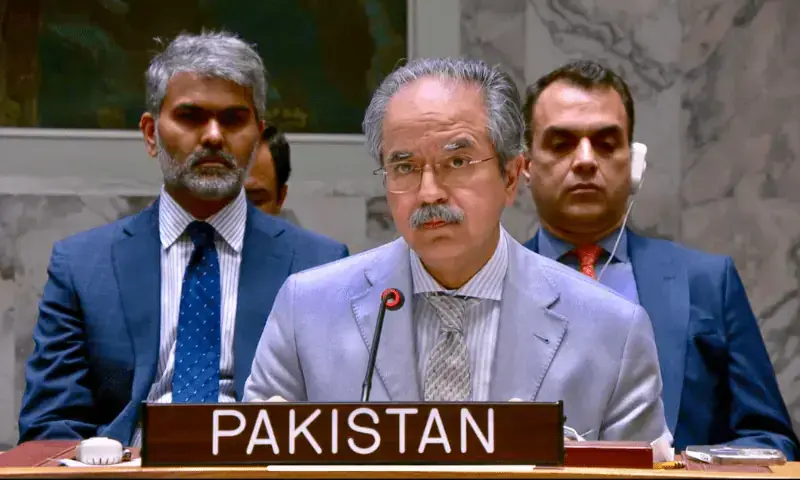

WASHINGTON: Pakistan has warned that the United Nations’ liquidity crisis is directly undermining peacekeeping operations by reducing patrols, mobility and field presence, with serious consequences for the protection of civilians and the safety of UN personnel.
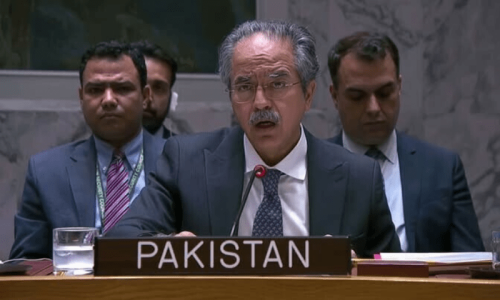
In a statement on Friday, Pakistan’s UN Ambassador Asim Iftikhar Ahmad said cash shortfall was “affecting mandate delivery, deterrence against violence and the overall effectiveness of missions in the field”.
Speaking at the opening of the Special Committee on Peacekeeping Operations, he stressed that UN peacekeeping remains an indispensable instrument for maintaining international peace and security, but “is facing mounting political, operational and financial pressures that require collective reflection and action”.
The warning came amid growing concern over the world body’s financial health. In late January, The New York Times reported that the UN was facing an “imminent financial collapse” and could run out of cash by July if member states failed to pay their assessed contributions.
The report noted that the United States accounts for about 95 per cent of the arrears owed to the UN’s regular budget. At present, US unpaid dues to the UN exceed $2.2 billion.
Washington recently paid only a small portion of its outstanding obligations. The administration of President Donald Trump made a $160 million contribution last week — the first since his return to office — as a partial payment towards arrears to the UN’s regular budget, according to UN spokesperson Stéphane Dujarric.
Ambassador Ahmad said predictable financing — once a core strength of UN peacekeeping — had now become its biggest challenge, with contingency measures forcing reductions in both uniformed and civilian personnel across missions.
Calling for Security Council mandates to be matched with commensurate and predictable resources, he urged a serious and structured review of the financial architecture underpinning UN peacekeeping to ensure funding that is sustainable and aligned with mandated tasks.
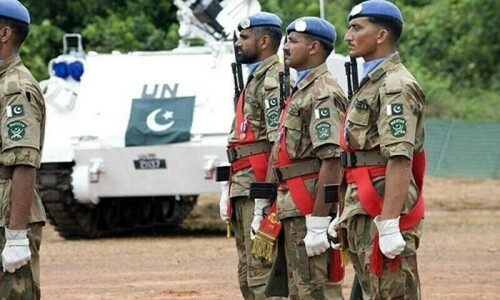
The Pakistani envoy paid tribute to 182 peacekeepers from the country who have lost their lives while serving under the UN flag.
He noted that although several missions have transitioned or drawn down in recent years, no new UN peacekeeping operation has been established for more than a decade despite rising global instability and the highest levels of conflict since the Second World War.
The growing reliance on non-UN and ad hoc arrangements, he said, reflected continued demand for peacekeeping. “The central challenge is not relevance, but resolve and collective political will,” he added.
Ambassador Ahmad cautioned that if financial commitments continued to decline and missions kept shrinking without clear strategic direction, the readiness of troop-contributing countries to maintain forces earmarked for UN deployment could also be affected — including standby arrangements, rapid-deployment capabilities and specialised units.