First-ever markhor trophy hunting receives mixed reaction in Bahrain
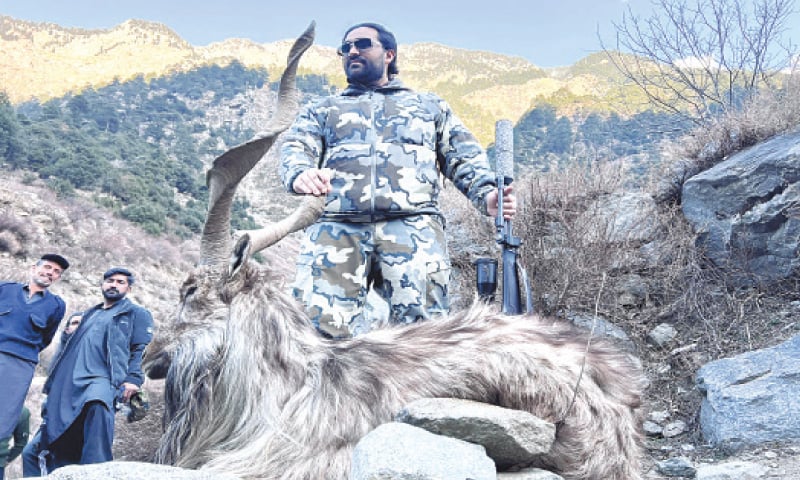
SWAT: The first-ever trophy hunting of a Kashmir markhor in Mankyal Valley of Bahrain tehsil has received mixed reaction from residents, with some calling it a historic milestone for wildlife conservation and others raising concerns over transparency and fairness of the exercise.
The hunt took place in Mankyal Shringal National Park on Tuesday and was described by wildlife officials and supporters as a landmark achievement for Swat.
Those welcoming the development praised the Wildlife Department Kalam and the Mankyal Conservancy for their efforts.
“It wouldn’t have been possible without your hard work, dedication and commitment. It is undoubtedly a remarkable step in wildlife conservation, particularly for the endangered markhor, according to supporters.
In a statement, they also acknowledged Divisional Forest Officer Wildlife Kalam Naveed, Sub-Divisional Forest Officer (SDFO) Farzand Ali and Mohammad Talha from Lahore for securing the legal permit and facilitating what they termed a historic event.
Some hail development, others question ‘legality, transparency and financial fairness’ of exercise
Officials said the initiative was expected to enhance regulated trophy hunting, generate revenue and support wildlife conservation efforts in the region.
SDFO (Wildlife) Farzand Ali said that the objective of granting trophy hunting permission was to benefit the local community, which, in turn, would help conserve the markhor population.
He said the hunted markhor was eight-year-old, weighed approximately 120kg and had a 37-inch horn.
However, the development received criticism from the local community.
Faraz Ahmad of Mankyal questioned the legality, transparency and financial fairness of the hunt. He demanded clarification regarding the reportedly low permit price, the utilization of funds, and public disclosure of official records. He warned that legal action could be pursued if transparency is not ensured.
Mian Fazle Adil expressed concern over the broader conservation approach. “Is it truly conservation if the survival of an endangered species depends on allowing it to be hunted?” he asked, suggesting that long-term strategies such as habitat protection, population growth and eco-tourism alternatives should be prioritized instead of killing endangered animals.
Similarly, Tariq Hussain Zeb, a resident of Bahrain tehsil, raised questions about the composition and legitimacy of the local conservancy committee. He said the committee should represent all segments of the community, but its formation process, membership and structure remain unclear.
“Verbal assurances were given that all stakeholders would be included, but the matter proceeded to the hunting stage without public knowledge,” he said, calling for transparency and a public explanation.
Questions have also been raised regarding the permit price. Critics pointed out that markhor permits in Chitral were reportedly sold for over Rs60 million in December 2025, while a recent permit in Torghar fetched Rs18.4 million. In contrast, the Mankyal permit is said to have been issued for Rs3-4 million.
Under existing regulations, 80 per cent of the royalty from trophy hunting is meant to go to the local community. However, residents argue that the existence, structure and financial records of the relevant committee have not been made public.
The debate highlights a broader discussion in Swat over balancing conservation efforts, community benefits, transparency and ethical concerns surrounding trophy hunting of endangered species.
Published in Dawn, February 20th, 2026