Net-metering changes worry lawmakers
• Parliamentarians voice apprehensions over rapid finalisation of regulation and limited stakeholder consultation
• Say rooftop solar boom was driven by high electricity tariffs, unreliability of grid
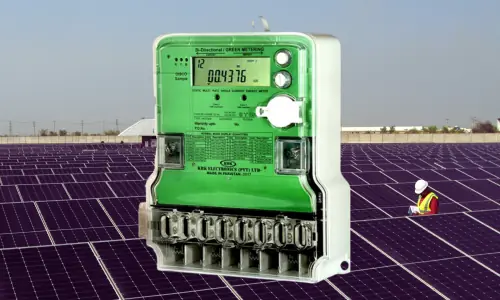
ISLAMABAD: The Parliamentary Forum on Energy and Economy here on Tuesday raised concerns over consumer rights after changes to net-metering by the National Electric Power Regulatory Authority (Nepra).
A discussion session organised by the Forum examined the implications of the recently approved Prosumer Regulation 2026 by Nepra, raising concerns about consumer rights, regulatory predictability, and the future trajectory of distributed renewable energy in Pakistan.
The Parliamentary Forum on Energy and Economy is a parliamentary body dedicated to analysing the energy-economy nexus through collaboration with experts and think tanks.
The session brought together parliamentarians, regulators, industry representatives and policy experts to assess the economic, legal and structural consequences of the revised net-metering framework. Danyal Chaudhary, Secretary of the Forum, moderated the proceedings.
Participants expressed concern over the speed with which the regulation was finalised. Parliamentarians noted that reforms with far-reaching financial and legal consequences for thousands of consumers require broader consultation, greater transparency in impact assessments and adequate time for public scrutiny. They questioned whether the urgency demonstrated in approving the regulation matched the scale of stakeholder engagement conducted.
Sher Ali Arbab, co-convenor of the Forum, observed that the rapid expansion of rooftop solar has been driven by rising electricity tariffs and persistent grid unreliability.
“Citizens invested in rooftop solar largely as a response to systemic weaknesses in the power sector,” he said, emphasising that regulatory stability is essential to sustain public confidence in clean energy investments.
Imtiaz Hussain Baloch, Director General (Licencing) at Nepra, presented the regulatory rationale behind the Prosumer Regulation 2026.
He stated the revised framework seeks to address concerns related to revenue recovery, cost allocation, and grid sustainability amid the growing penetration of distributed solar generation.
Speaking on consumer rights and the public policy implications, Manzoor Ahmed Ali Zai of the Policy Research Institute for Equitable Development (PRIED) warmed that altering the financial terms of net-metering undermines the legitimate expectations of households that made long-term investments under an earlier regulatory regime.
He emphasised that reforms must not disproportionately burden middle-income consumers who adopted renewable energy in good faith.
Pakistan Solar Association Chairman Waqas Moosa warned that the revised framework could significantly extend the payback period for rooftop solar systems and potentially slow future adoption.
He noted that weakening incentives for distributed generation may push consumers towards battery storage and partial disengagement from the national grid, which could create new financial and operational challenges for the power sector.
During the interactive discussion, parliamentarians underscored the constitutional responsibility of legislature in overseeing major regulatory shifts that carry wide economic and social consequences.
They emphasised that strong parliamentary oversight is essential to ensure transparency, fairness, and alignment with national climate and energy goals and called for more structured engagement between regulatory bodies and parliamentary forums prior to the approval of significant policy changes.
Published in Dawn, February 18th, 2026