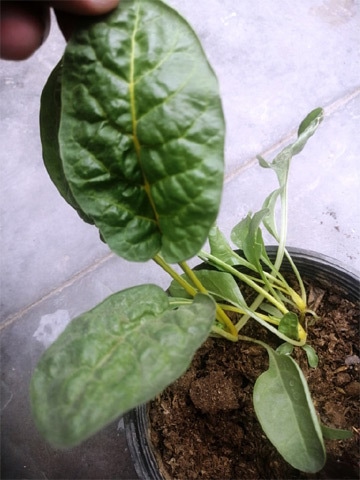
Swiss chard is one of those leafy vegetables that is not only nutritious but can also be easily grown in the Subcontinent. The life cycle of Swiss chard is similar to beetroot, while its physical attributes are more closely related to spinach. The requirements for growing Swiss chard are more or less similar to those for beetroot and spinach — from nutrient requirements to protection from pests and even methods of harvest.
At the same time, many gardeners advise against growing Swiss chard near beetroot or spinach. This is because pests and other stressors that may be debilitating for beetroot or spinach would also adversely impact Swiss chard and vice versa.
Swiss chard saplings are usually transplanted to their permanent location when they are around four inches in height and have sprouted at least three to four true leaves. The sapling is transplanted to large pots or open ground, depending on the desired harvest volume. After the transplantation, the Swiss chard plant is gradually introduced to sunlight by removing existing shades.
Swiss chard grows better when it has increased exposure to direct sunlight. Do note that the sunlight here refers to the winter morning sunlight and not the scorching rays of the summer sun. An exception is the ‘Fordhook Giant’ variety of Swiss chard, which thrives even in summer sunlight and can tolerate temperatures of up to 32 degrees Celsius. This makes it a handy variety to be grown in warmer regions such as Karachi. Once the 32 degrees Celsius threshold is breached, however, the plant’s growth rate diminishes, causing leaves to turn hard and bitter, while early bolting is also likely to occur.
Nutritious, resilient and surprisingly easy to cultivate, Swiss chard can thrive in South Asian climates — if grown with the right sunlight, watering and pest control strategies
Therefore, gardeners growing the ‘Fordhook Giant’ variant in warmer areas should expose the plant to four to five hours of early morning sunlight and avoid the scorching afternoon and evening sunlight. A green shade should be installed above the plant to protect it from the afternoon sun. In regions with milder temperatures, the plant can be exposed to full-day direct sunlight.
Watering should be done daily so that the upper soil layer turns dry within 24 hours. Water should not pool up on the soil surface, which should stay moist but not wet.
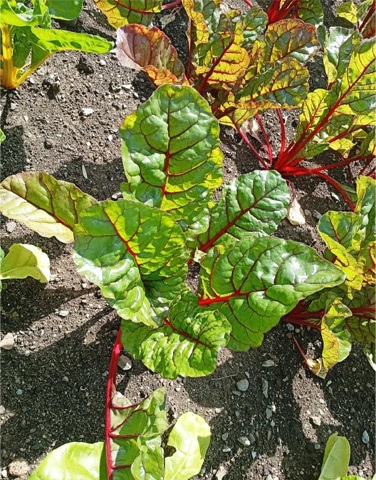
Like most leafy vegetables, Swiss chard should be given nitrogen-rich fertilisers throughout their life cycle. Nitrogen is more important than potassium and phosphorus, as it makes the Swiss chard, which comprises mostly of leaves above the soil surface, makes the plant bushier. However, the plant needs potassium and phosphorus as well for the growth of buds, flowers, fruits and roots.
Decomposed cow manure and decomposed chicken manure are two inexpensive and easily available organic options of nitrogen-rich fertilisers. A fistful of nitrogen-rich fertiliser should be sprinkled around the plant after every two to three weeks.
During the sprouting and seedling stages, Swiss chard is vulnerable to birds. Installing light-deflecting CDs or mirrors, green net or a scarecrow helps to protect the plant from such attacks. Birds become a lesser threat in later stages, as the number and size of true leaves increases. However, pests such as aphids, slugs, snails and leaf miners may attack Swiss chard leaves.

If there are only a couple of Swiss chard plants, pests can be removed manually by picking them up with your hands. If there are more plants being grown, then it is better to spray the plants with a suitable organic pesticide to protect the plant from pest attacks. Neem oil is a good organic option, since most of the plant consists of edible leaves. Prepare a mixture with one teaspoon of neem oil mixed in a litre of water and spray over the plants after every fortnight.
Please send your queries and emails to doctree101@hotmail.com. The writer is a physician and a host for the YouTube channel ‘DocTree Gardening’ promoting organic kitchen gardening
Published in Dawn, EOS, February 15th, 2026