IHC contempt proceedings against PM Shehbaz stayed in Aafia Siddiqui case
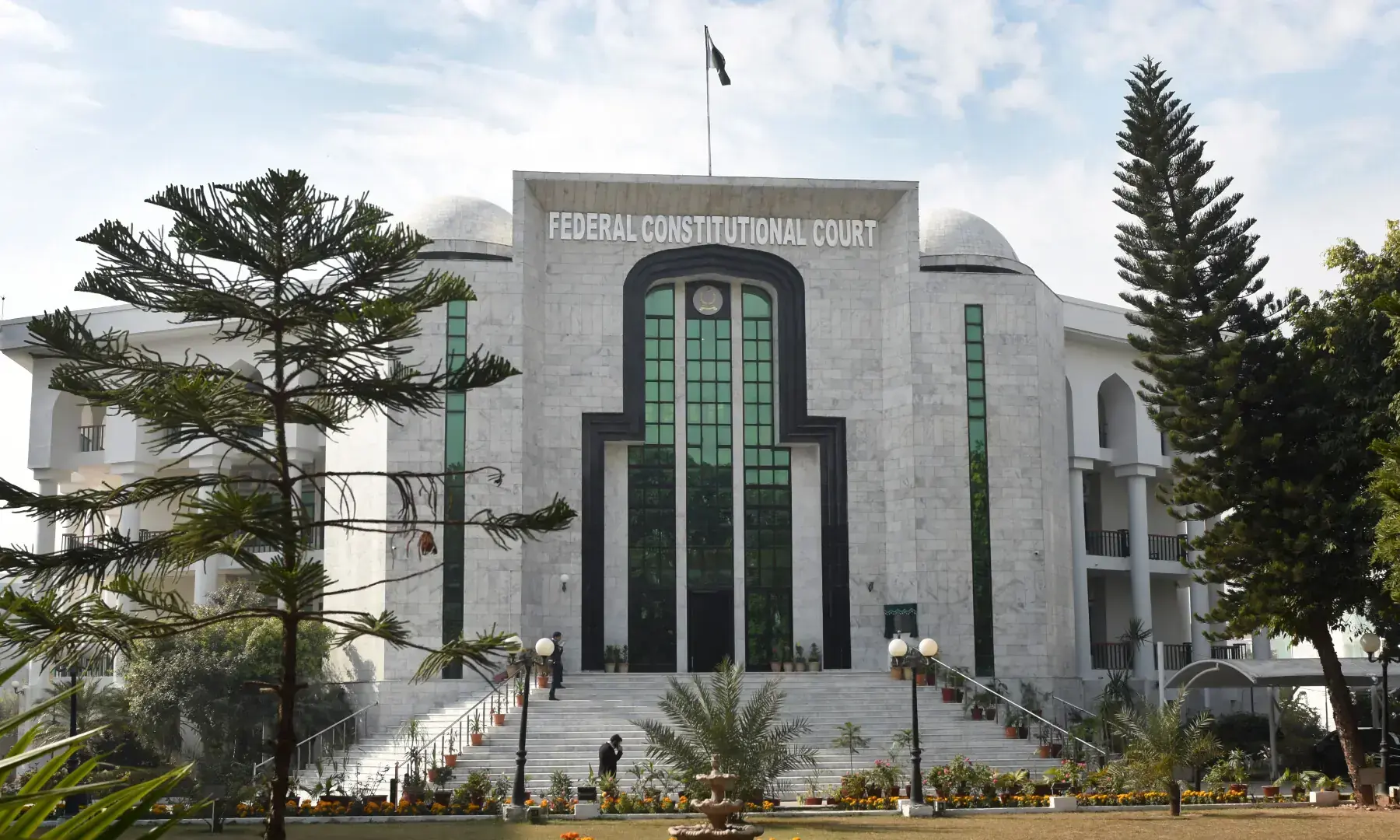
ISLAMABAD: The Federal Constitutional Court (FCC) on Tuesday restrained the Islamabad High Court (IHC) from proceeding further with a contempt of court case against Prime Minister Shehbaz Sharif and federal ministers over the alleged failure to support Dr Fowzia Siddiqui’s legal efforts in the United States.
Headed by FCC Chief Justice Aminuddin Khan, a three-judge bench, also comprising Justice Ali Baqar Najafi and Justice Arshad Hussain Shah, took up a set of appeals filed by the federal government.
The appeals challenge the IHC’s initiation of contempt proceedings against government officials and seek to overturn the May 16, 2025 order allowing amendments to an already settled petition relating to Dr Aafia Siddiqui, nearly a decade after its disposal.
Additional Attorney General Rashid Hafeez represented the government, while Advocate Imran Shafeeq appeared on behalf of Dr Fowzia, to whom the court also issued notice.
FCC takes up govt appeal challenging ‘judicial overreach’ and its foreign policy implications
Earlier, Justice Sardar Ejaz Ishaq Khan of the IHC had put the PM and the entire federal government on notice, seeking an explanation from the cabinet for not supporting Dr Fowzia’s legal efforts in the US.
In its appeal, the government argued that the IHC’s direction permitting amendments to the pleadings amounted to judicial overreach and undermined the finality of concluded litigation.
It maintained that reopening a settled matter after such a long lapse violated settled principles of law.
Dr Aafia was convicted by the US district court for the southern district of New York .
Her sister Dr Fowzia had approached the IHC expressing concern for Dr Aafia’s life, safety, and physical and mental wellbeing, citing a lack of consistent and reliable updates about her condition in custody.
The government contended that by allowing the amendments, the high court failed to consider the serious legal and foreign policy implications of the revised relief sought, which, it said, squarely fell within the exclusive domain of the executive and engaged Pakistan’s obligations under international law.
It asserted that the respondent sought the amendments with mala fide intent, describing the move as a counterblast aimed solely at keeping the petition alive.
In the amended petition, Dr Fowzia sought a declaration that the government had constitutional and international law obligations to take all necessary measures for Dr Aafia’s release and repatriation.
The appeal stated that these concerns had already been addressed, noting that in October 2024 the PM had written a formal letter to the US president in support of Dr Aafia’s clemency petition. This was followed by the dispatch of a high-level state delegation. The government also made efforts to negotiate bilateral and multilateral treaties for the transfer of prisoners, but US authorities declined to enter into any such agreement.
The government argued that the IHC had overlooked the applicability of the Vienna Convention on Diplomatic Relations 1961 (VCDR) and the Vienna Convention on Consular Relations, 1963 (VCCR), both of which have the force of law in Pakistan under the Diplomatic and Consular Privileges Act, 1972.
Published in Dawn, February 11th, 2026