‘Umayyads of Cordoba survived against all odds’


 0
0
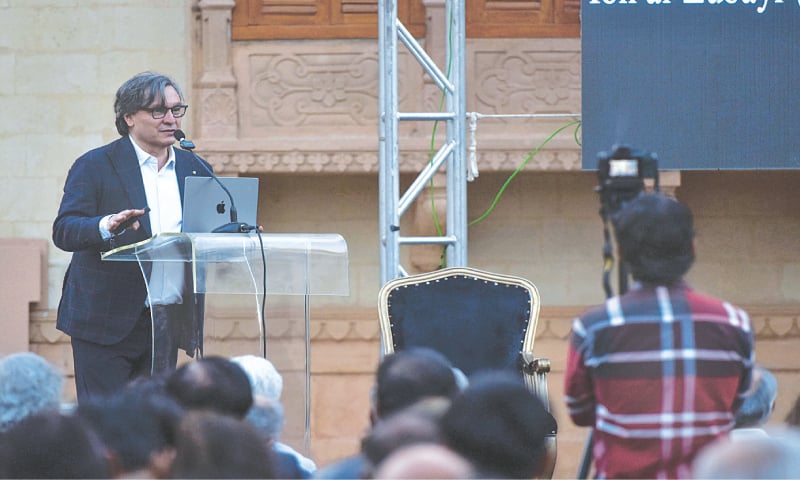

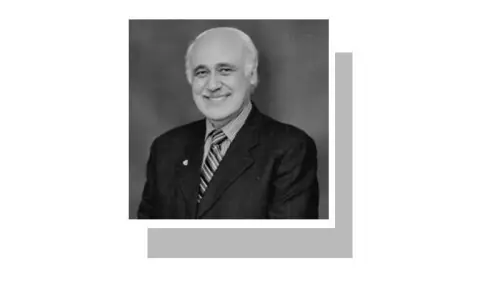
KARACHI: A lecture about ‘The Umayyad Caliphate that was Cordoba’ by a leading historian from Spain, Dr Eduardo Manzano Moreno, organised by the Mohatta Palace Museum and Endowment Fund Trust for Preservation of the Heritage of Sindh in collaboration with Lahore Literary Festival at the Mohatta Palace Museum here on Monday, examined the life, politics and culture of the Umayyad court in Cordoba.
Speaking about the Umayyad dynasty, the historian said that they do not have a very good reputation in Islamic tradition. “They were not particularly receptive to the message of the Prophet when he started his preaching. Many people believed that when the Prophet conquered Mecca they would finally be wiped out. No one expected the Umayyads to take over power but they prevailed after the first conflict of the Rashidun Caliphate. But they were also overthrown by the Abbasids in AD750 where they massacred all the members of the Umayyad family while also desecrating the tombs of some former Umayyad caliphs. So it was against all odds, however, that the Umayyads survived,” he said.
“Abd al-Rahman I, who miraculously escaped from the massacre of his family, proclaimed himself as an independent amir in the age of the Dar al-Islam. There was Egypt, there was Syria, too, which was not completely Islamised. It was a time when the process of Islamisation had not particularly taken off that side. So in Andalusia, somehow the Umayyad caliph Umar II managed to prevail by consolidating their dynasty at a distance from Mecca.
“Caliphs are a family affair of the Quraish of Mecca, the same clan to which the Prophet Mohammed belonged. But you had the caliphs in Damascus and from there you had Abd al Rahman III, a descendant of Abd al Rahman I, who proclaimed himself as a caliph.
“In AD909, the Fatimids, which were a branch of the Shiits, managed to take over Ifriqiya, a big shock for the world of Islam. The Fatimids had a very powerful political programme. They were beginning a new hijrah with a complex ideology. They never hid that they wanted to expand through Dar al Islam,” he said.
Historian Dr Moreno traces political struggle, transformation of the dynasty in Andalusia
“Meanwhile, there was the Abbasid Caliphate, which was in a bit of turmoil in AD923. Everyone thought that they had failed in serving the Muslim community of that time, especially since they had been unable to prevent the Fatimids Caliphate from taking over. In AD969, the Fatimids occupied Egypt while also sending agents to Andalusia to provoke rebellion to take the Umayyads down.
“But the Umayyads were in contact with Christians, who were pushing southwards at the time. The Umayyads thought that, despite all the wrongs they had done in the past, they had a second opportunity in Andalusia. They had inscribed verses from the Quran asking God’s forgiveness for their mistakes and asked Him to show them the right path against their enemies on the walls of the Mezquita or the Cordoba Mosque. They believed that they were a dynasty of survivors who should claim the caliphate as they were living in a society that had become deeply Arabised at that time.
“For many years, the idea was that Islam in Andalusia, or Spain, was a very superficial phenomenon. But in reality, this was not the case. There was the adoption of the Arab language there, which was being spoken not just by the Muslims but by Christians as well. The Christians were also reading and appreciating Arab poetry, and the Gospels were also translated into Arabic. And not only the Christians were Arabised, the Jewish people there were also reading and writing Arabic.
“The extension of the Cordoba Mosque over the years, initially built in the 8th Century by Abd al-Rahman I, was one thing but there were so many other mosques coming up in Cordoba in the 10th Century. Some say that there may have been 400 mosques in
Cordoba at the time,” the historian said, adding that he himself has been able to document around a hundred. “The Andalusians also maintained biographical dictionaries of people numbered in hundreds and thousands, which can be connected. Today, we historians have made a database of such literature from the 8th Century to the 15th Century to show that some 11,573 scholars or ulema managed to create an impact in Andalusia. They travelled to North Africa, to Egypt and the Middle East and as far as Central Asia.
“They learned, brought back manuscripts, and were responsible for a massive input of knowledge. They were extremely keen to bring back knowledge from all over. Umayyads were very proud of this as many times they were sponsoring these travels as the Umayyads were not just interested in Islamic heritage but heritage and knowledge from all over the world, such as law, science, mathematics, medicine, and so much more,” Dr Moreno said.
Earlier, while introducing the lecturer, Hameed Haroon, the Managing Trustee of Mohatta Palace Museum and DawnMedia CEO, said that he is a thinker and somebody who speaks about interesting periods in our history.
Published in Dawn, February 10th, 2026