Karachi requires a strong foundation of corporate citizenship to balance the needs of shareholders with those of the community and the environment in the surrounding area. Practices elsewhere show that this could help attract consumers, promote brands, and enhance company loyalty, creating more successful businesses.
To quote Dave Massaron, General Motors Vice-President of infrastructure and corporate citizenship, “General Motors and Detroit’s DNA are interwoven. The two things just go together.” He further told CNN that, “The city is on an upward trajectory for the first time in my lifetime.”
During the last US financial crisis, Detroit’s reliance on the auto industry and on taxes had badly hurt the city, as free-trade agreements, automation, and incentives from southern states sent jobs away.
Economic literature shows that social spending and social protection are essential strategies for promoting inclusive and sustainable development, especially in developing countries like Pakistan, where poverty, inequality, and vulnerability are prevalent. That 762,499 professionals, skilled and unskilled persons left the country for work in 2025, says a Business Recorder editorial, “is perhaps the most telling statistic in a largely grim economic snapshot”. None of the sectors where remittances are coming in are labour-absorbing, says a political economist.
‘No nation can remain secure if its elite disengages itself from public life or retreats into private comfort’
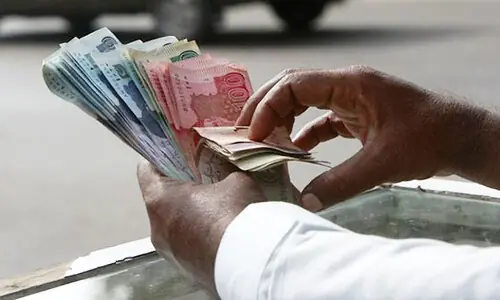
Pakistan has approximately 40 million households with a national average monthly household income of Rs82,000, says Dr Farrukh Saleem, whereas the minimum survival threshold is Rs105,000. The average Pakistani household is Rs23,000 short every month, and that’s before education, healthcare or savings are even considered.
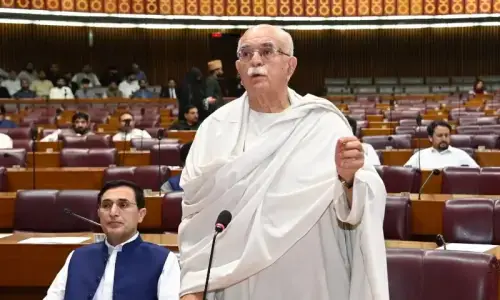
A talk on the ‘Future Expectations of the Elite of Karachi’ by Commander Karachi Vice Admiral Mohammad Faisal Abbasi was organised recently by the English Speaking Union of Pakistan. Vice Admiral Abbasi said those with means, education and access must contribute decisively to improve civic life in the city. This includes sustained engagement in education, healthcare, environmental management, urban planning and social welfare.
He said, “I see remarkable human capital, extraordinary entrepreneurial energy and unmasked strategic importance in Karachi. I also see persistent challenges, governance gaps, infrastructure stress and social inequality. No nation can remain secure if its elite disengages itself from public life or retreats into private comfort.” A globalised city must be led by its citizens who care deeply about its trajectory and are prepared to invest in its recovery and advancement.
Corporate citizenship is an effective way to nurture social protection. JPMorgan, which had a long-standing relationship with Detroit, has become a model for corporate investment in underserved communities. Its investment in the city, surpassing $2bn, has helped tens of thousands of Detroiters get apprenticeships or jobs, led to the preservation of thousands of affordable housing units and provided aid to countless small businesses.
Rocket Community Fund, in partnership with the city, helps delinquent homeowners pay off their property tax dues. Since 2020, the programme has prevented over 12,000 homes from being foreclosed upon.
In recent years, Pakistan has made significant efforts to improve the coverage and effectiveness of social spending, but the country still faces many challenges in this area.
Focused on education, health, and social protection, the Benazir Income Support Programme (BISP), analysts say, social spending remains low by regional standards, often falling below 1pc of GDP for social protection, despite IMF-mandated increases. Recent data shows a 7.5pc decline in social protection spending to Rs144.9bn (July–Nov FY26). BISP is the primary safety net, with a target to reach 10.2m families by the end of FY26.
That said, key challenges, according to researchers, include limited coverage, low education spending and reliance on foreign-funded projects. Provincial governments are responsible for most social sector spending, but they often underutilise resources, creating a gap in service delivery. There is limited capacity to measure, plan, and monitor social needs and spending.
Low social spending and economic growth are mainly attributed by development economists to unsustainable debt burden in developed and lower-income countries.
However, civic disorder begins when influential individuals believe that rules are optional, says Vice Admiral Abbasi, “Pakistan’s progress depends on strong institutions, not personalities.”
A report in The New York Times says, “For decades, crushing debts have spread misery in the world’s poor and lower-income nations. Now record or near record debt in the richest countries such as the United States, Britain, France, Italy and Japan threatens to hamper growth and sow financial instability around the world.
“At home, it means countries must make interest payments with money that otherwise could have been used for healthcare, roads, public housing, technological advances or education. The hunger for more and more loans has also pushed up borrowing costs, gobbling a bigger share of taxpayers’ money. It can also push up rates on business, consumer and car loans as well as mortgages and credit cards, and drive up inflation.”
In the United States, The New York Times reported that interest payments have tripled over the past five years, reaching roughly $1 trillion. They now eat up to 15pc of the US expenses.
Published in Dawn, The Business and Finance Weekly, February 9th, 2026