Politics power crude supplies
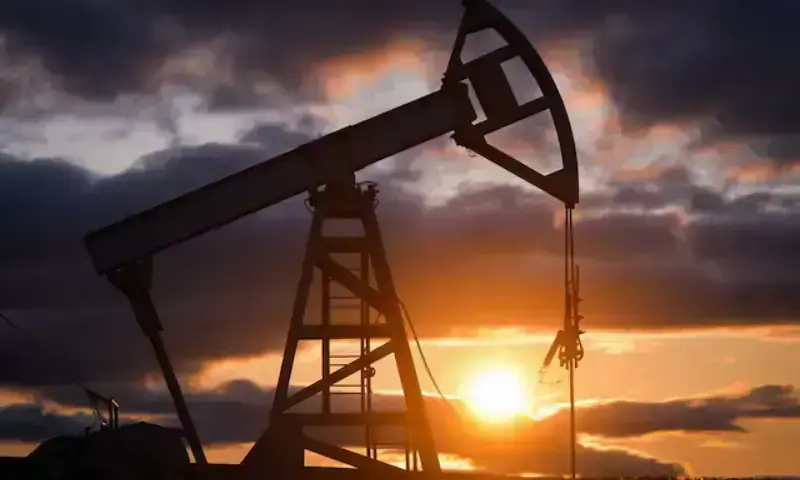

Geopolitics is overriding the fundamentals. For now, it is politics, not barrels, that are driving the oil markets.
Markets are confused and unsettled. Prices continue to see-saw, depending on the movements on the global geopolitical chessboard. Each move on the chessboard can impact the supply side of the oil balance, and markets are concerned.
So far, the Iran-US imbroglio remains unsettled, feeding uncertainty. Despite the resumption of parleys between Iran and the US on a possible nuclear deal, as the weekend drew closer, the oil market was once again flashing warning signs of the elevated risks of a US military confrontation with Iran. If that happens, oil prices would spike — albeit for a shorter period — one could say with some certainty here. The Iran-US tiff is the biggest challenge to the oil market stability today.
As some analysts warned of the possibility of a US attack on Iran, oil prices finished higher on Feb 6. Any such eventuality could threaten the flow of crude in the oil-rich Middle East.
As soon as geopolitics recedes into the background, the reality of a glut-like oil situation will force market prices to go down
While talks continued between the two, the US State Department announced measures on Feb 6 to tighten the noose around Iran. It sanctioned 15 entities and 14 fleet vessels, connected to the ‘illicit’ trade in Iranian petroleum, petroleum products and petrochemical products. The measures were understandably aimed at halting the flow of oil revenue to Tehran as it continues to face discontent among a section of its population. The new sanctions were, understandably, a pressure tactic on Iran to give in to US demands.
The Wall Street Journal, however, also reported that during the talks, despite added pressure from Washington, Tehran held firm on its refusal to end enrichment of nuclear fuel. The only positive sign coming from both US and Iranian officials was their willingness to keep working toward a diplomatic solution that could prevent an American strike on Iran, the report added.
With the holy month of Ramazan around the corner, the window for an attack on Iran is short. A US attack on Iran is not off the table, Phil Flynn, senior market analyst at the Price Futures Group, told MarketWatch analyst Myra P. Saefong. “When it comes to Donald Trump and foreign policy, we should have learned by now to expect the unexpected,” he added.
Meanwhile, the US government issued a warning on X on Friday, advising US citizens to consider departing Iran by land to Armenia or Turkey. Uncertainty thus keeps the markets guessing. “We keep going back and forth on this Iran situation,” John Kilduff, partner at Again Capital, told Reuters. “It’s better one day or even one hour, than worse the next. It’s status quo nervousness over Iran.”
If Iran is actually attacked any day now, better fill up your tanks; oil prices will spike. Bear in mind, oil prices edged up after the US shot down an Iranian drone approaching a US aircraft carrier and armed boats approached a US-flagged vessel in the Strait of Hormuz.
In the meantime, last week, President Trump also announced a trade deal with India in exchange for New Delhi halting Russian oil purchases and lowering trade barriers. After months of pressure over India’s purchases of discounted Russian and sanctioned Iranian crude, New Delhi appears to have bowed to US President Donald Trump’s demand by agreeing to phase out Russian oil imports and shift toward buying more barrels from the United States — and potentially Venezuela, said DW’s Nik Martin.
India is one of the largest global oil importers. New Delhi was also one of the largest buyers of sanctioned, discounted Russian oil. Around a million barrels per day of Russian oil was reportedly going to India, and if India needs to replace that, it will be supportive of prices, analysts agree.
While the Indo-US deal might appear bullish for oil, “The near-term impact will likely be on a further discount on Russian crude barrels that is unlikely to affect the exit of shadow cargoes into the world market,” energy advisory firm Ritterbusch and Associates said.
The immediate suspension of crude oil imports from Russia by India would present a major disruption to global oil markets, Moody’s warned after the deal. Again, geopolitics, not fundamentals, would cause this possible firming up of the oil markets.
Other factors are also getting into the equation. The possibility of additional US tariffs on countries supplying oil to Cuba, as threatened by President Trump, and the arm-twisting of Mexico to stop oil sales to Havana, are moves on the global energy chessboard and will impact oil markets.
Many interesting questions are being raised. “Ultimately, in the war for global hegemony waged by Washington, which sees Beijing as its main contender, Venezuelan and Iranian oil are the ultimate strategic trophies. Venezuela and its 100-year history of oil, as we began to study, is one of the battlefields,” said Carmen Naval Reyes, a Venezuelan political scientist and a member of the International Advisory Council of the Tricontinental Institute for Social Research, an international institute guided by popular movements and organisations.
Geopolitics is driving the current uncertainty in the oil markets. This is a phase in passing. Ultimately, it is the fundamentals that will take back control of the market.
And that means, as soon as geopolitics recedes into the background, the reality of a glut-like situation will force market prices to go down. That is the only silver lining for countries like Pakistan in the given circumstances.
The writer is an energy analyst and has delivered talks at the Department of Energy in Washington and the International Energy Agency. X: @rhusainsyed
Published in Dawn, The Business and Finance Weekly, February 9th, 2026