In the recently published Urdu book of stories titled Tamasha-i-Ahl-i-Karam [The Circus of the Benevolent] by Dr Samia Altaf, which narrates separate incidents and situations but which are linked to each other, one finds many curious, well-crafted and, for some of us, highly relatable characters.
In fact, people like myself, possessing a long experience of working in the Pakistani social sector, including community and social development programmes, can easily relate to the characters and stories that are told.
Some characters appear to recur across the book, like Lucy Memsahib, along with others, including politicos and bureaucrats who run the government and are in-charge of any development programmes — all madams and sirs, both local and foreign who make decisions and occupy the corridors of power as well as the corridors of five-star hotels.
Among the characters are different levels of locally hired directors and project managers, besides contractors and technical experts who are mostly recruited from First World countries or are those Global South natives who have either trained or both trained and worked abroad. Then there are the heartfelt stories of those women, children and men for whom the development programmes and projects are conceived, planned, budgeted and implemented.
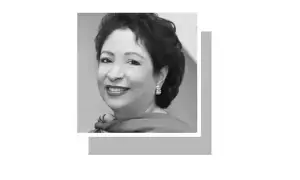
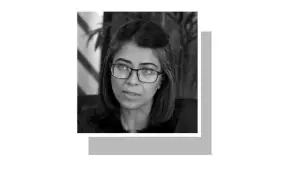
Dr Samia Altaf is one of Pakistan’s very few public health physicians and public intellectuals who have made a name for themselves globally, across academia and professional practice. She has worked with universities, UN agencies and international financial institutions, as well as other governmental and non-governmental outfits. She is a literature buff as well, with a remarkable command over both English and Urdu. Finding bilingual or multilingual people who can express themselves with equal ease in more than one language is fast becoming rare in Pakistan.
The book being discussed here had an earlier version in English, titled So Much Aid, So Little Development: Stories from Pakistan, published in 2011 by the Johns Hopkins University in the US. Its Pakistan edition was published in 2015 by Ilqa Publications. Instead of translating, Altaf has now rewritten those stories in Urdu with a close attention to the language’s idiom. The book in Urdu was published in 2025 by Maktaba-i-Daniyal, with the author pointing out that her stories are now available to those who could not fully appreciate the stories written in English earlier.
Altaf has done a minute dissection, if not a full and final autopsy, of Pakistan’s Social Action Programme (SAP), worth a US$450 million loan from the World Bank more than 30 years ago. Beginning in 1993 and ending in 2003, SAP was aimed at improving basic services for common citizens, such as clean water, basic healthcare, education etc, with a focus on disadvantaged women and children. When you read the narrative, you find that different parts of the programme may have provided temporary relief to a limited number of individuals over the years but, overall, SAP did not succeed in achieving its aims or bring about any substantial structural or institutional change in the system.
Those of us who are familiar with run-of-the-mill project evaluations and impact assessments of development programmes understand that there is a certain jargon, specific language, cliches and terminologies that are in fashion and multiple ways of number-crunching, data management and assessment that are used. They keep changing with time, as and when the mood and the language of Western academia changes. There are other ways of recording beneficiary experience as well, which includes case studies, testimonials and stories based on interviews etc. Most of these project or programme evaluations and assessments are either overly analytical, with a primary emphasis on numbers, or simple human stories offering little analysis.
Altaf does a powerful analysis of the health component of SAP by relating incidents and telling people’s stories by using more Urdu verses to arrive at her point than figures or images. That makes this work unique.
There are different places in the book which may bring divergent emotions to the reader. The ignorance of a policy-maker will make you laugh and the incompetence of a technocrat will make you cringe. The not-so-latent corruption of both the overlords, including the local government officer and international contractor, will make you angry and, finally, the plight of a marginalised young woman will make you cry.
There is a description of how the whole health infrastructure in Punjab works with all its departments. Altaf was closely engaged, as a technical expert provided by a UN agency as a part of SAP, with common people, international donors and experts, and the provincial public administration responsible for planning and development. She credits the idea that inspired her to differently evaluate the failures and successes of a development programme to American economist Jeffrey Sachs.
She says she has used her skill for medically diagnosing a sick person to offer a diagnosis of what has gone wrong in Pakistan’s political, structural and developmental structure. SAP’s health component and Punjab’s health infrastructure are a lens through which all international aid and loan-dependent development in Pakistan can be understood.
The book is dedicated to the never-ending suffering of the common Pakistani people. It should be a compulsory text for policy-makers, public health professionals and development practitioners. Besides being an enjoyable read, there are so many lessons that can be learned from the stories of people narrated in the book.
The writer is a poet and essayist. His latest collections of verse are Hairaa’n Sar-i-Bazaar and No Fortunes to Tell
Published in Dawn, Books & Authors, February 8th, 2026