Reforms okayed to ease business operations
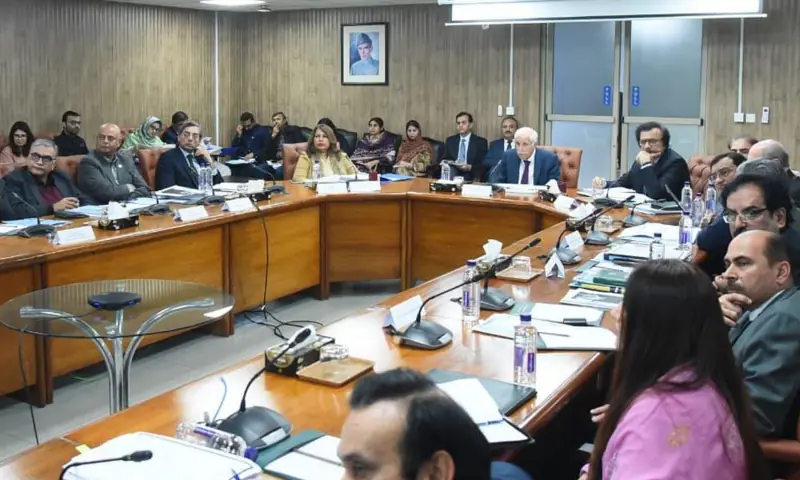

ISLAMABAD: The Cabinet Committee on Regulatory Reforms approved a comprehensive set of reforms aimed at reducing regulatory bottlenecks and establishing a faster, clearer and more predictable regulatory framework for businesses across the country.
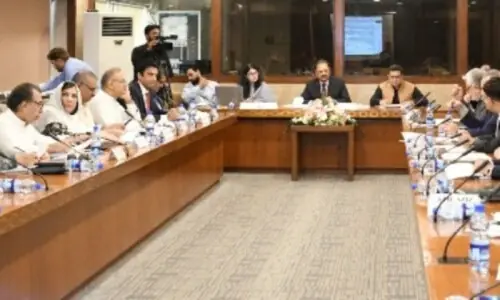
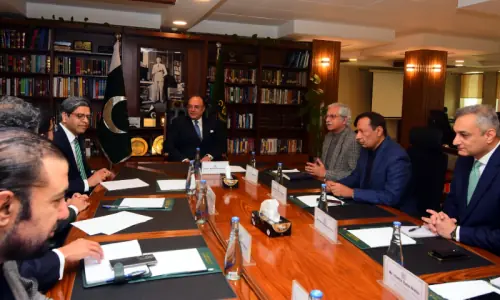
Minister for the Board of Investment (BOI) Qaiser Ahmed Sheikh chaired the sixth meeting of the Cabinet Committee in Islamabad on Wednesday, alongside Special Assistant to the Prime Minister on Industries and Production Haroon Akhtar.
The BOI reforms team presented a structured, phased approach to reforming the country’s foreign exchange management regime, advocating for gradual, well-sequenced reforms rather than abrupt liberalisation. The proposed interventions include 16 short-term reforms, medium-term reforms that focus on developing a liberalisation roadmap, and long-term reforms that call for replacing the Foreign Exchange Regulation Act (FERA), 1947.
The committee, mandated by the federal government to streamline regulatory landscape, endorsed all reform interventions proposed by the BOI under Package-IV. The committee emphasised that these measures would ease the inflow of foreign exchange, simplify the repatriation of funds, and facilitate exports.
It was noted that the short-term reforms, developed with input from leading international experts, should be approved unless the State Bank of Pakistan (SBP) expresses strong reservations. The SBP has fully committed to supporting the proposed reforms.
The BOI reforms team also presented proposals to modernise the venture capital framework, with a focus on the role of unicorns in mobilising capital for innovators and startups. These proposals referenced international best practices, including India’s experience.
Reforms for the surgical instruments manufacturing industry were also discussed, with a focus on introducing a unified single application form.
Published in Dawn, February 5th, 2026