A mad, mad world

THE name of my favourite film as a kid, a great comedy, describes well the tragedy of the world today. Humanity faces unparalleled risks despite its unparalleled powers to ensure global peace and prosperity.
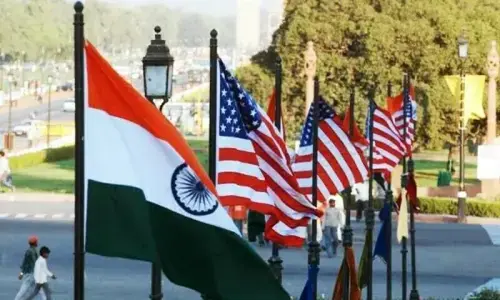
Israel commits genocide aided by world powers which still skewer small states on human rights. The world’s self-declared sheriff kidnaps the head of a state, threatens to invade an ally’s colony and slaps senseless tariffs on other close allies. The top one per cent own about 50pc of global wealth, the bottom 50pc own about 1pc and the bottom 1pc live in abject poverty. Pandemics, climate change and even the shadow of nuclear war threaten mass deaths despite big scientific and managerial strides.
In short, power is in hands that don’t use it to solve global problems but for narrow ends, which often add to them and weaken the global rule of law. Three states stand out for regularly creating problems that have a huge global impact: the US, Israel and Russia. Two of them are global superpowers in decline; they can’t accept the fact and vainly try to regain their lost glory. A dozen powers do the same regionally and occasionally even globally. Their actions ensure that realpolitik rather than the rule of law guides most global affairs.
But no state adds to this sorry state of affairs more than the US. Only the US has the economic, political, military and scientific power to resolve most global problems. Yet, it often enhances global turmoil in pursuit of its narrow national interests, while ironically ending up harming them too. Whether it is climate change, global inequity, global economic crises and conflicts or keeping abusive autocrats in power, no state comes close to its negative role. Things take an even nastier turn under the Republicans, especially under President Donald Trump.
Power is in hands that don’t use it to solve global problems.
America’s future policies will have a huge impact on how humanity’s future unfolds. Many hope the end of Trump’s term may reverse US global policies. While Trump has now ended his pursuit of an unconstitutional third term, the issue is whether Trumpism will end along with his term. So radicalised is the Republican core base now that only someone aping Trump’s extreme rhetoric may win the party’s primaries in the coming years. Trump won twice by tapping into the gripes of industrial workers in the Midwest laid off due to industrial jobs moving abroad, by blaming this trend on foreign states and immigrants to sell isolationist ‘America first’ policies. But blame mainly accrues to American industry titans who moved these jobs abroad for cheaper labour to make money. The right policies would be to tax the rich, retrain or socially support laid-off workers and expand jobs in the service sector where the US still leads. But even Democrats do not strongly push this vision as they too take money from the rich.
Now a bigger threat, AI, looms over lower-end jobs even in the service sector that employs nearly 80pc of salaried Americans. Even many rich elites like Elon Musk say that AI will create a world where work is optional and that states should give guaranteed incomes to jobless people. Other elites say the state must bar companies from firing people due to AI-driven automation to avoid social turmoil. But both policies will run afoul of current US free market ideology. A more likely outcome is the rise of even more radical right-wing populists who externalise US problems to shield its rich elites.
Despite its industrial decline, the US still enjoys huge global clout via its military power, hold on global finance and control of global political platforms that it regularly uses to spread chaos that undermines its own and other’s interests. Meanwhile, China has failed to translate its huge economic strides into global clout to checkmate US global transgressions. Other major regions like Europe, East Asia and the Global South also remain too weak and divided to challenge the US.
The world is now interlinked economically, intellectually, socially and ecologically and it’s critical that global politics catches up to develop global rules-based frameworks to govern these huge linkages and flows. But instead, we see a breakdown of even the currently weak global rule of law due to the desire of big states to impose their will and maximise their share from global flows. Unless such a global framework rises soon from peaceful politics, we may see an era of big conflicts and reduced productivity, peace and prosperity. That era may then force the rise of strong global rule of law after sufferings, as after the two world wars, to some extent.
The writer has a PhD degree in political economy from the University of California, Berkeley, and 25 years of grassroots to senior-level experience across 50 countries.
Published in Dawn, February 3rd, 2026