AGP audit observations cannot be used against taxpayers: Supreme Court

ISLAMABAD: The Supreme Court on Thursday ruled that audit observations by the Auditor General of Pakistan against government entities of the federal or provincial governments cannot be used by tax authorities to initiate audit proceedings against a taxpayer.
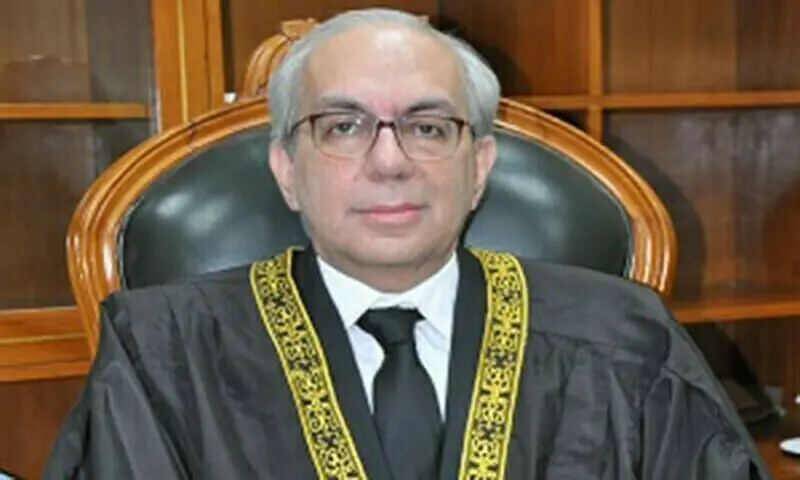
“Any audit observation made by the Auditor General in relation to the accounts of, e.g., the Inland Revenue Department or the FBR or any other governmental entity or any authority or body established by the federation or a province cannot form the basis of enabling or allowing any tax authority exercising powers and performing functions under a fiscal statute to regard that observation as information that would allow for the audit or inspection of the accounts or activities of a taxpayer or sustain the issuance of any notice or initiation of any proceedings under the fiscal statute,” affirmed Justice Munib Akhtar.
Headed by Justice Akhtar, a two-member bench had taken up an appeal against the July 7, 2025, Peshawar High Court’s (PHC) quashing of proceedings against the private company Diamond Filling and CNG Station, Peshawar. The direction came in a sales tax case that was moved by the Inland Revenue commissioner, Peshawar, against the high court decision.
The tax department had initiated proceedings against the private CNG station based on audit observations made by the Director General of Revenue Receipt Audit (DGRRA), a wing of the Auditor General’s office.
Justice Munib Akhtar notes auditor general acts under 2001 ordinance, while tax authorities operate under fiscal statute; both are separate, work in own domains
In his six-page judgement, the judge explained the reason for the observation by stating that it was a well-settled rule that what “cannot be done directly cannot be done indirectly.”
What is properly within the scope, powers, and authority of the Auditor General acting under the 2001 Ordinance, on the one hand, and of the tax authorities under a fiscal statute, on the other, are separate and operate within their own spheres, he emphasised, adding that they constitute distinct compartments that do not overlap.
The judgement explained that Article 169 of the Constitution mandated that the Auditor General of Pakistan, in relation to the accounts of the federation and the provinces, shall perform such functions and exercise such powers as may be determined by federal law.
The statute currently in the field is the Auditor General’s (Functions, Powers, Terms and Conditions of Service) Ordinance, 2001. It appears that while exercising such powers in relation to the Federal Board of Revenue (FBR), and in particular the Inland Revenue Department in relation to sales tax, an officer of the Auditor General, the DGRRA, made an audit observation against the CNG company, on the basis of which the officer concerned of sales tax issued a show-cause notice on March 9, 2023, under Section 11(2) of the Sales Tax Act (STA) 1990.
Being unsatisfied, the CNG station moved against the order for the recovery of sales tax by filing an appeal before the commissioner (appeals). That appeal succeeded, and when the commissioner took the matter to the appellate tribunal, the decision of the commissioner (appeals) was upheld on Oct 24, 2024. The department then took the matter in a tax reference to the PHC, which was dismissed.
The judgement said that to stretch the provision in the manner attempted by the department — to include private sector entities in its scope and thereby allow for their audit for fiscal purposes by the auditor general — was to completely misread, misunderstand, and misapply the provision.
In the end, the Supreme Court rejected the appeal by the Inland Revenue commissioner.
Published in Dawn, January 30th, 2026