1
1
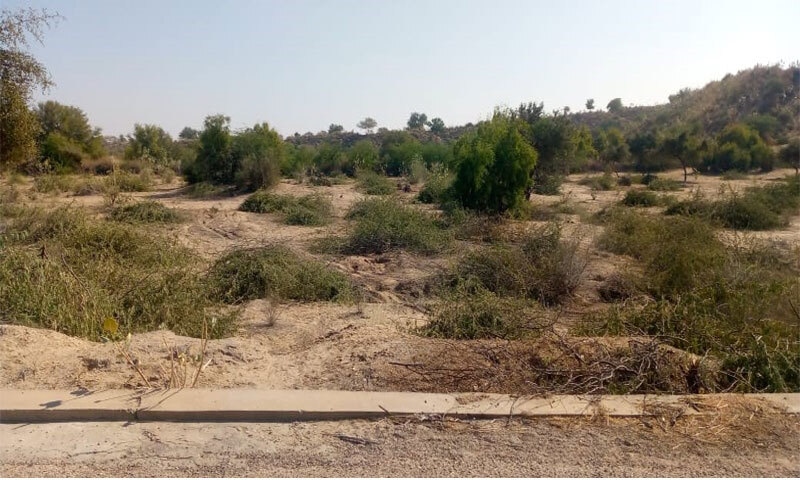

In the vast, sun-baked expanse of Tharparkar, where life has always been a delicate negotiation between man, animal and the whims of the monsoon, a new threat has taken root.
It grows in defiance of drought, thrives where nothing else can and slowly strangles the very ecosystem that has sustained communities for generations. The locals call it “devi”; elsewhere it goes by the name vilayati/ jangli keekar, but botanists know it as Prosopis juliflora — and it is winning.
To understand how Tharparkar arrived at this crisis, one must travel back to 1960, to the era of Gen Ayub Khan. The problem then was different but no less urgent. In the southern reaches of what was then a unified Tharparkar district — including area that would later become Mirpurkhas — and the neighbouring deltaic area of Badin, the construction of irrigation barrages had created an unintended catastrophe. The land had become waterlogged, choked with salinity and alkalinity that rendered vast tracts useless for cultivation.
The solution seemed ingenious: large scale seeding and plantation, including aerial dispersal in some areas, of Prosopis juliflora, a hardy tree from South America that could supposedly reclaim poisoned soil. Seeds rained down from the sky on to the barren earth, and the devi plant took hold. For a time, it appeared to work.
The imported devi plant was supposed to save degraded land in Sindh. Instead, it’s now sucking ancient wells dry, poisoning animals and strangling the desert vegetation that communities have depended on for generations
But nature rarely responds to human intervention the way we expect.
THE INVASION BEGINS
The pathway of destruction began innocuously enough. During a particularly harsh drought in Tharparkar, someone had the idea to transport the ripened pods of these southern devi plants northward as emergency livestock fodder. The animals ate. The animals walked. The animals defecated. And with each dropping, seeds found new ground.
After the rains came, those seeds germinated with aggressive vigour. Starting in sub-district Diplo, the invasion spread like wildfire across the Thar region. Within years, a plant that had never existed in Tharparkar was everywhere.
What makes the devi plant so devastating isn’t merely its presence — it is its appetite. The plant possesses a remarkable root system that acts like countless hair-thin straws, extending both vertically and horizontally within a 150-foot radius. These roots are extremely efficient at extracting groundwater and significantly reduces groundwater availability, sometimes rendering shallow wells unreliable.
This is catastrophic in a region where survival depends on the delicate balance of seasonal rainfall and groundwater reserves. Before devi’s arrival, the rainwater that recharged the shallow wells — sweet, potable water — was sufficient for all human, domestic and livestock consumption, even during cycles of water stress. Those days are long gone.
A MULTIFACETED MENACE
Even during droughts that stretch two or three years, the devi plants remain defiantly green, their roots greedily sucking moisture from depths that indigenous plants and trees cannot match. Meanwhile, the native drought-resistant trees, herbs and shrubs that once provided essential fodder for livestock — such as kandi (Prosopis cineraria) and khabbar (Salvadora persica) — wither and die. The vegetation that co-evolved with Tharparkar’s harsh climate, perfectly adapted to survive lean years and sustain animals through drought — this irreplaceable natural heritage is vanishing.
The destruction extends far beyond water theft. Walk through areas overtaken by devi and you’ll notice the eerie absence of other vegetation. Trees and plants that once stood near these invaders gradually wilt and disappear, unable to compete for the water being hoarded below ground.
Then there are the thorns — hard, sharp and genuinely poisonous. If a thorn pierces human or animal flesh and isn’t properly treated, it can cause permanent disability. Worse still, the thorns don’t break down or dissolve. They remain intact for years, lodged in tissue, causing chronic complications.
The un-ripened pods present another horror. When goats, sheep, buffaloes, or cows chew these immature pods, their jaws are said to become dislocated and disabled. Unable to graze, the animals slowly starve to death.
The dense thickets of devi also create deadly blind spots along the main and link roads throughout Tharparkar. Drivers cannot see livestock wandering inside these plant walls until it’s too late. Tourists and locals alike have suffered casualties in such accidents. The same dense growth also provides perfect cover for dacoits of the riverine areas — bandits who exploit the impenetrable vegetation.
And as if all this weren’t enough, devi plants contribute to the rise in ambient temperature in their surroundings — cannibalising on other vegetation to reduce shade and cover — and serve as ideal breeding grounds for mosquitoes, particularly Culicidae species, the vectors for malaria, dengue and chikungunya. Until two decades ago, mosquitoes were unheard of in the region.
The devi invasion has occurred alongside another catastrophe: the systematic appropriation of grazing land. Tharparkar and parts of Umerkot encompass some 22,000 square kilometres. Of this, approximately 20 percent has been designated for cultivation, while the remaining 80 percent — some 4.3 million acres — should remain as gowcher [literally, cow grazing] land, communal grazing areas essential for livestock survival.
Livestock is the primary and most reliable source of income for most of Tharparkar’s inhabitants. Yet, over the past three decades, influential figures have forcibly occupied much of this protected grazing land. As devi plants simultaneously destroy what remains of the natural fodder base, herders find themselves in an impossible squeeze.
THE ROAD TO RESISTANCE
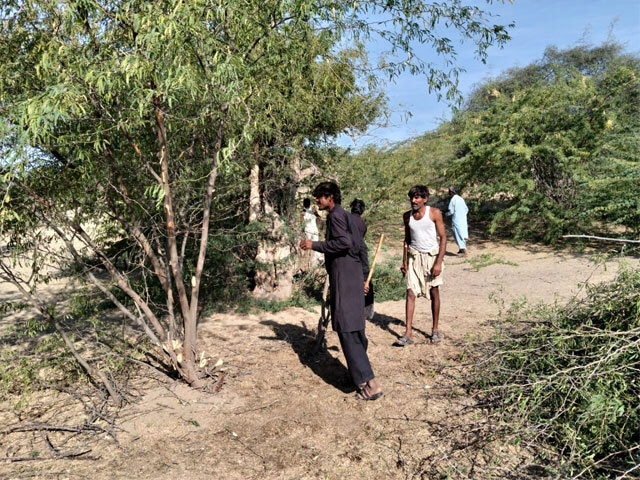
Not everyone has accepted this slow-motion catastrophe as inevitable. In scattered villages — Malihar, Karkasar, Dedsarh and Varwai in Diplo and Mithi — small groups of residents have begun collectively eradicating devi plants from their vicinities. It’s backbreaking work, but they understand what’s at stake: their livestock, their traditional vegetation and their way of life.
These villagers have calculated that the devi plant is 99 percent harmful to their region. The only marginal benefit? It makes decent firewood.
What Tharparkar needs now is recognition that this isn’t merely a botanical nuisance but an existential threat. The local administration must work with community leaders to coordinate large-scale eradication efforts. Priority should be given to clearing devi growth from roadsides to prevent accidents. Strict enforcement of laws for the protections for gowcher land could help preserve what little grazing area remains.
But perhaps, most importantly, there must be acknowledgment of how this crisis began: with an attempt to engineer nature without considering long-term consequences. The seeds scattered from planes in 1960 to solve one problem have created something far worse.
In Tharparkar today, the green of devi plants is not the colour of life — it’s the hue of slow devastation, proof that, in the delicate ecology of desert margins, even solutions can become curses.
The writer is a researcher and environmentalist who worked for the Sindh Arid Zone Development Authority (Sazda). He can be contacted at engrpunhani123@gmail.com
Published in Dawn, EOS, January 25th, 2026