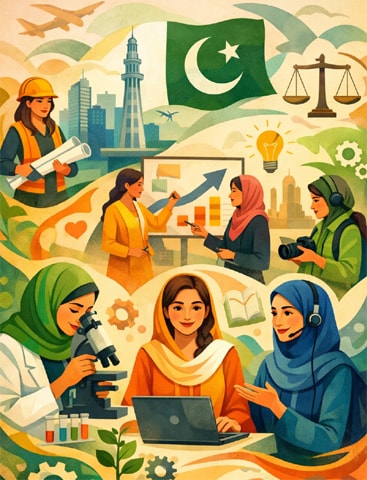
WOMEN representation across Pakistan’s institutions remains deeply imbalanced. Despite possessing immense potential for meaningful and active participation in all affairs, women continue to have a minimal presence in most key decision-making sectors.
For example, a higher participation of women in Customs alone could open substantial opportunities, as it is a front-line department that is directly linked with trade and logistics. However, it has been observed that women entrepreneurs face several challenges when entering this field.
Beyond the initial entry barriers, many women lack exposure to Customs laws, tariff structures and global shipping procedures, underlining the utter need of capacity-building efforts.
Additionally, workplace safety concerns at ports, border posts, and bonded ware-houses further discourage women from joining the profession.
The government should play a proactive role by encouraging women’s participation in trade and business. Greater involvement of women can support the revival of economy, and also enhance visibility in logistics, trade and customs in line with the principles of gender-responsive trade facilitation outlined in various World Customs Organisation (WCO) agreements. Such steps would strengthen Pakistan’s global image regarding gender parity, and ensure inclusive and equitable trade growth.
The government may encourage women to run firms in niche segments, such as small exports, handicraft, information technology (IT) equipment and e-commerce shipments.
Moreover, a specific quota of customs clearing, forwarding and shipping agent licences may be issued to our women to increase their presence.
The various chambers of commerce in the country must also be encouraged to expand women’s membership. Simplified initiatives would economically empower women and open new entrepreneurial avenues, as women entrepreneurs often demonstrate much higher compliance with regulatory requirements.
Establishing women-only counters and operational desks at ports, dry ports and border stations would also promote the ease of doing business.
The participation of women can also be increased through financial incentives, partnership models, and the provision of other requisite facilities. These steps can ensure inclusive trade operations.
Shahid Ali Abbasi
Karachi
Published in Dawn, January 20th, 2026