Botany is a fascinating subject. At school and college levels, it can make students think that they know everything there is to know about the physiology, structure, genetics, ecology, classification and economic importance of plants. Yet certain botanical truths defy common assumptions.
Two well-known examples: strawberries are not berries and tomatoes are fruits. While carrots and radishes are the root part of their respective plants, potato tubers — which have underground stems, not roots — complicate matters further.
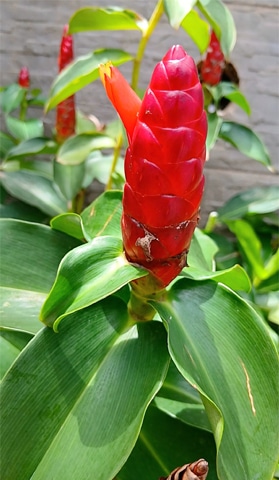
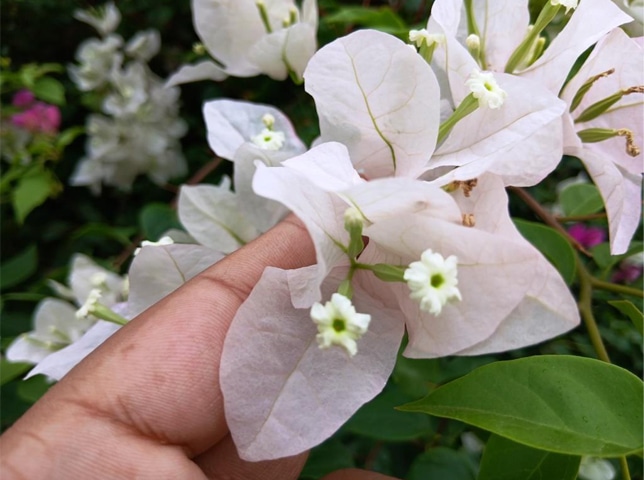
Consider the three images accompanying this piece. You are likely to think that one of the images is a bougainvillea, while the other two appear to be exotic, shiny flowers, probably from tropical regions or distant gardens. But what if I tell you that none of these images has any flowers or petals in it? Instead, the vibrant, coloured part that you can see in these photographs are known as bracts!
Bracts are modified and specialised leaves that are usually not green in colour. Their shape, size, location, colour and texture may differ from the other leaves on the same plant. Most of us mistakenly consider them to be the flowers of the plant. Bracts usually engulf the buds and the budding flowers within. They do this to protect the buds and nascent flowers from herbivorous animals and birds, which see them as a source of food.
From bougainvillea to red button ginger, some of the most striking ‘flowers’ we admire are not flowers at all. A closer look at bracts reveals how botany delights — and deceives — the eye
Bracts not only protect flowers in their growth stage but also help to attract pollinators with their vibrant, attractive colours. Take the bougainvillea plant, which will form a hedge or be part of your garden wall. It may have only three to four white or red, thin and small flowers within a single bract. These bougainvillea plants would otherwise have pink, red, orange, white, purple or magenta bracts, which are visible to the naked eye. Bougainvillea bracts have a papery texture, which is not necessarily the case with the bracts of other bracteates or bracteolates (terms used for plants having bracts).
Glume, which are found in grass, is another example of the texture of bracts. Grass produces a basic flowering structure called a spikelet. At the base of this spikelet lies a pair of dry, scaly and thin bracts, known as glumes. These bracts support and protect the extremely small flowers that develop within.
Consider one of my favourite bracts that comes from the red button ginger plant (scientifically known as Costus woodsonii). This tropical plant is also commonly known as the red cane, Indian head ginger and scarlet spiral flag. This plant grows five to six feet tall and is native to South America, but it is also widely found in South East Asian countries and in countries like Sri Lanka.

It can be found at specialty nurseries in Pakistan, although at a premium. Plants grown in Pakistan tend to be shorter, probably due to the unfavourable weather conditions. In other countries, it is used as a decorative, ornamental plant lining the walls.
The bract arrangement resembles a cone, with a number of button-shaped, glossy red bracts arranged spirally. As is the case with others, the bracts of the red button ginger plant also have yellowish orange, tube-shaped flowers within. The bracts and flowers of the red button ginger plant can produce a liquid when squeezed. This foamy liquid has traditionally been used as an organic shampoo, organic conditioner and a liquid handwash.
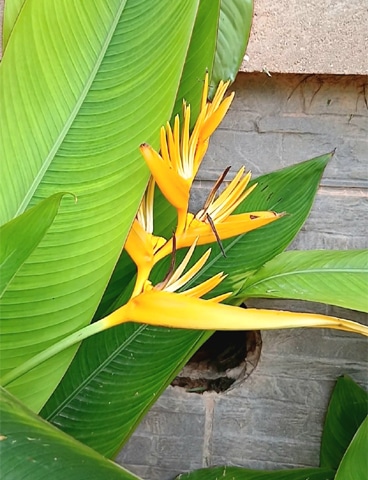
Bracts themselves have sub-types, classified by location and shape. Spathes, petaloid, glumes, foliaceous, scaly and involucral are some of the types of bracts, classified according to their location and shape. So, the next time when you come across an exotic yellow heliconia plant, which is also referred to as lobster claw or parrot’s beak due to its uniquely shaped bract, do not praise its beautiful flowers as they are concealed within. What you see are actually bracts!
Please send your queries and emails to doctree101@hotmail.com. The writer is a physician and a host for the YouTube channel ‘DocTree Gardening’ promoting organic kitchen gardening
Published in Dawn, EOS, January 18th, 2026